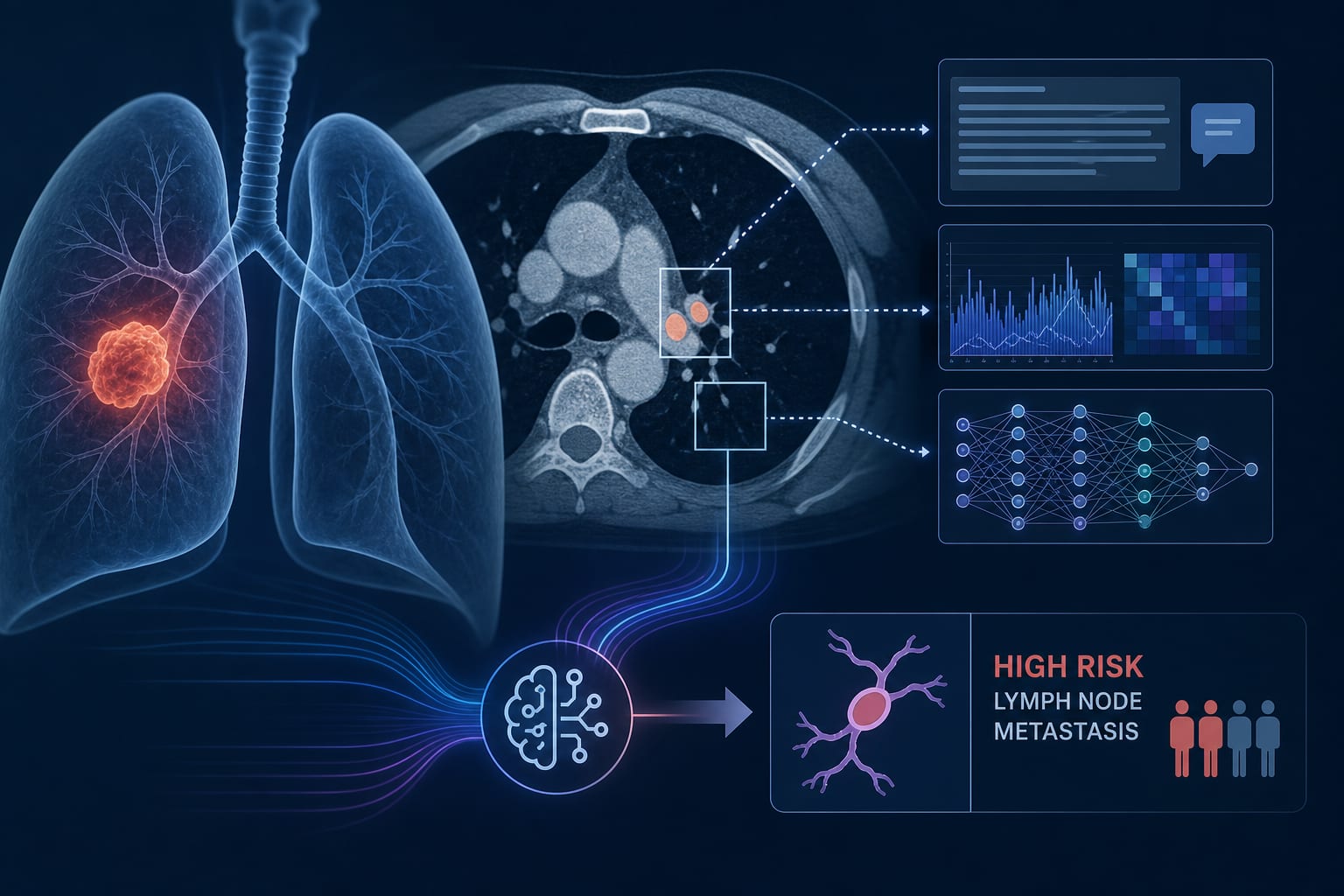
Leveraging Large Language Models to Integrate Clinical Knowledge and Machine Learning Predictions for Lymph Node Metastasis Prediction: Development of a Knowledge-Augmented Framework - Summary - MDSpire
Conexiant’s news site is now MDSpire News. Learn more
Advertisement
Utilizing Advanced Language Models to Combine Clinical Insights and Machine Learning Forecasts for Predicting Lymph Node Metastasis: Creation of an Enhanced Knowledge Framework
To integrate the medical knowledge of large language models (LLMs) with statistical patterns identified by machine learning (ML) models to predict lymph node metastasis (LNM) in lung cancer patients.
Approach:
Key Findings:
The proposed knowledge-augmented method outperformed traditional ML models when predicting LNM based on specific performance metrics.
Combining clinical characteristics with ML model predictions enhanced the predictive performance as measured by relevant statistical indicators.
Interpretation:
The integration of LLMs with data-driven models can improve the accuracy of LNM predictions in lung cancer patients.
Limitations:
The study was retrospective and limited to a single institution, which may affect the generalizability of findings.
Informed consent was waived, which may impact the ethical considerations and generalizability of the results.
Conclusion:
The study demonstrates that leveraging both LLMs and ML models can enhance predictive capabilities for lymph node metastasis in lung cancer, although further validation is needed.