To synthesize and contrast traditional neuropsychological tests, digital cognitive assessment tools, and digital biomarkers for cognitive evaluation.
Approach:
Key Findings:
Traditional neuropsychological tests are time-consuming and require trained personnel.
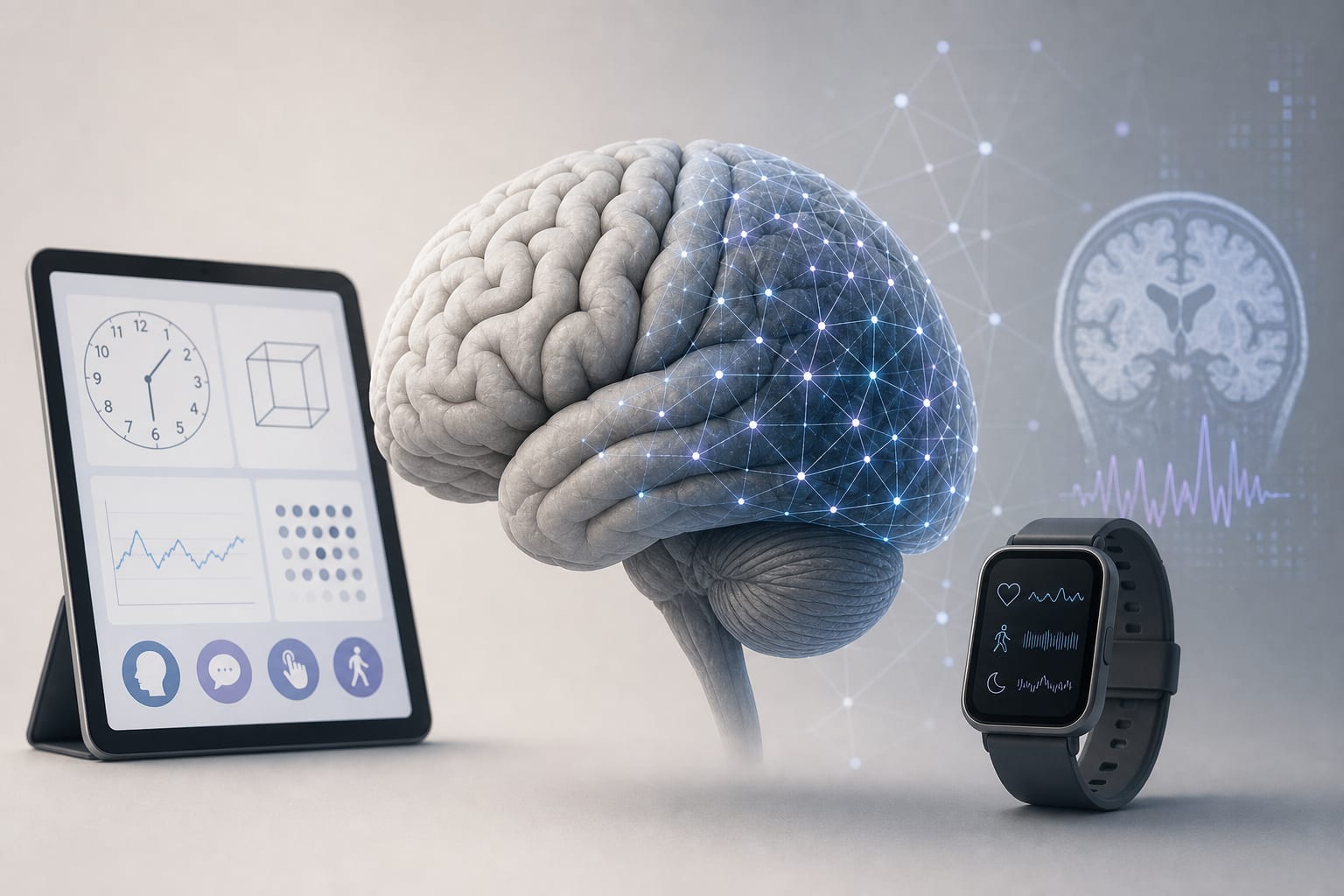
Digital cognitive assessment tools enhance accessibility and scalability.
Digital biomarkers capture subtle cognitive changes through real-world interactions.
AI-driven multimodal biomarkers show higher sensitivity for early Alzheimer’s detection.
Interpretation:
Digital cognitive assessments and biomarkers show promise for enhancing early detection and monitoring of cognitive decline, but practical feasibility in community settings needs further evaluation.
Limitations:
Discrepancies in scores between digital and traditional tests.
Variability in digital literacy among older adults.
Lack of standardized scoring frameworks.
Conclusion:
Community nurses can enhance accessibility to digital cognitive assessments, but face operational challenges that need addressing.