Biomaterial physicochemical properties govern immune activation and bone regeneration: a titanium-focused design-oriented osteoimmunological framework - Summary - MDSpire
Advertisement
Biomaterial physicochemical properties govern immune activation and bone regeneration: a titanium-focused design-oriented osteoimmunological framework
To explore the integration of biomaterial physicochemical properties with immune signaling and regenerative outcomes in craniofacial applications, particularly in the context of macrophage polarization and titanium wear particles in reconstructive surgery.
Key Findings:
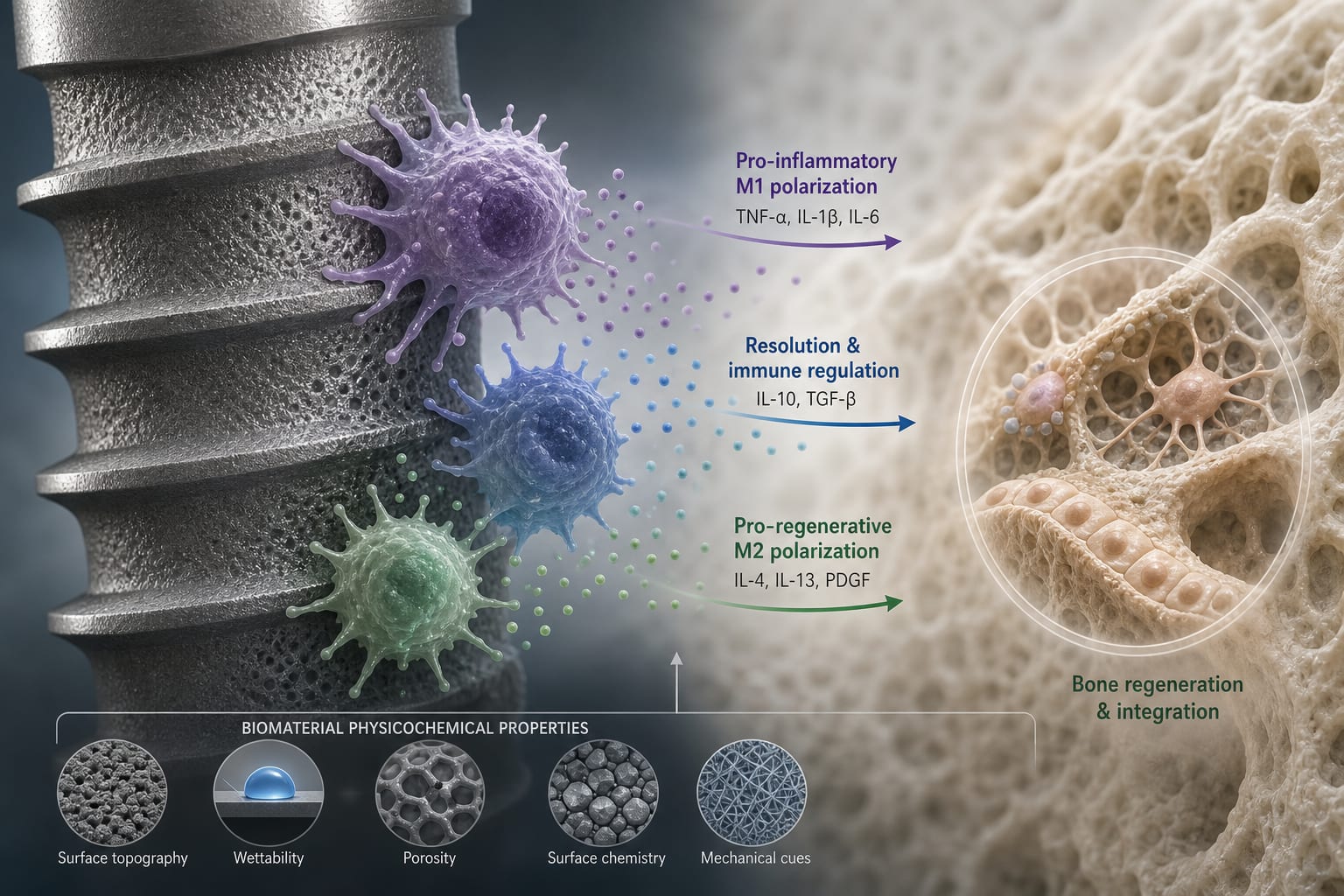
Macrophages play a central role in the foreign body response and can adopt different phenotypes based on biomaterial properties, influencing healing outcomes.
Titanium wear particles activate macrophages through various signaling pathways, which can lead to increased inflammation and affect bone healing.
Material-induced modulation of macrophage phenotypes is crucial for balancing inflammation and regeneration, impacting overall healing.
Interpretation:
The study emphasizes the need for a comprehensive understanding of how biomaterial characteristics influence immune responses and healing, advocating for integrated design principles in biomaterials.
Limitations:
Oversimplified classification of macrophage phenotypes may not reflect the complexity of immune responses, potentially limiting the applicability of findings.
Limited translational relevance of in vitro models hampers the applicability of findings to clinical settings, necessitating further research.
Conclusion:
Integrating immunology with materials science can lead to the development of next-generation immuno-instructive biomaterials, enhancing predictability in regenerative outcomes and guiding future research directions.