Percutaneous Closure of Multiple Large Coronary Fistulae and Right Ventricular Outflow Tract Opening to Establish Biventricular Circulation in a Child with Pulmonary Atresia and Intact Ventricular Septum – A Case Report - Summary - MDSpire
Conexiant’s news site is now MDSpire News. Learn more
Advertisement
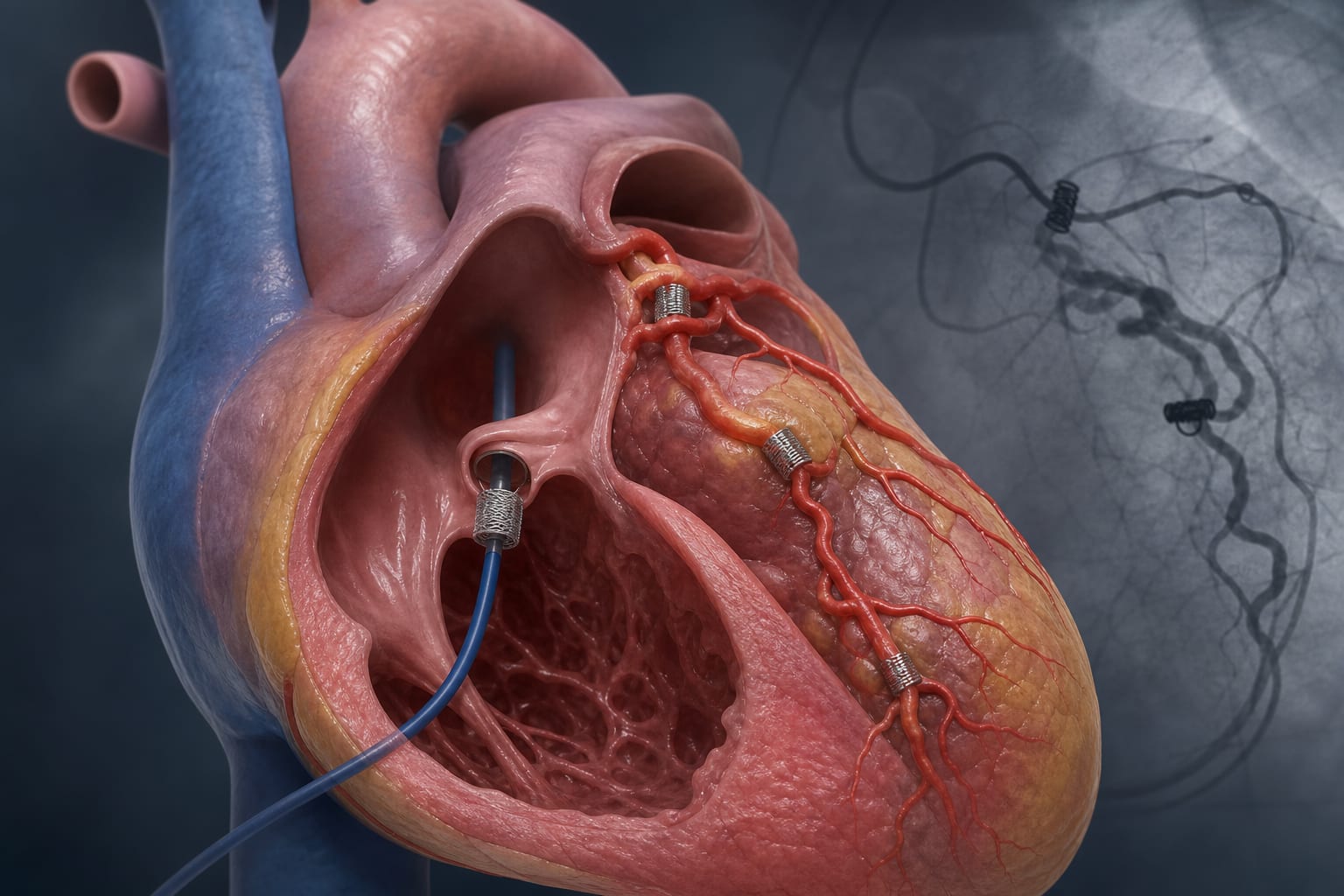
Catheter-Based Closure of Multiple Large Coronary Fistulae and Right Ventricular Outflow Tract Intervention to Achieve Biventricular Circulation in a Pediatric Patient with Pulmonary Atresia and Intact Ventricular Septum – A Case Study
To report on a child with pulmonary atresia with intact ventricular septum (PAiVS) and large right ventricle-to-coronary artery fistulae, where right ventricular-dependent coronary circulation (RVDCC) was excluded angiographically, followed by interventional closure of the fistulae and transcatheter perforation of the pulmonary valve to achieve biventricular physiology.
Approach:
Method: label
Method: text
Key Findings:
The patient had multiple large RV-to-coronary fistulae that were successfully closed.
Transcatheter interventions led to improved biventricular function and reduced right ventricular pressure.
At 22 months, the patient exhibited normal oxygen saturation and preserved biventricular function.
Interpretation:
The case illustrates the importance of catheter-based interventions in managing complex congenital heart defects, particularly in patients with PAiVS and RV-to-coronary fistulae.
Limitations:
The initial diagnostic cardiac catheterization did not definitively exclude RVDCC.
Long-term outcomes beyond 22 months are not reported.
Conclusion:
The successful closure of coronary fistulae and RVOT intervention in this patient demonstrates the potential for achieving biventricular circulation in complex congenital heart disease.
An interpretable machine-learning model classified angiographic coronary artery disease in patients referred for coronary angiography, but high disease prevalence and unclear inflammatory signals limited clinical interpretation.