Risk-Stratified Lung Cancer Screening for Never-Smokers
-
By
-
Antonio Vitale
-
Emilio Bria
-
November 2, 2026
Objective:
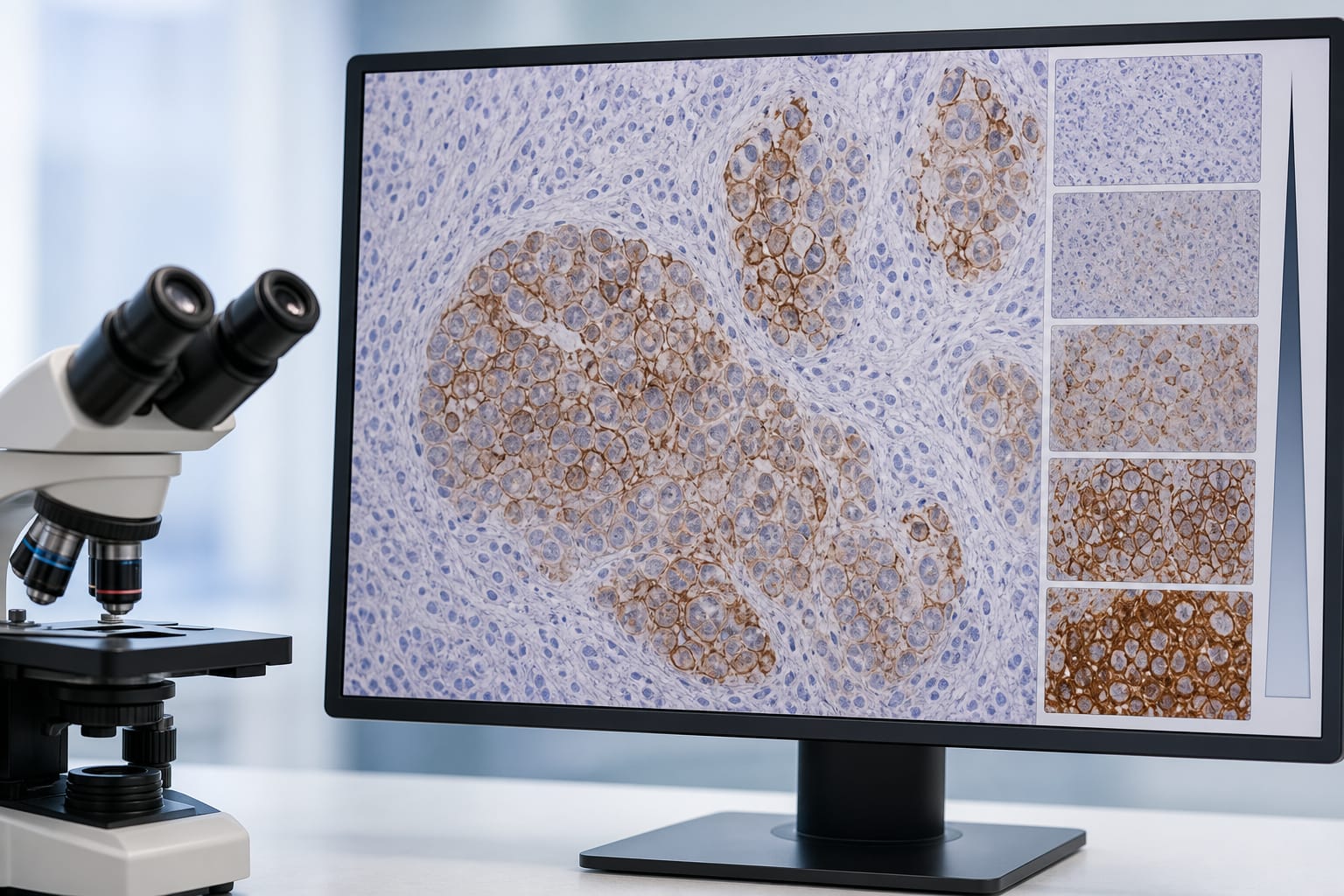
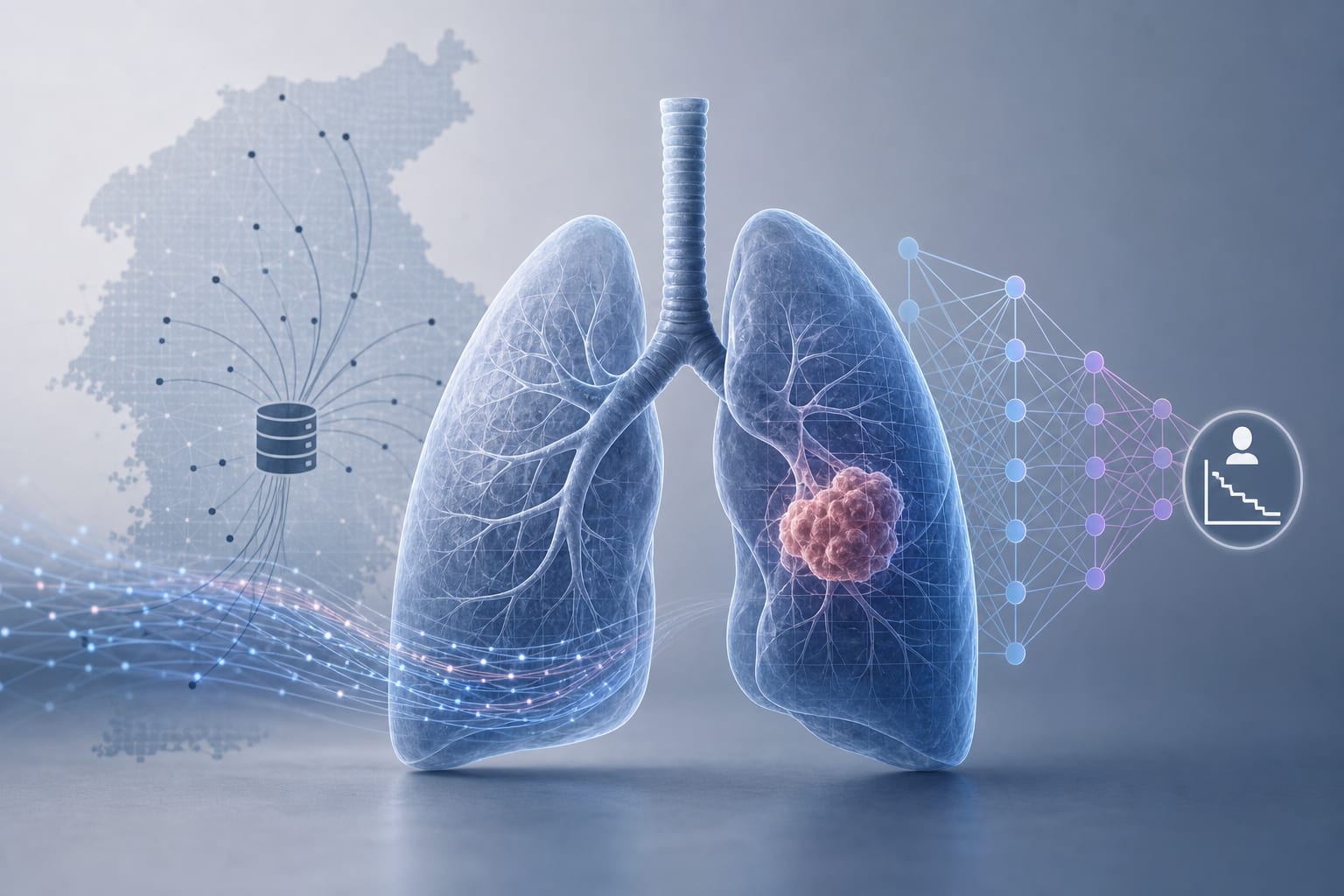
The article examines CEACAM5 and CEACAM6 as potential lung cancer risk biomarkers in people who never smoked and discusses the need for risk-based screening models for this population.
Approach:
- Biomarker discovery: Zahed and colleagues analyzed 2,821 proteins in prediagnostic blood samples from 180 matched case-control pairs of never-smokers, collected up to 5 years before diagnosis.
- Replication: Associations were assessed in 49,291 UK Biobank participants, regardless of smoking status.
- Screening context: The article reviews never-smoker screening programs, risk-model development, and other candidate biomarkers.
Key Findings:
- Each SD increase in CEACAM5 and CEACAM6 concentration was associated with 65% and 72% higher lung cancer risk within 5 years, respectively, in the discovery analysis.
- In UK Biobank, corresponding risk increases were 86% for CEACAM5 and 92% for CEACAM6; the proteins were weakly correlated and provided largely independent risk information.
- Only 4 of 36 previously identified markers of imminent smoking-related lung cancer were associated with lung cancer in PWNS, indicating that smoking-derived risk models may not transfer to this population.
- TALENT detected lung cancer in 2.6% of participants, and a subsequent Taiwanese national program reported a 1.7% detection rate; both selected participants with additional risk factors, and 85% of tumors were early-stage.
- No comparable validated risk instrument currently exists for PWNS, and the other biomarker approaches described have not been validated in this population.
Interpretation:
The article presents CEACAM5 and CEACAM6 as promising risk-associated biomarkers, while emphasizing that screening PWNS requires risk-based selection and a validated model incorporating biomarkers and relevant exposures.
Limitations:
- The discovery analysis included 180 matched case-control pairs.
- No comparable risk instrument currently exists for people who never smoked.
- The Taiwanese screening programs selected participants with additional risk factors, so their results do not represent unselected never-smoker populations.
- The source describes other biomarker categories under study but does not establish their validation for risk estimation in people who never smoked.
Conclusion:
Risk-model development for people who never smoked will require incorporating biomarkers and relevant exposures and calibrating estimated risk against observed incidence.
Sources:
Based on findings from:
Risk-Based Lung Cancer Screening for People Who Never Smoked
Antonio Vitale, Emilio Bria. Jama Network Open, 2026.
https://jamanetwork.com/journals/jamanetworkopen/fullarticle/2856151
This content is an AI-generated, fully rewritten summary based on a published scholarly article. It does not reproduce the original text and is not a substitute for the original publication. Readers are encouraged to consult the source for full context, data, and methodology.