To discuss differential diagnoses and implications of disulfiram-induced neurotoxicity in patients with acute severe encephalopathy and bilateral basal ganglia abnormalities.
Approach:
Differential Diagnoses: Includes hypoxic-ischemic injury, mitochondrial disorders, toxic-metabolic encephalopathies, infectious encephalitis, and autoimmune encephalitis.
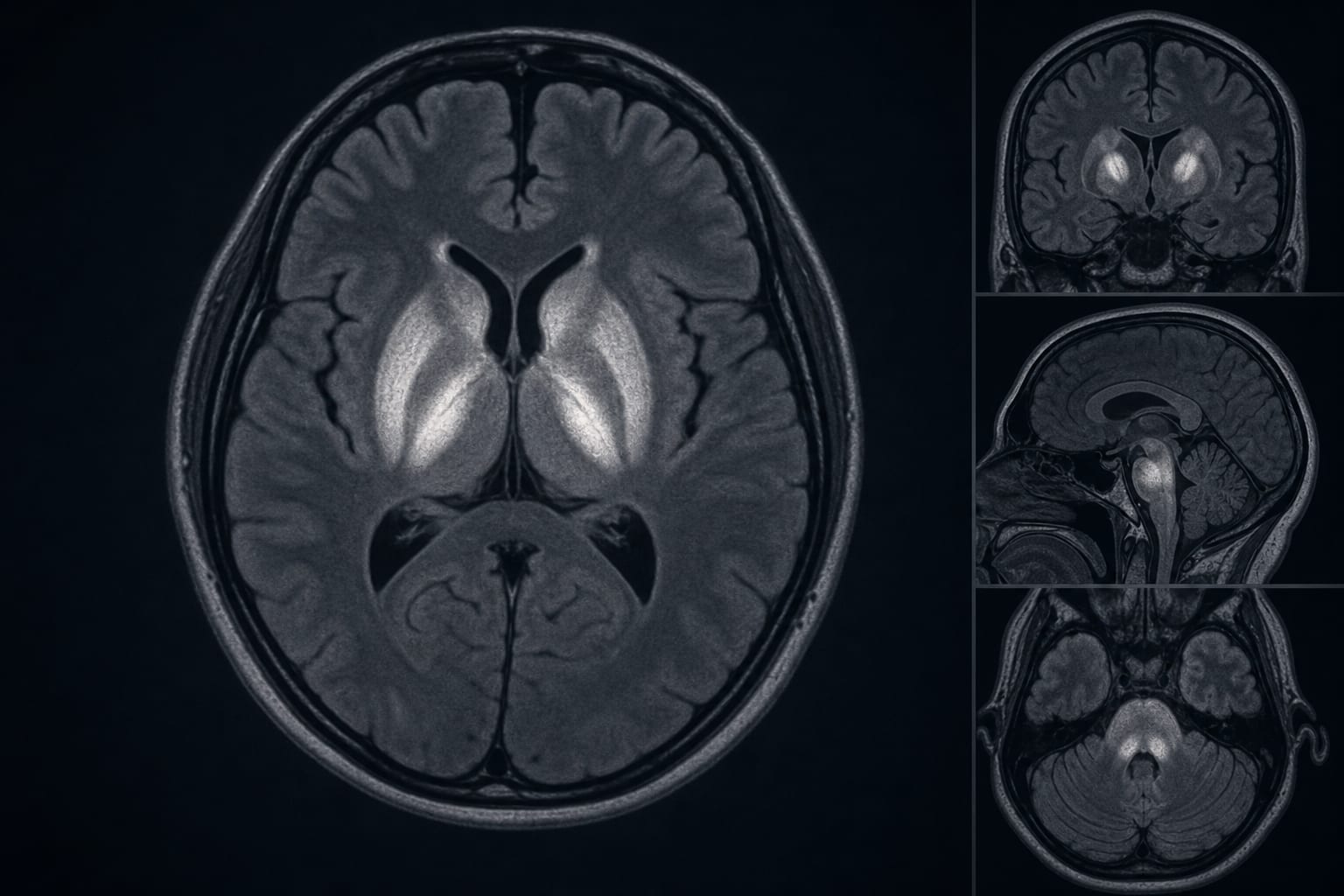
Neuroradiological Findings: Brain MRI may reveal bilateral and symmetrical basal ganglia involvement, indicative of disulfiram neurotoxicity.
Diagnosis Consideration: Diagnosis can be highly probable based on MRI findings and chronic disulfiram exposure, even without blood level measurement.
Key Findings:
Disulfiram neurotoxicity is linked to oxidative stress affecting dopaminergic structures.
Most cases show a reversible course, but severe presentations can lead to poor neurological outcomes.
Withdrawal of disulfiram does not guarantee recovery; severe symptoms can persist.
Interpretation:
Disulfiram toxicity should be considered in cases of unexplained encephalopathy with symmetric deep gray nuclei involvement.
Limitations:
The rarity of disulfiram neurotoxicity may limit widespread recognition.
Severe cases may not be well-documented in literature.
Conclusion:
Disulfiram toxicity is a critical consideration in acute encephalopathy with specific MRI findings.