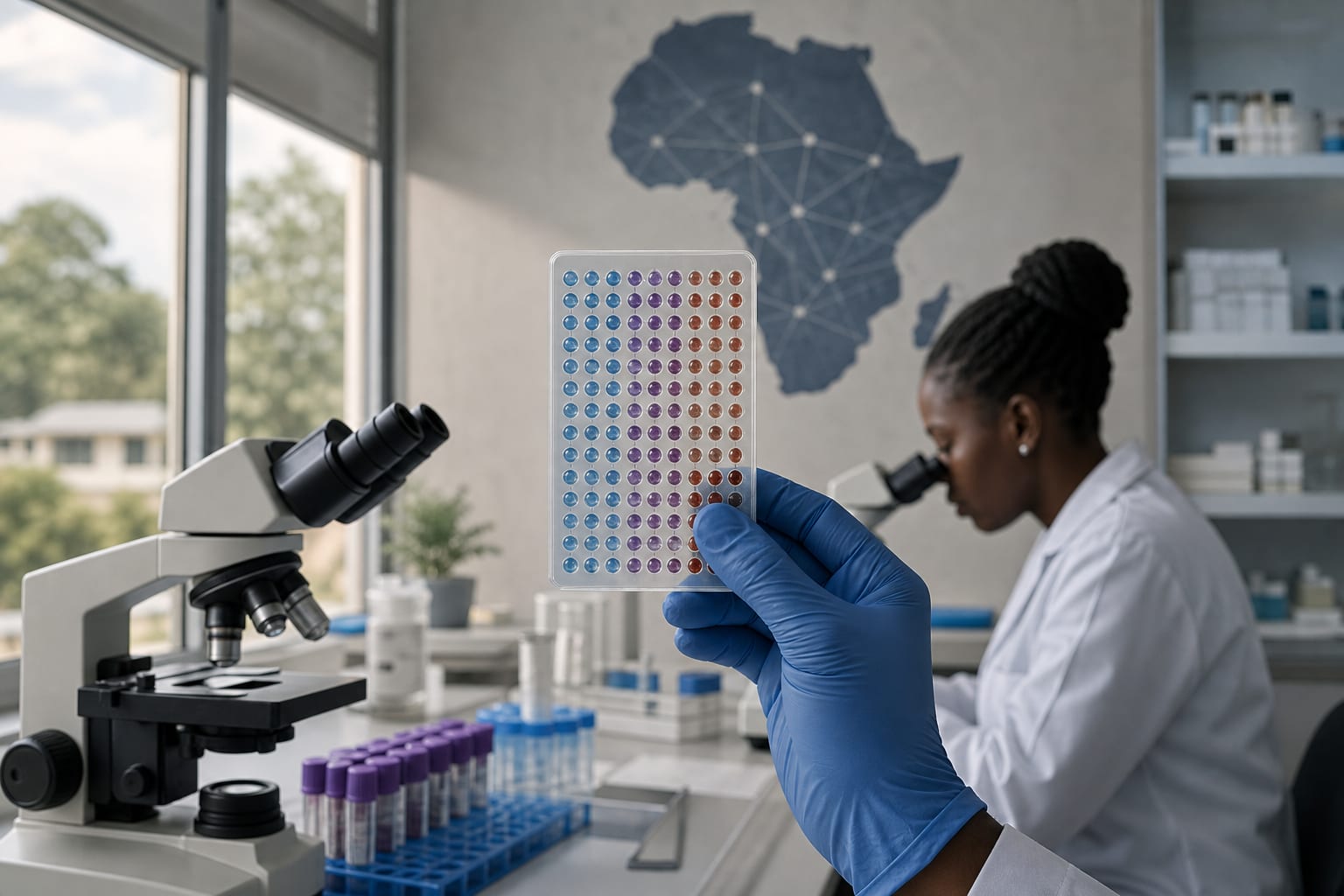
To highlight the gaps in immunology education in sub-Saharan Africa and its implications for addressing local health challenges related to infectious diseases.
Approach:
Current Teaching Gaps: Immunology is underrepresented in undergraduate curricula in sub-Saharan Africa, particularly in the context of HIV and TB, impacting the training of future scientists and clinicians.
Need for Strong Training: Immunology is often a minor component of broader courses in the global South, leading to a lack of recognition of its importance until later in clinical practice.
Key Findings:
Immunology education is limited in sub-Saharan Africa, affecting the ability to address local health challenges.
Advances in immunology research are not being fully utilized due to inadequate training.
There is a structural gap in immunology as a standalone discipline in many countries in the global South.
Interpretation:
The lack of robust immunology training hampers the development of relevant research and clinical applications in regions heavily burdened by infectious diseases.
Limitations:
Immunology is often embedded within larger courses, limiting focused education.
Few MD-PhD programs exist in South African universities compared to other countries.
Conclusion:
Strengthening immunology education in the global South is essential for improving responses to infectious diseases.