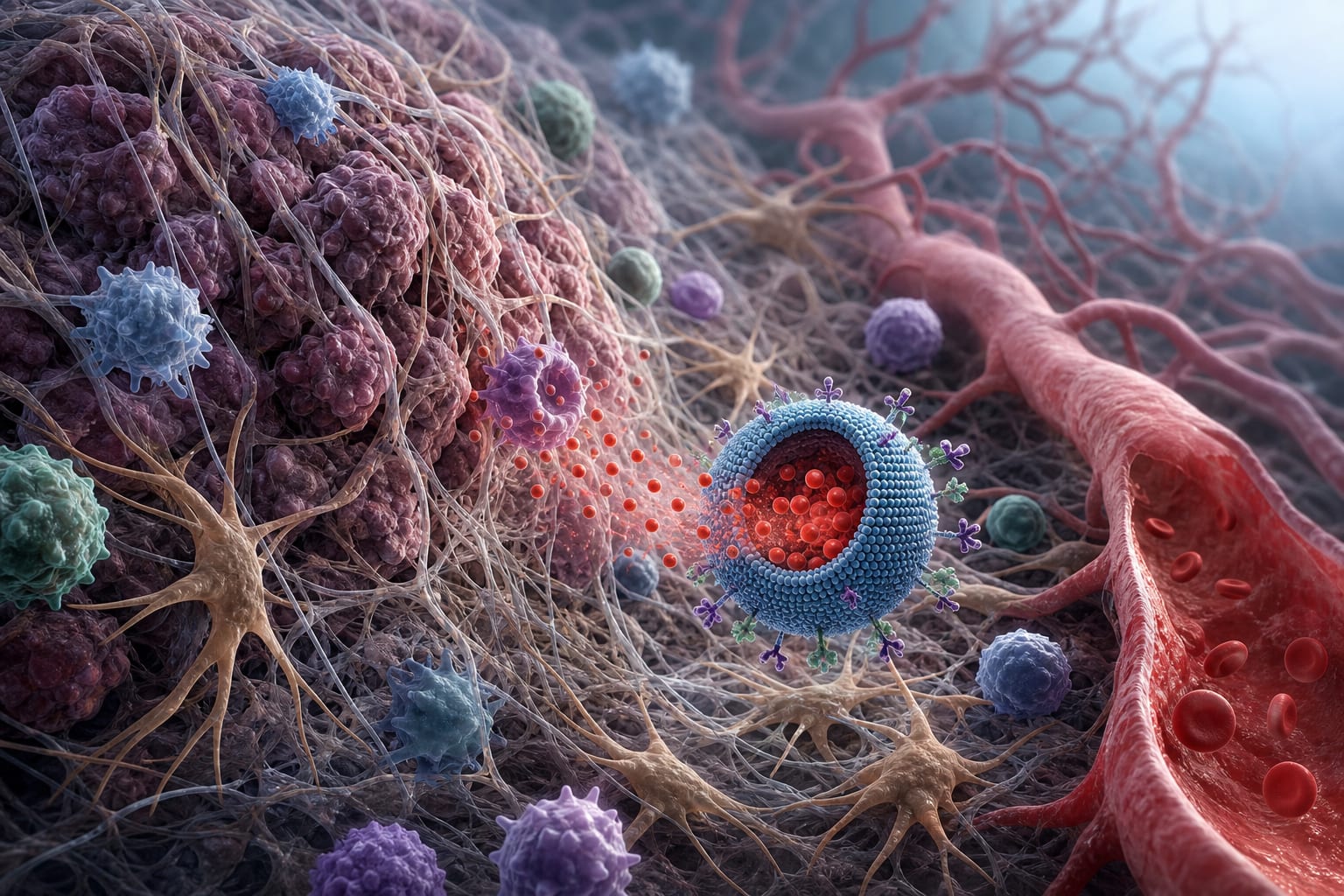
To discuss the role of the tumor microenvironment (TME) in chemoresistance and the potential of intelligent nanomedicine to overcome these challenges, specifically addressing barriers such as hypoxia and abnormal vasculature.
Approach:
Key Findings:
The TME contributes significantly to chemoresistance through barriers such as hypoxia, acidic pH, and abnormal vasculature, which impair drug delivery.
Intelligent nanomedicine can enhance drug delivery and penetrate the TME more effectively by utilizing stimuli-responsive mechanisms.
Nanocarriers can actively remodel the TME through immunomodulation and other mechanisms, improving therapeutic responses.
Interpretation:
The review highlights a shift in cancer treatment strategies from direct tumor cell eradication to modulation of the TME using advanced nanomedicine.
Limitations:
The review does not provide specific clinical trial data or outcomes related to the discussed nanomedicine approaches.
Potential challenges in the translation of these nanomedicine strategies to clinical practice are not fully addressed, including potential side effects.
Conclusion:
Intelligent nanomedicine represents a promising approach to enhance cancer therapy by targeting and transforming the TME, ultimately improving therapeutic efficacy.