Comparison of ultrasound-guided percutaneous radiofrequency ablation and reoperation for nerve-adjacent cervical lymph node recurrence of papillary thyroid carcinoma: a propensity score–matched study - Summary - MDSpire
Advertisement
Comparison of ultrasound-guided percutaneous radiofrequency ablation and reoperation for nerve-adjacent cervical lymph node recurrence of papillary thyroid carcinoma: a propensity score–matched study
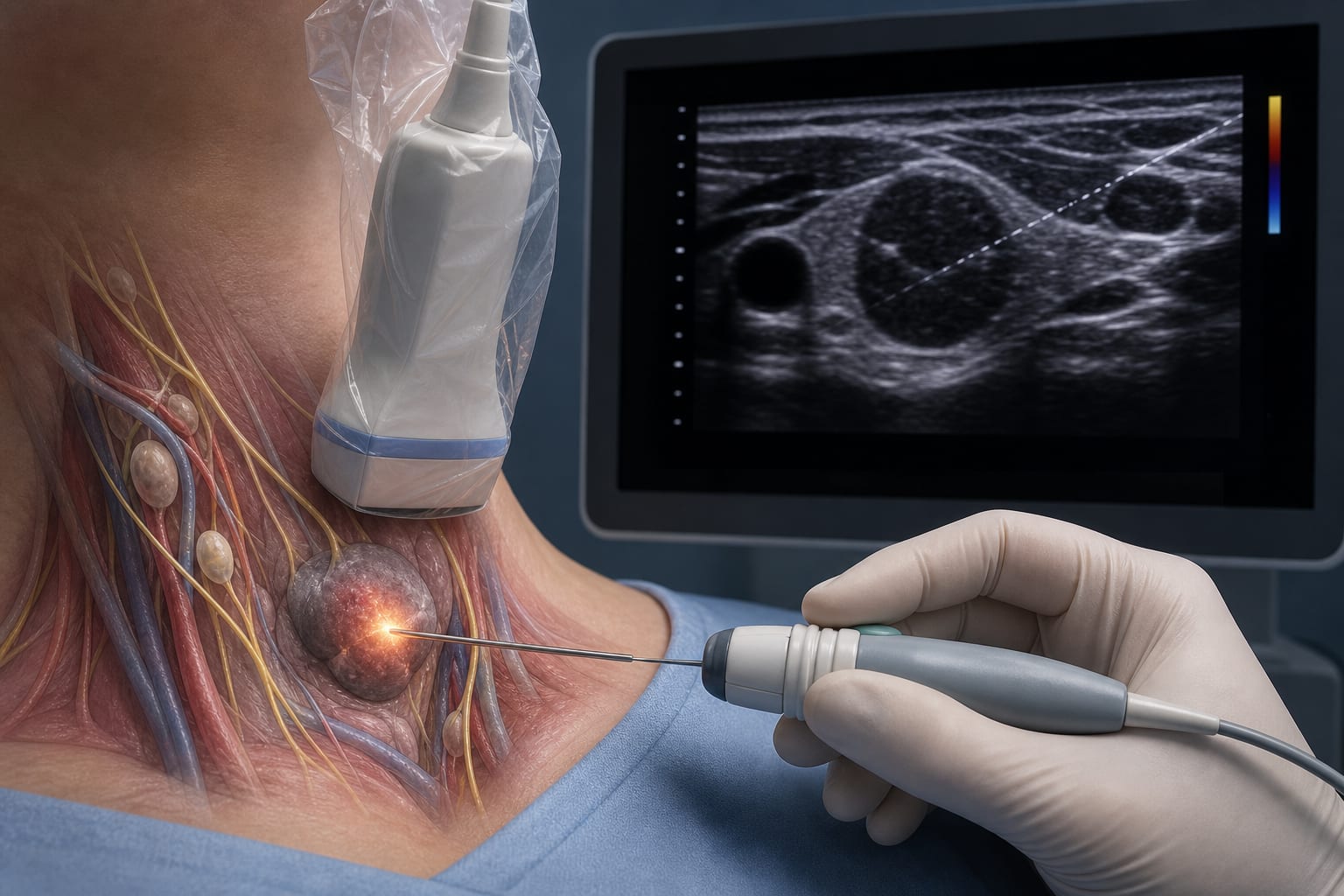
To compare the short-term efficacy and safety of ultrasound-guided percutaneous radiofrequency ablation (RFA) and reoperation (RO) for recurrent papillary thyroid carcinoma presenting as solitary cervical lymph node metastasis (R-PTC-SCLNM) located in perineural regions (PNRs).
Approach:
Key Findings:
In the RFA group, the mean volume reduction ratio (VRR) at 24 months was 0.97 ± 0.04, with 42.3% of metastatic lymph nodes completely disappearing.
No significant difference in overall local recurrence rates between RFA and RO groups.
RFA group had significantly lower overall complication rates compared to RO (P<0.001), including nerve-related (P=0.009) and non-nerve-related complications (P=0.002).
RFA associated with shorter procedure time, shorter hospital stay, less intraoperative blood loss, and smaller postoperative scar length (all P<0.001).
Interpretation:
In carefully selected patients with nerve-adjacent R-PTC-SCLNM, RFA demonstrated acceptable short-term local control and a minimally invasive profile characterized by faster recovery and a lower complication burden.
Limitations:
Retrospective design may introduce selection bias.
Limited sample size may affect generalizability of results.
Conclusion:
RFA may serve as a potential treatment option for patients who are unsuitable for or unwilling to undergo reoperation.