Interleukin−1 receptor antagonist and heat shock protein 90alfa are independently associated with fatigue and general health in euthyroid Hashimoto’s thyroiditis
By
Roald Omdal
Tore Grimstad
Grete Jonsson
Jan Terje Kvaløy
Charlotte Gibbs
Laurens C. Reitsma
Tomm Bernklev
Geir Hoff
July 2, 2026
Objective: To examine the associations of specific inflammatory mediators with patient-reported outcomes in euthyroid patients with Hashimoto’s thyroiditis.
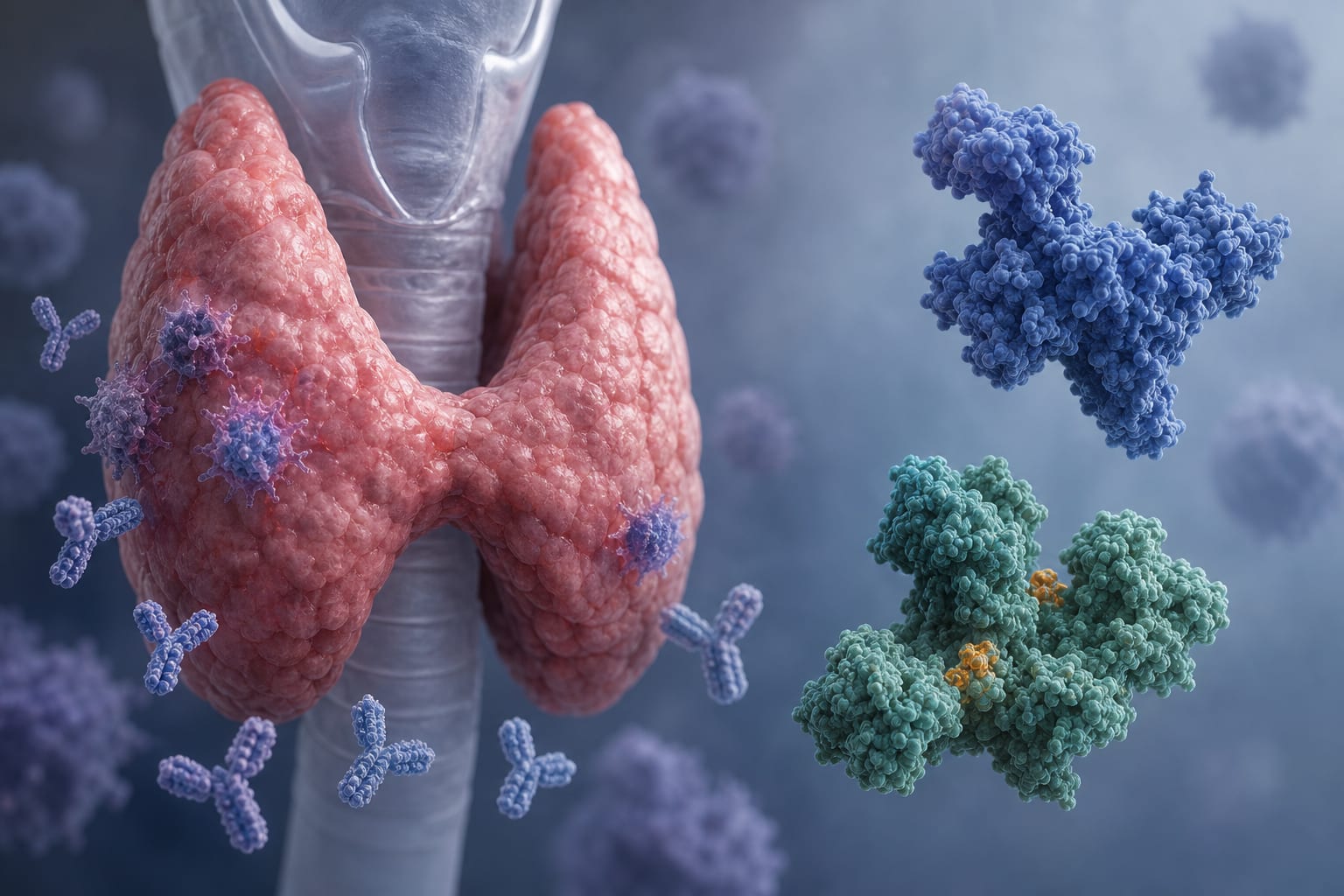
Approach: Study Design: Cross-sectional study of 36 euthyroid patients with confirmed Hashimoto’s thyroiditis.Biomarker Measurement: Serum/plasma levels of IL-1Ra, HSP90α, IL-6, TNF-α, and anti-TPO were measured.Patient-Reported Outcomes: PROMs included SF-36 General Health subscale, Fatigue Visual Analog Scale, and Fatigue Severity Scale.Statistical Analysis: Spearman correlations, univariable and multivariable linear regression, and principal component analysis were applied.Key Findings: Patients exhibited severe fatigue with median fVAS 85, FSS 6.7, and SF-36 GH 16, as determined by statistical analysis. IL-1Ra was consistently associated with poorer general health and increased fatigue across all regression models. HSP90α showed an inverse association with fatigue in multivariable models. IL-6 was correlated with fatigue, while TNF-α and anti-TPO showed no significant associations. Interpretation: IL-1Ra and HSP90α are independently associated with fatigue and general health in euthyroid Hashimoto’s thyroiditis.
Limitations: Small sample size of 36 patients may limit generalizability. Cross-sectional design does not establish causality. Conclusion: IL-1Ra and HSP90α are significant biomarkers related to fatigue and health in euthyroid patients with Hashimoto’s thyroiditis.