To present a case of acetaminophen overdose with uncertain timing and reported doses, emphasizing the importance of measured acetaminophen concentrations and the educational value of interpreting these concentrations in overdose scenarios.
Approach:
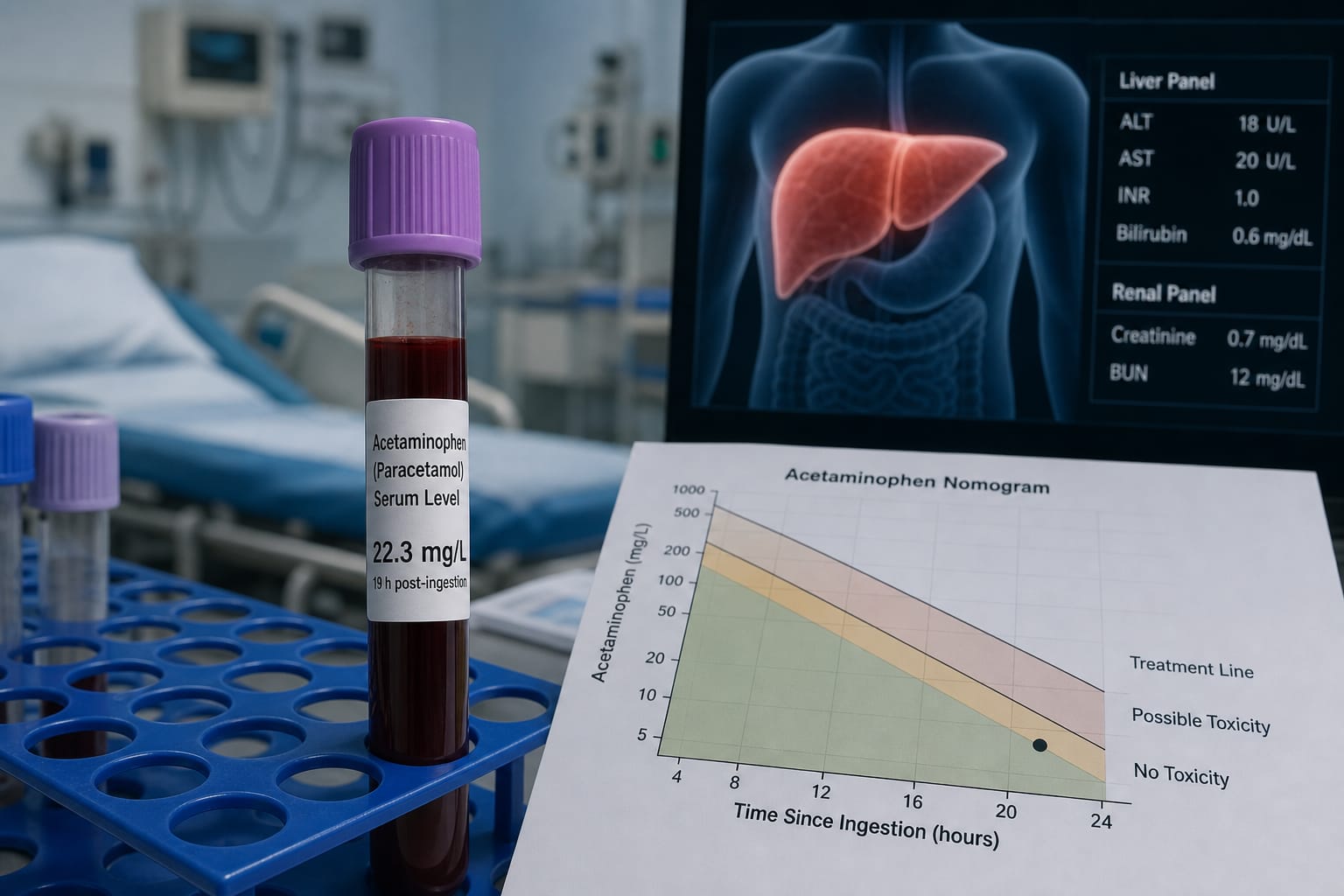
Case Presentation: A 16-year-old male ingested acetaminophen and multiple NSAIDs for dental pain, with a measured acetaminophen concentration of 22.3 mg/L 19 hours post-ingestion, prompting N-acetylcysteine treatment.
Laboratory Assessment: Initial tests showed normal aminotransferases and elevated alkaline phosphatase and bilirubin, indicating no immediate liver injury despite the acetaminophen concentration.
Key Findings:
The patient's reported acetaminophen intake of 6,000 mg was below the toxic threshold, yet the measured concentration was clinically relevant, indicating a need for careful assessment.
Normal aminotransferases at presentation indicated no acute liver injury.
The case highlights the discordance between reported doses and measured acetaminophen concentrations in overdose scenarios, which can complicate clinical decision-making.
Interpretation:
The measured acetaminophen concentration was clinically significant despite the reported dose being below the toxic threshold, suggesting the need for careful evaluation of ingestion history.
Limitations:
The exact timing and distribution of doses could not be confirmed.
Hyperbilirubinemia may have caused a falsely elevated acetaminophen concentration, complicating the interpretation of the measured level.
Conclusion:
This case underscores the need for careful interpretation of acetaminophen concentrations in the context of uncertain ingestion history.