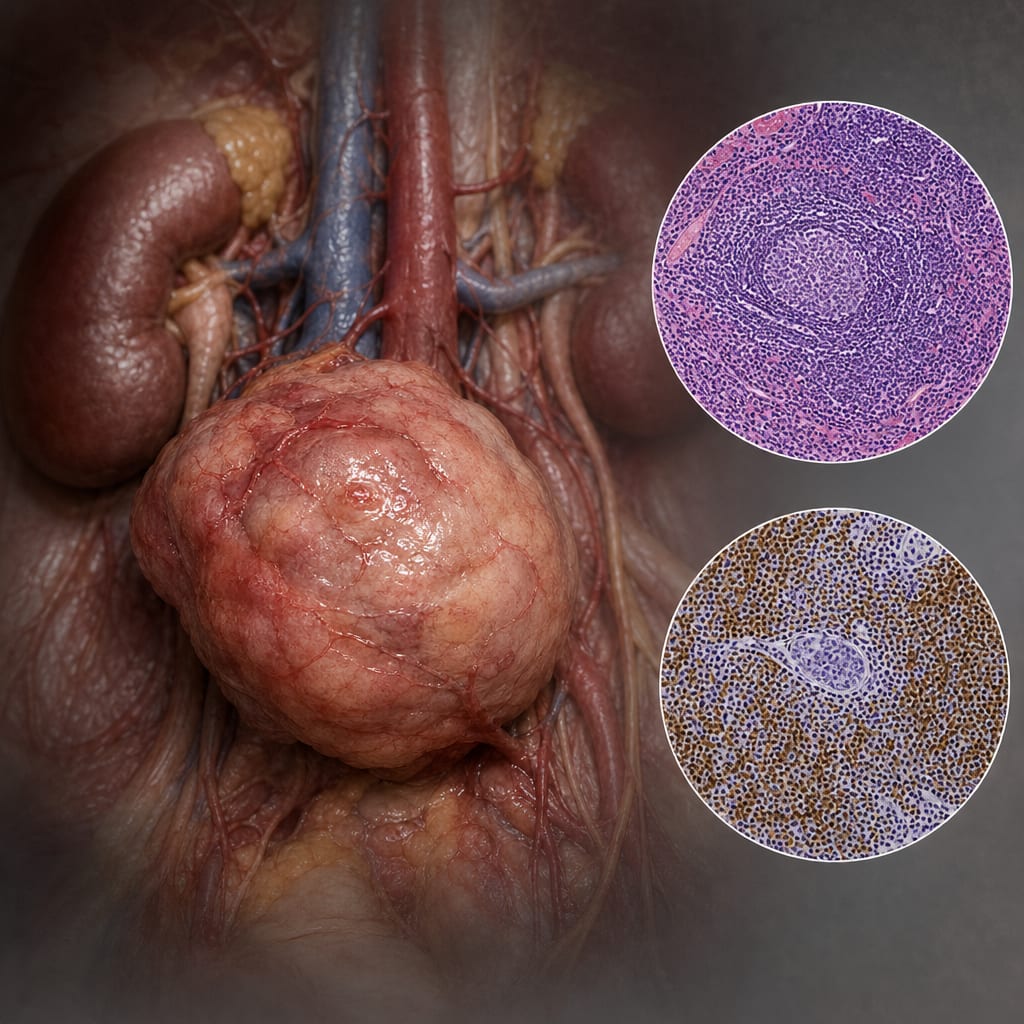
To improve the comprehension, identification, and treatment of retroperitoneal mixed type unicentric Castleman disease, highlighting its clinical significance.
Key Findings:
The patient had a retroperitoneal tumor diagnosed as mixed type unicentric Castleman disease, emphasizing the need for careful differential diagnosis.
Histopathological features included expanded follicular mantles and interfollicular plasma cell infiltrate, which are critical for understanding the disease.
The condition is rare and often misdiagnosed due to nonspecific clinical presentations, highlighting the importance of clinician awareness.
Interpretation:
Recognition of retroperitoneal mixed type unicentric Castleman disease is essential due to its unique characteristics and potential for misdiagnosis, necessitating increased clinician awareness.
Limitations:
The case study is based on a single patient, limiting generalizability and potential biases in reporting.
Preoperative diagnosis of unicentric Castleman disease can be challenging due to its nonspecific symptoms.
Conclusion:
Increased awareness and understanding of retroperitoneal mixed type unicentric Castleman disease are necessary for accurate diagnosis and treatment, and further research is encouraged.