To evaluate the safety and mid-term outcomes of strictureplasty for primary proximal duodenal Crohn’s disease.
Approach:
Study Design: Retrospective single-center case series reviewing electronic medical records of patients who underwent strictureplasty for primary duodenal CD.
Inclusion Criteria: Patients aged 16–65 years with an established diagnosis of Crohn’s disease and primary proximal duodenal lesions confirmed by various assessments.
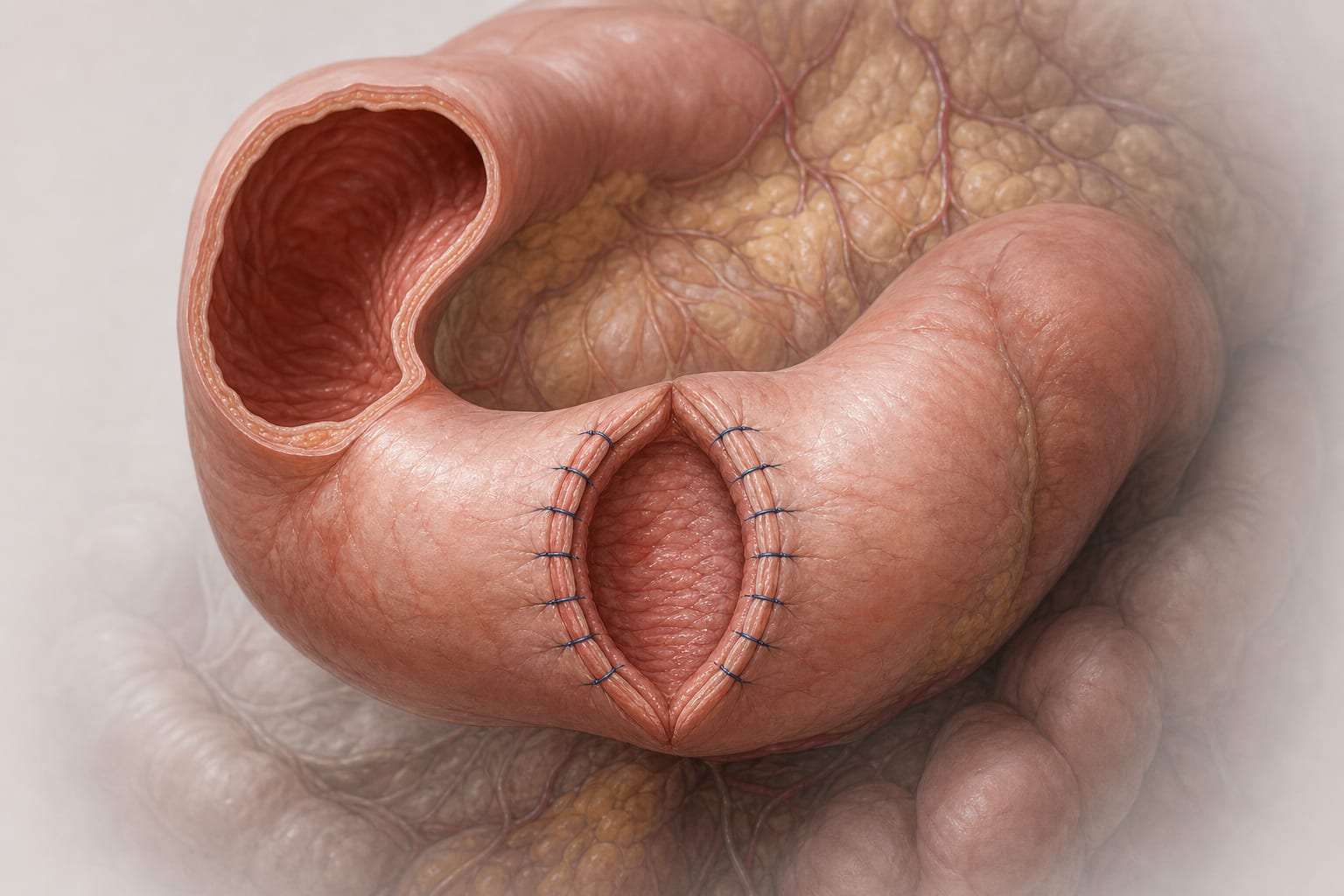
Surgical Techniques: Strictureplasty techniques used included Heineke-Mikulicz for strictures < 5 cm and Finney for strictures 5–10 cm.
Postoperative Care: Emphasized early recovery, close monitoring for complications, and enteral nutrition initiation on postoperative day 2.
Key Findings:
Strictureplasty is a bowel-sparing procedure effective for treating fibrotic strictures in proximal duodenal Crohn’s disease according to the study.
The study provides evidence on the safety and mid-term outcomes of strictureplasty in this uncommon clinical scenario.
Interpretation:
Limitations:
Retrospective design may introduce selection bias.
Single-center study limits generalizability of results.
Conclusion:
Strictureplasty is reported to be a safe and effective intervention for patients with primary proximal duodenal Crohn’s disease based on the study findings.