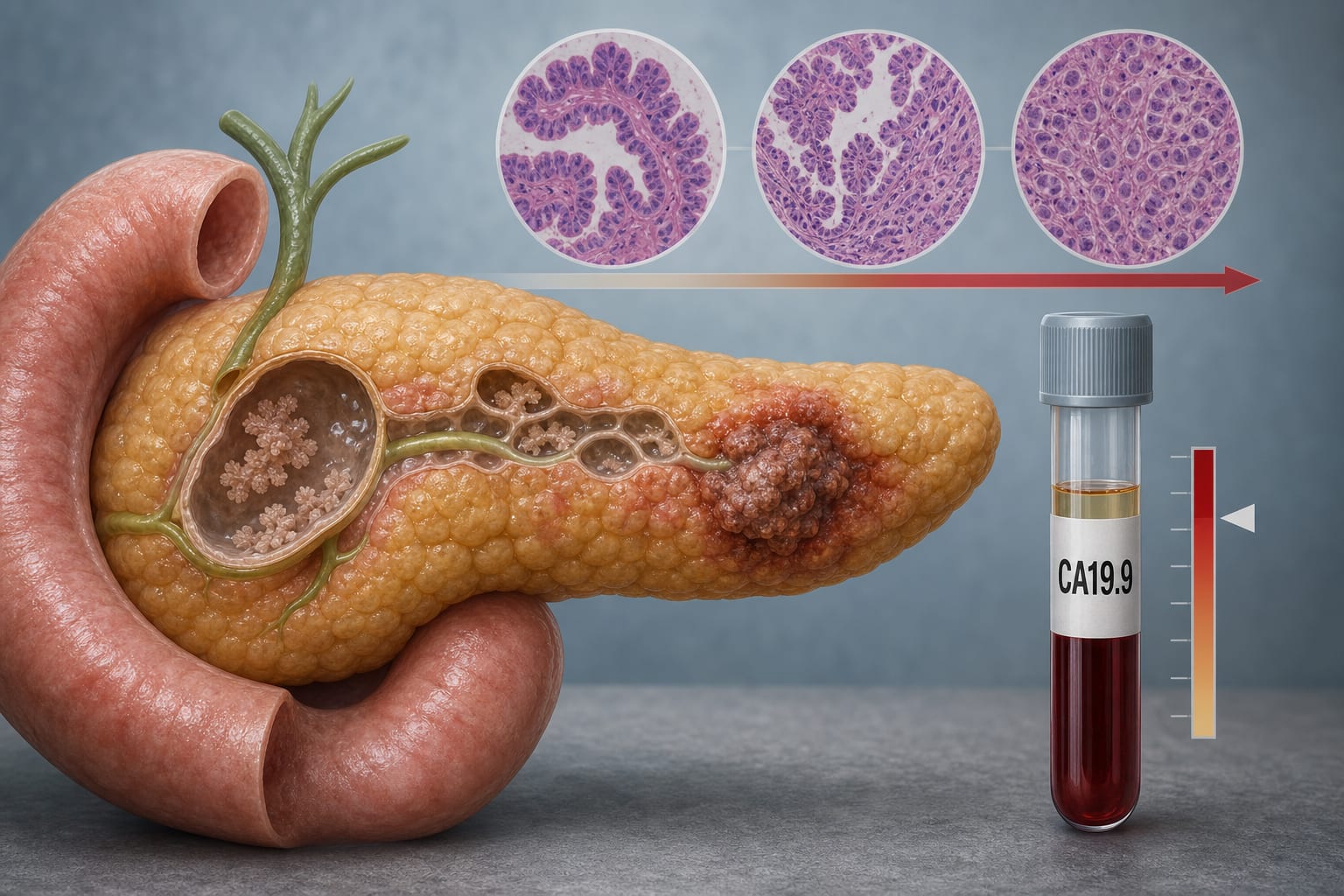
To evaluate the diagnostic accuracy of serum CA19.9 levels at a cutoff of 37 U/mL for identifying high-grade dysplasia (HGD) and invasive carcinoma (IC) in patients with intraductal papillary neoplasms (IPMN).
Approach:
Study Design: A systematic review and meta-analysis were conducted, registered with PROSPERO and adhering to PRISMA-DTA guidelines.
Literature Search: A systematic search was performed in PubMed, Embase, and Web of Science databases to identify relevant studies.
Eligibility Criteria: Included studies reported on at least 25 patients with IPMN who underwent surgery and provided primary diagnostic test accuracy estimates.
Data Extraction: Data were independently extracted by multiple reviewers, with disagreements resolved through consensus.
Bias Assessment: Risk of bias was assessed using the QUADAS-2 tool, and the certainty of evidence was evaluated using the GRADE approach.
Statistical Analysis: Pooled estimates of sensitivity, specificity, and other diagnostic metrics were calculated using statistical software.
Key Findings:
A total of 24 studies involving 5281 patients were included in the analysis.
Mean age of participants was 64.7 years, with 55.3% being male.
20.8% of patients had elevated serum CA19.9 levels (≥37 U/mL).
41.7% of patients had final histological findings of HGD or IC.
The sensitivity of CA19.9 for detecting HGD or IC was 0.35, and the specificity was not provided.
Interpretation:
The sensitivity of CA19-9 for detecting HGD or IC was 0.35, indicating limited effectiveness in identifying these conditions.
Limitations:
All included studies were retrospective, which may introduce selection bias.
Current recommendations for CA19.9 use are primarily based on retrospective surgical case series, which may not accurately reflect the diagnostic performance.
Conclusion:
The diagnostic accuracy of serum CA19.9 levels for identifying HGD and IC in patients with IPMN remains uncertain.
by Charlotte A. Leseman, Alessandro M. Bonomi, Job Schuitema, Stefano Granieri, Margaret Sällberg Chen, Ajay V. Maker, Zeeshan Ateeb, Laura D. Wood, Rogier P. Voermans, Giovanni Marchegiani, Marco Del Chiaro, Johannes C. F. Ket, Anne Marie Lennon, Marc G. Besselink, Global Evidence-Based Guidelines for the Management of Pancreatic Cystic Neoplasms Group