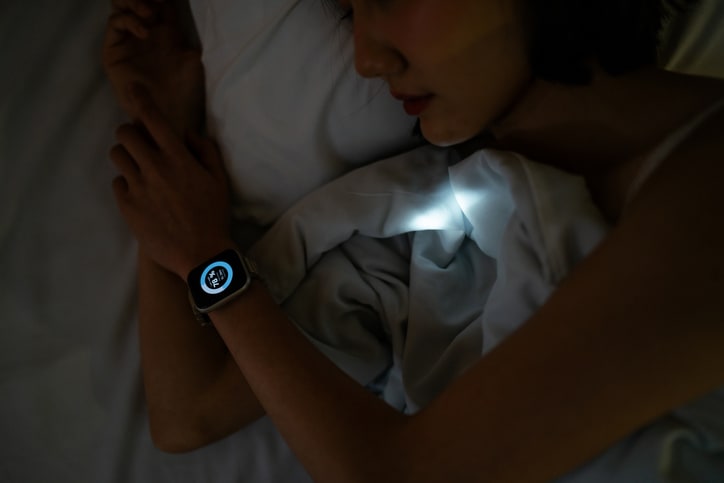
To evaluate the association of smartwatch-measured nighttime scratching with disease severity and clinical improvement in pediatric patients with atopic dermatitis, highlighting its potential significance.
Key Findings:
Moderate correlations were found between scratching metrics and baseline EASI (0.60 to 0.64), with correlations persisting post-treatment but weaker (0.43 to 0.47).
Declines in scratching correlated with clinical improvement (0.67 to 0.71), with a clearer distinction between pre- and post-treatment metrics.
SBI-based model distinguished clinically meaningful improvement with an AUC of 0.78, sensitivity of 75%, and specificity of 79%.
Associations with serum TARC were consistent with clinical severity (0.58 to 0.60).
Interpretation:
Wearable-derived nocturnal scratching metrics may serve as objective, treatment-responsive indicators of disease activity in atopic dermatitis, but further validation is necessary before clinical application, emphasizing the need for rigorous testing.
Limitations:
Small sample size and single-center design limit generalizability.
Short monitoring period of 1 to 2 weeks restricts long-term insights.
Observational design precluded causal inference.
Biomarker data collected at a single time point may not reflect changes over time.
Exploratory predictive models not externally validated limit reliability.
Conclusion:
While smartwatch metrics show promise as indicators of atopic dermatitis activity, further prospective validation is required for clinical use, which could significantly impact treatment strategies.