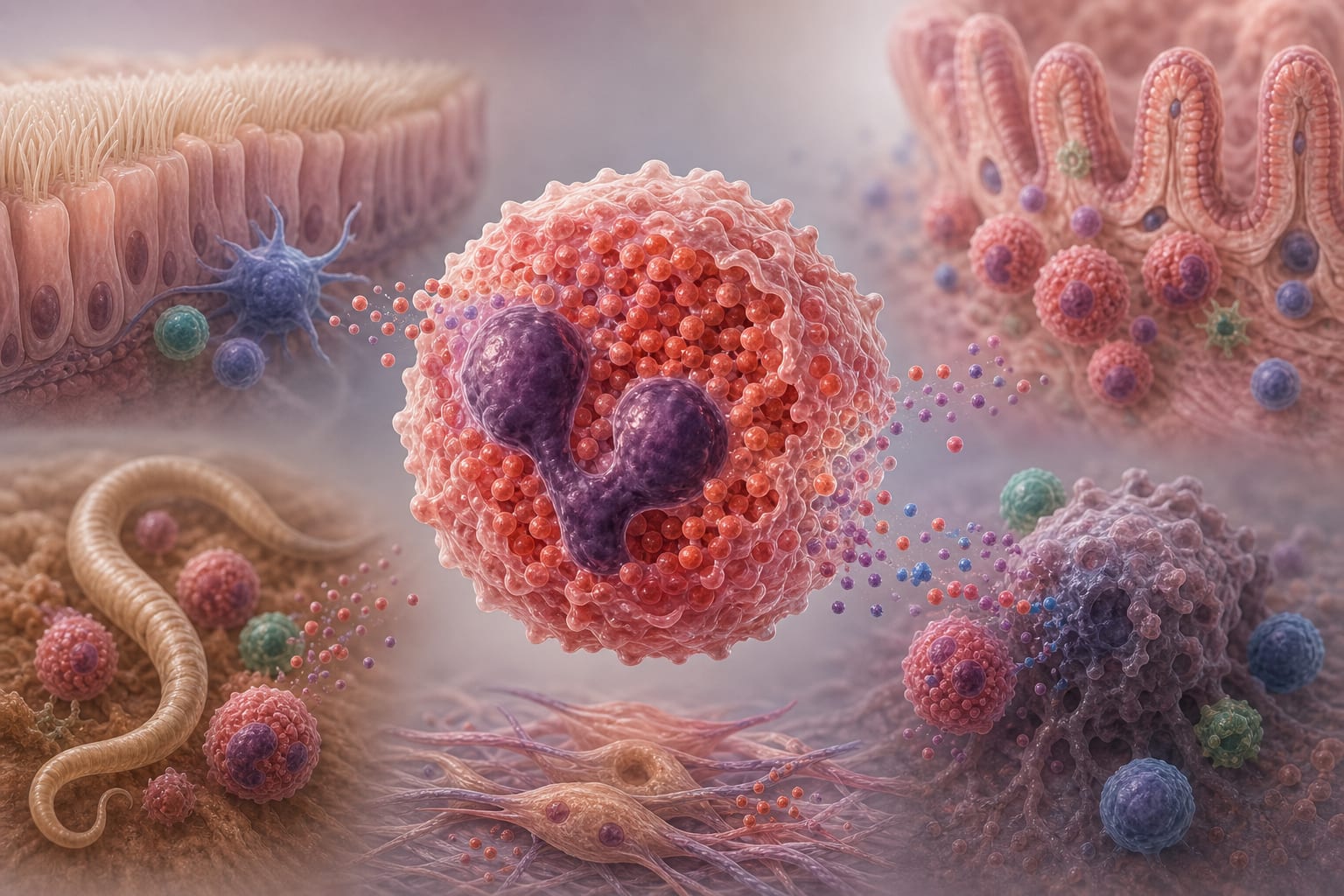
To evaluate the emerging roles of eosinophils in immune regulation across various health and disease contexts.
Approach:
Literature Review: A critical literature review summarizing traditional and emerging functions of eosinophils.
Key Findings:
Eosinophils are involved in both pro- and anti-inflammatory responses depending on the disease context.
They play significant roles in cancer, acting as both anti-tumorigenic and pro-tumorigenic mediators.
Eosinophils are implicated in tissue repair, regeneration, and various disorders including eosinophilic gastrointestinal diseases and SARS-CoV-2.
Interpretation:
Eosinophils have a complex role in immune modulation, extending beyond traditional Th2 responses to include diverse functions in health and disease.
Limitations:
The review does not provide exhaustive coverage of all eosinophil-related diseases.
Emerging roles are still being researched and may evolve with new findings.
Conclusion:
Eosinophils are an evolutionarily conserved cell lineage with critical functions in immune networks, warranting further exploration of their roles in various diseases.