A self-perpetuating neuron-intrinsic GSDMD–mtDNA–AIM2 inflammasome axis drives neuronal pyroptosis and cognitive impairment after traumatic brain injury
By
Tian Li
Siyu Huang
Junjun Zhang
Xueer Liu
Lihong Zhu
Yue Li
Runmin Lin
Xiaoxuan Chen
Kangsheng Li
Weiqiang Chen
Jiangtao Sheng
June 19, 2026
Objective: To define the role of the AIM2 inflammasome in neurons following traumatic brain injury (TBI) and its contribution to cognitive decline.
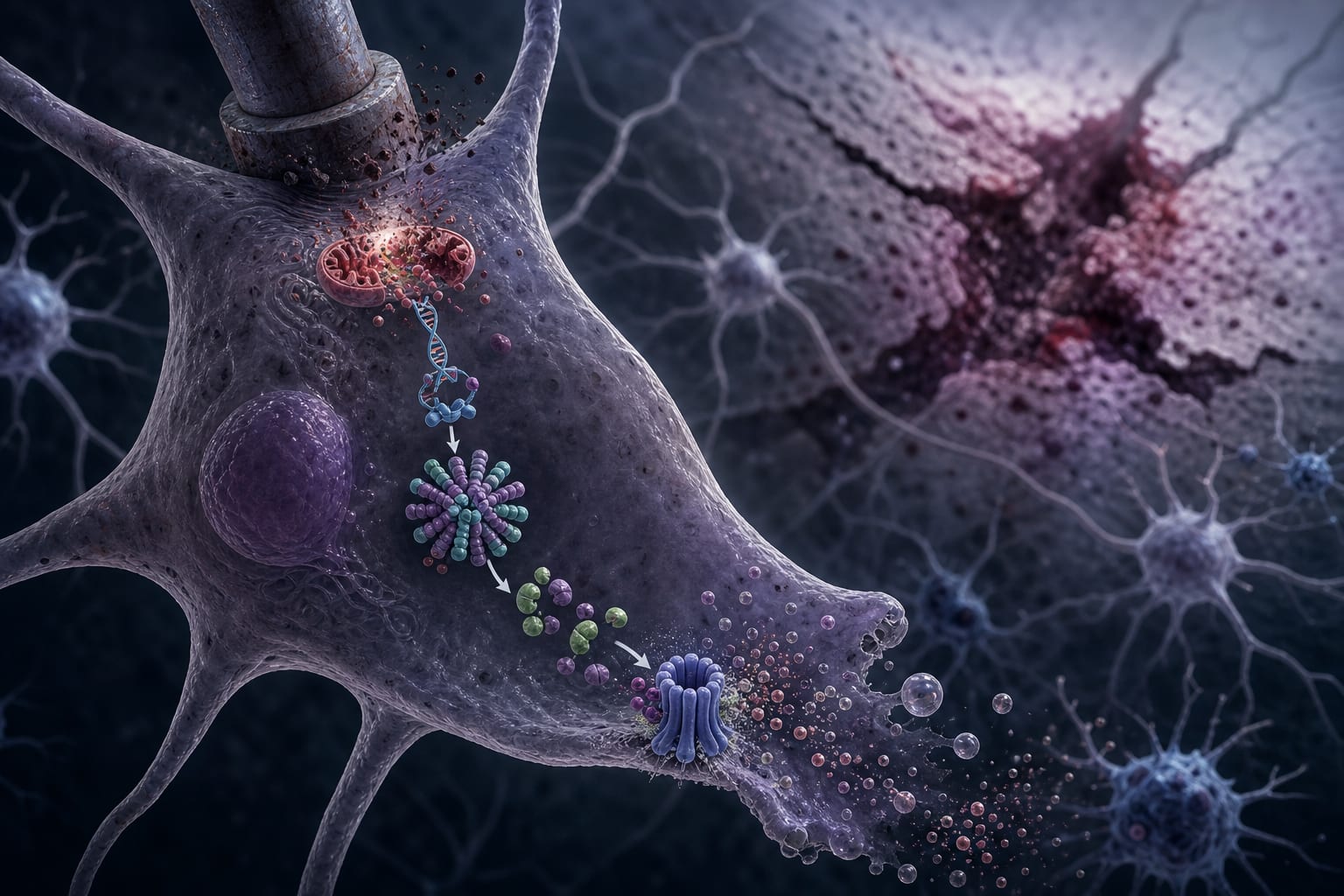
Approach: Key Findings: CCI activated the AIM2 inflammasome in cortical and hippocampal neurons, leading to neuronal pyroptosis and CA3 neuronal loss. AIM2 knockdown in CA3 neurons reduced neuronal loss and improved cognitive performance in behavioral tests. Mechanical injury caused early release of mitochondrial DNA (mtDNA) into the cytosol, activating the AIM2 inflammasome and promoting pyroptosis. GSDMD-NT fragments translocated to mitochondria, disrupting mitochondrial function and promoting further mtDNA leakage. Caspase-1 inhibition after injury suppressed a second wave of mtDNA release and attenuated late-phase neuronal damage. Interpretation: The study identifies a self-perpetuating GSDMD–mtDNA–AIM2 inflammasome pathway as a critical driver of cognitive decline following TBI.
Limitations: The study primarily uses animal models, which may not fully replicate human TBI responses. Further research is needed to explore the long-term effects of AIM2 inhibition on cognitive function. Conclusion: The findings highlight the importance of the neuron-intrinsic GSDMD–mtDNA–AIM2 axis in TBI-related cognitive decline.