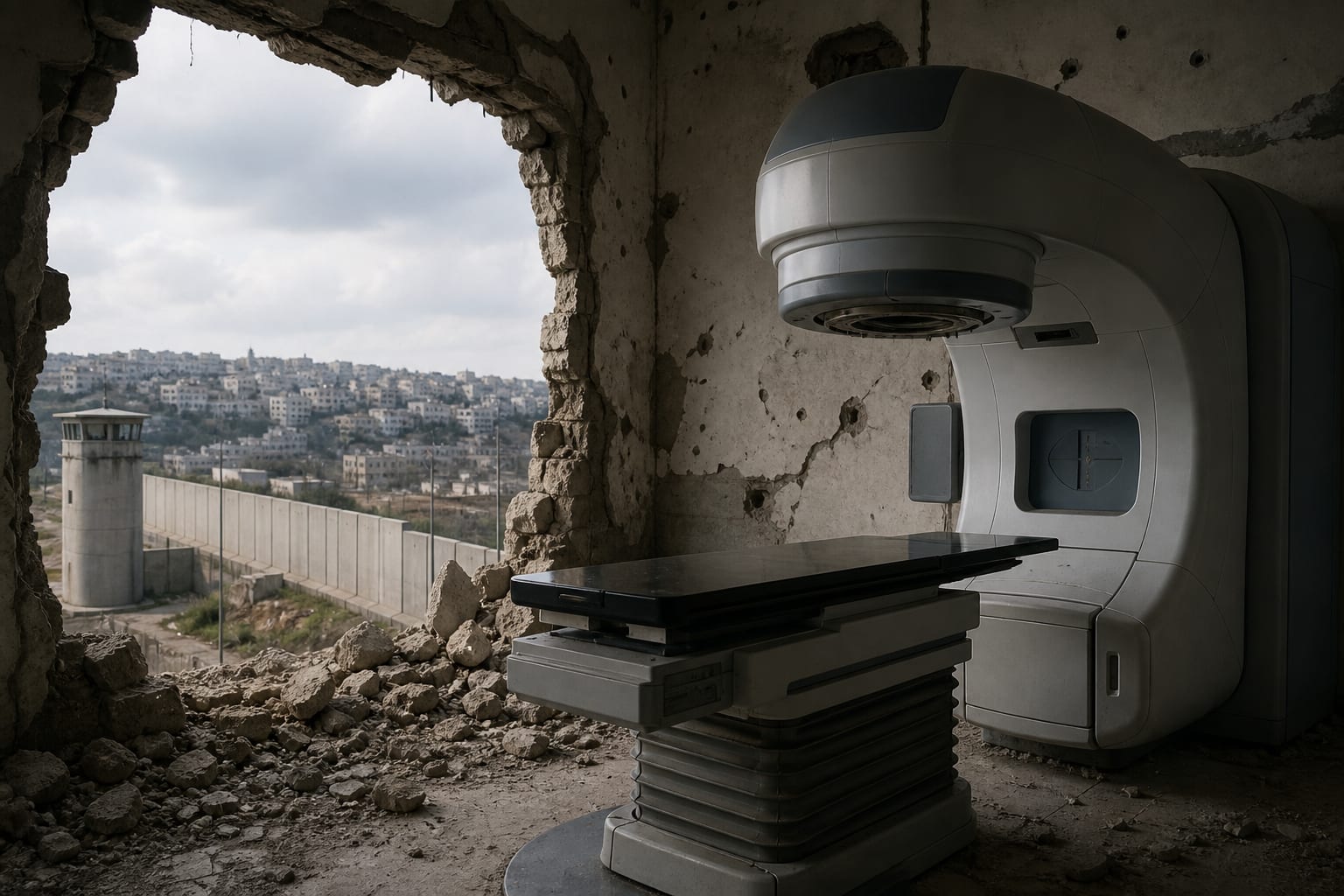
To analyze how occupation and conflict affect cancer care in Palestine, focusing on diagnosis, treatment continuity, and patients' rights.
Approach:
Framework Analysis: The review rejects the notion that occupation impacts health outcomes through a single pathway, instead highlighting the complex interplay of political control, governance, conflict, and fiscal crisis.
Comparative Study: Palestine is compared with historical and regional cases such as Japan, West Germany, East Timor, and Israel to contextualize its oncology challenges.
Evidence Gathering: Data was synthesized from peer-reviewed studies and institutional reports from various health organizations and governance indicators.
Key Findings:
Gaza lacks radiotherapy services, while the West Bank faces delays and restrictions in radiotherapy provision.
Access to oncology services collapsed after October 2023, exacerbated by shortages of medicines.
Patients' rights are compromised due to structural violence and governance issues under occupation.
Interpretation:
The analysis indicates that the oncology system in Palestine is impacted by ongoing occupation and conflict, leading to barriers in cancer diagnosis and treatment.
Limitations:
Incomplete cancer registration and under-ascertainment of incidence in Palestine.
Disruption in reporting systems, particularly in the Gaza Strip.
Conclusion:
The review highlights the need for strategies to protect cancer treatment and improve access to care in Palestine.
The goal of this clinical trial is to learn if Adaptive Radiation Therapy (ART) is safe and effective in treating patients with locally advanced pancreatic cancer.