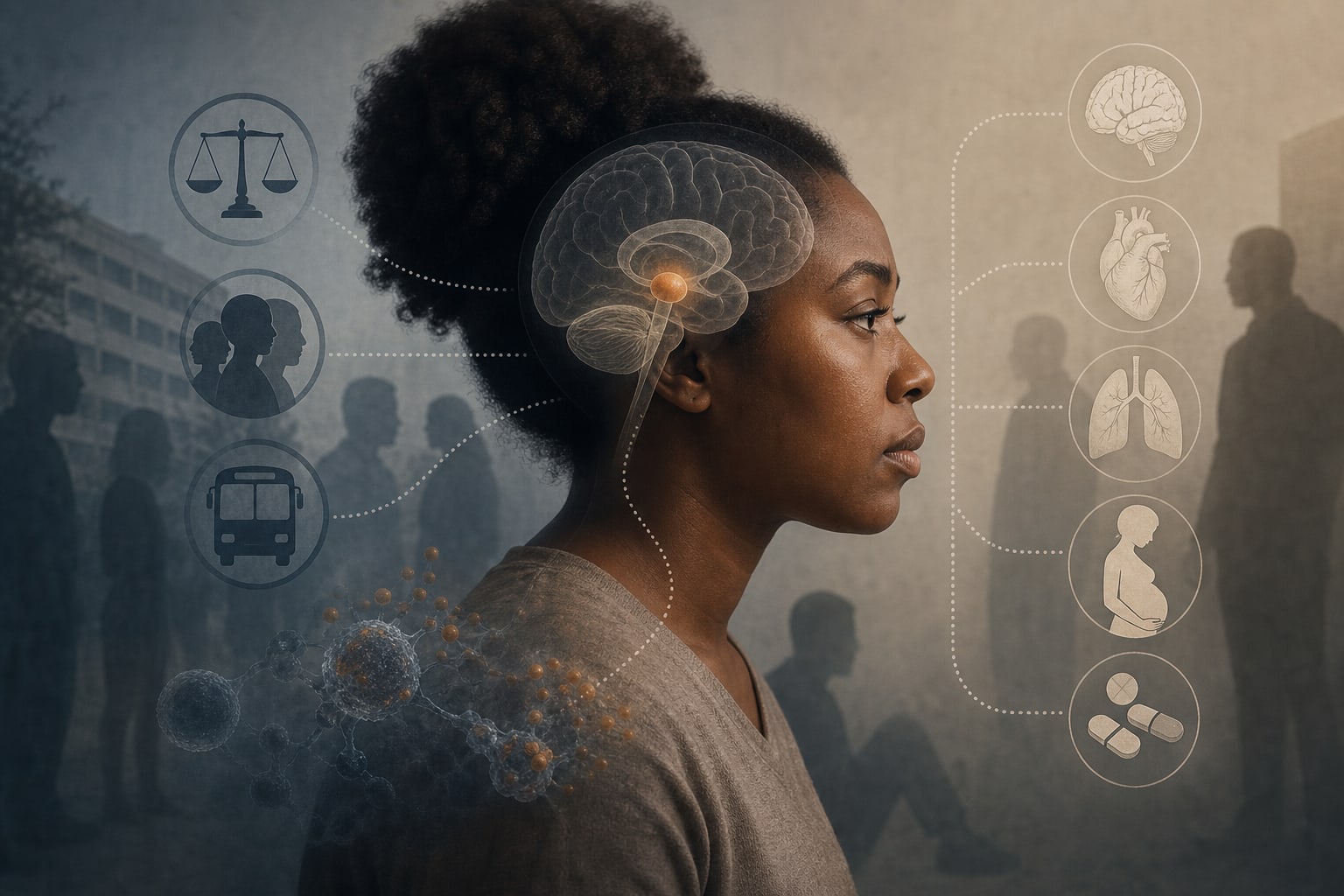
To overview the relationship between racial discrimination and health, highlighting recent research on mechanisms linking self-reported experiences of racial discrimination to health outcomes, including biological changes and chronic stress.
Approach:
Research Overview: The brief captures recent literature since 2015, including large-scale longitudinal studies and methodological advances examining biological changes linked to racial discrimination.
Key Findings:
Racial discrimination is associated with worse health outcomes across multiple domains, contributing to health disparities, particularly among Black and Hispanic populations.
Self-reported experiences of racial discrimination correlate with increased risks of chronic disease, such as cardiovascular disease, mental health disorders, substance use, adverse pregnancy outcomes like preterm births, and sleep problems.
Emerging studies suggest biological mechanisms, such as stress and inflammation, may mediate the health impacts of racial discrimination, including changes in brain structure and activity.
Interpretation:
Most studies relied on self-reported experiences of discrimination, which poses measurement challenges. Research primarily focused on Black populations, leaving gaps for other groups experiencing discrimination, such as Hispanic and Asian populations.
Limitations:
Challenges in measuring self-reported discrimination.
Limited focus on populations other than Black individuals, with a need for more research on Hispanic and Asian groups.
Mixed findings on protective social and coping factors against the negative effects of discrimination, indicating variability in study results.
Conclusion:
Future research may be constrained by reduced federal support for health disparities research due to recent policy changes, including executive orders that eliminate diversity, equity, inclusion, and accessibility initiatives.