Individualized physiological readiness over an admission-time denominator - a reply to comments on rapid sequence versus early surgical stabilization of severe chest wall injuries - Summary - MDSpire
Conexiant’s news site is now MDSpire News. Learn more
Advertisement
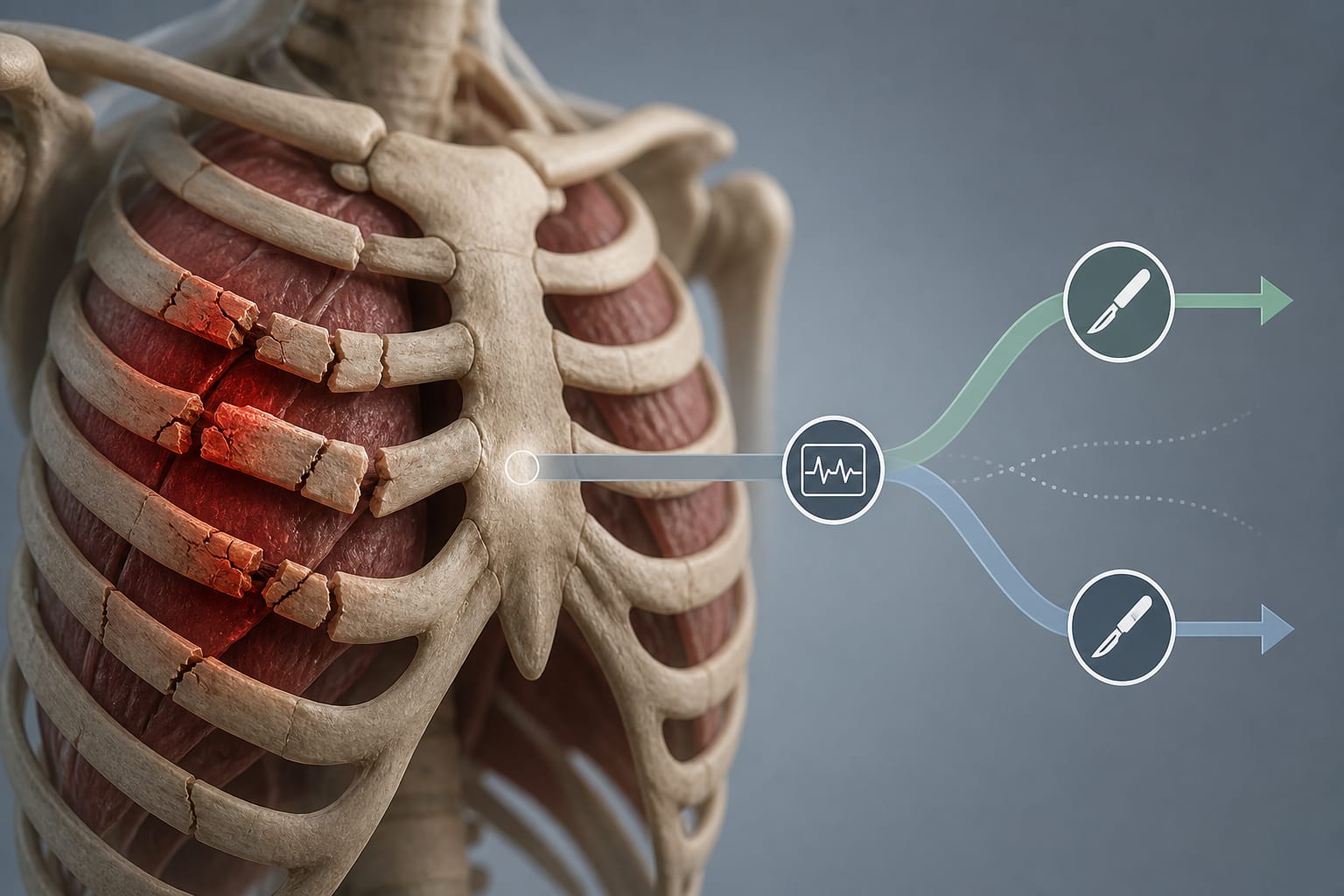
Tailored Physiological Readiness Based on Admission Timing - A Response to Discussions on Rapid Sequence Versus Early Surgical Stabilization for Severe Chest Wall Injuries
To address methodological concerns regarding the timing of chest wall reconstruction (CWR) and emphasize the importance of operative intent and physiological readiness.
Approach:
Methodological Emphasis: The authors advocate for target-trial emulation and eligibility defined at admission for registry-based investigations.
Confounding Factors: The authors discuss confounding by indication, survivorship bias, and limitations of the Revised Injury Severity Classification (RISC III).
Registry Constraints: The authors highlight challenges in defining CWR eligibility and physiological readiness within existing trauma registries.
Key Findings:
Day-0 CWR is not a homogeneous strategy and should be determined on a case-by-case basis.
Survivorship bias affects comparisons between Day-0 and Days 1-3 surgical interventions.
The current registry does not adequately capture the necessary data for effective analysis of CWR timing.
Interpretation:
The authors caution against interpreting mortality comparisons as causal treatment effects and emphasize the need for improved prospective study designs.
Limitations:
Residual unmeasured confounding cannot be eliminated.
Current registries lack detailed data on CWR eligibility and timing.
Retrospective assessments of physiological readiness are challenging.
Conclusion:
CWR should be individualized based on physiological stability and injury burden rather than arbitrary timing targets.