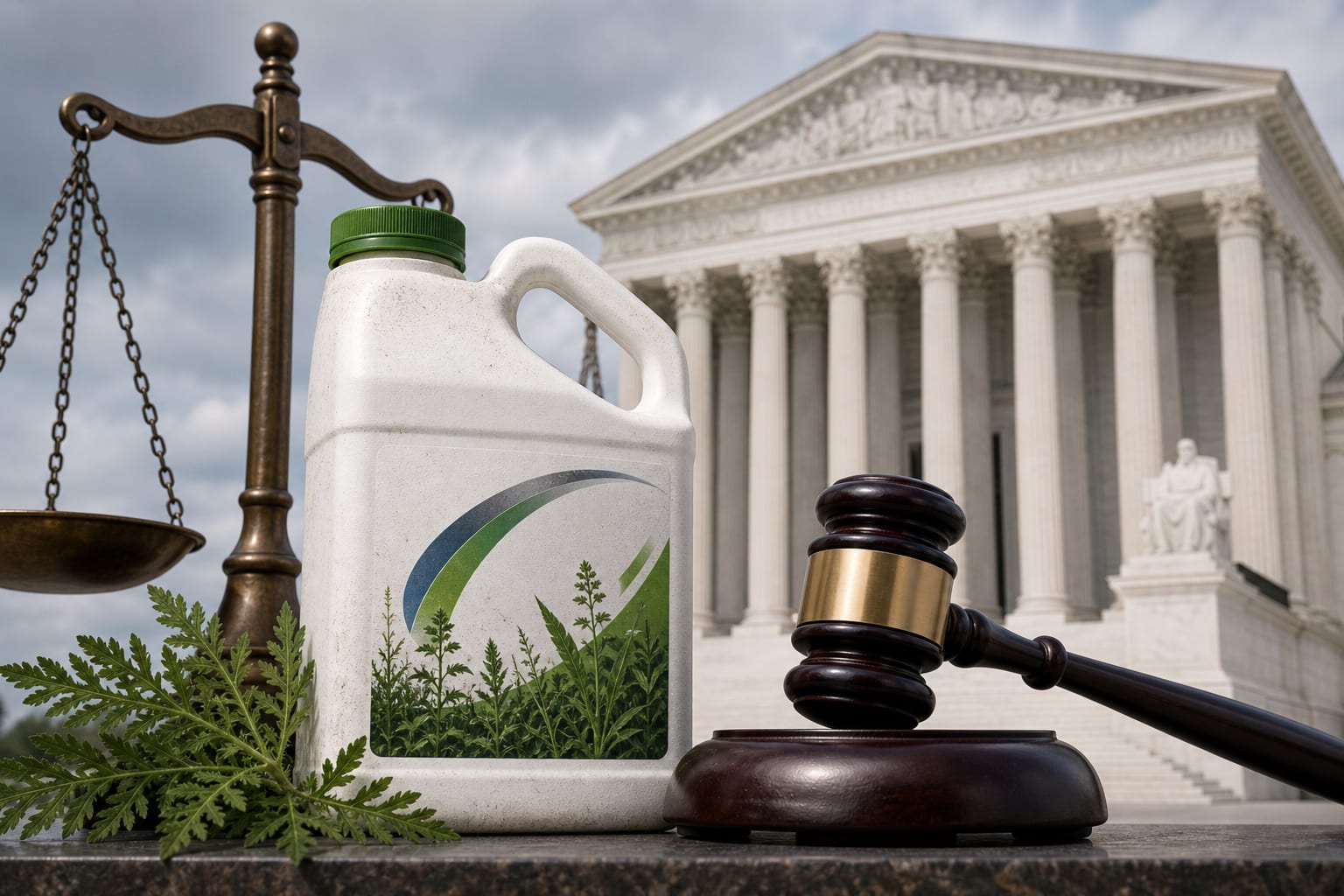
To summarize the Supreme Court's ruling regarding lawsuits against Bayer related to Roundup and its alleged cancer risks.
Approach:
Supreme Court Ruling: The Supreme Court ruled 7-2 that Bayer cannot face failure-to-warn lawsuits in state courts due to federal regulations.
Background of the Case: The case involved John Durnell, who developed non-Hodgkin’s lymphoma after using Roundup, leading to a jury award of $1.25 million.
Bayer's Position: Bayer argues that federal standards do not require a cancer warning label, and they plan to proceed with a $7.25 billion class-action settlement.
Opposition to the Ruling: Environmental groups and lawyers criticized the ruling, stating it limits access to justice for those harmed by pesticides.
Key Findings:
The Supreme Court's decision is expected to block thousands of lawsuits against Bayer related to failure-to-warn claims.
Bayer has set aside $16 billion for settlements and proposed a $7.25 billion class-action settlement to resolve many remaining claims.
The ruling may allow for other types of lawsuits against Bayer related to product design.
Interpretation:
The ruling has significant implications for ongoing litigation against Bayer and the regulatory landscape surrounding glyphosate.
Limitations:
The ruling does not address the safety of glyphosate or the validity of cancer claims.
It may not prevent future lawsuits based on different legal grounds.
Conclusion:
The Supreme Court's decision reinforces Bayer's legal standing against failure-to-warn claims while ongoing debates about glyphosate's safety continue.