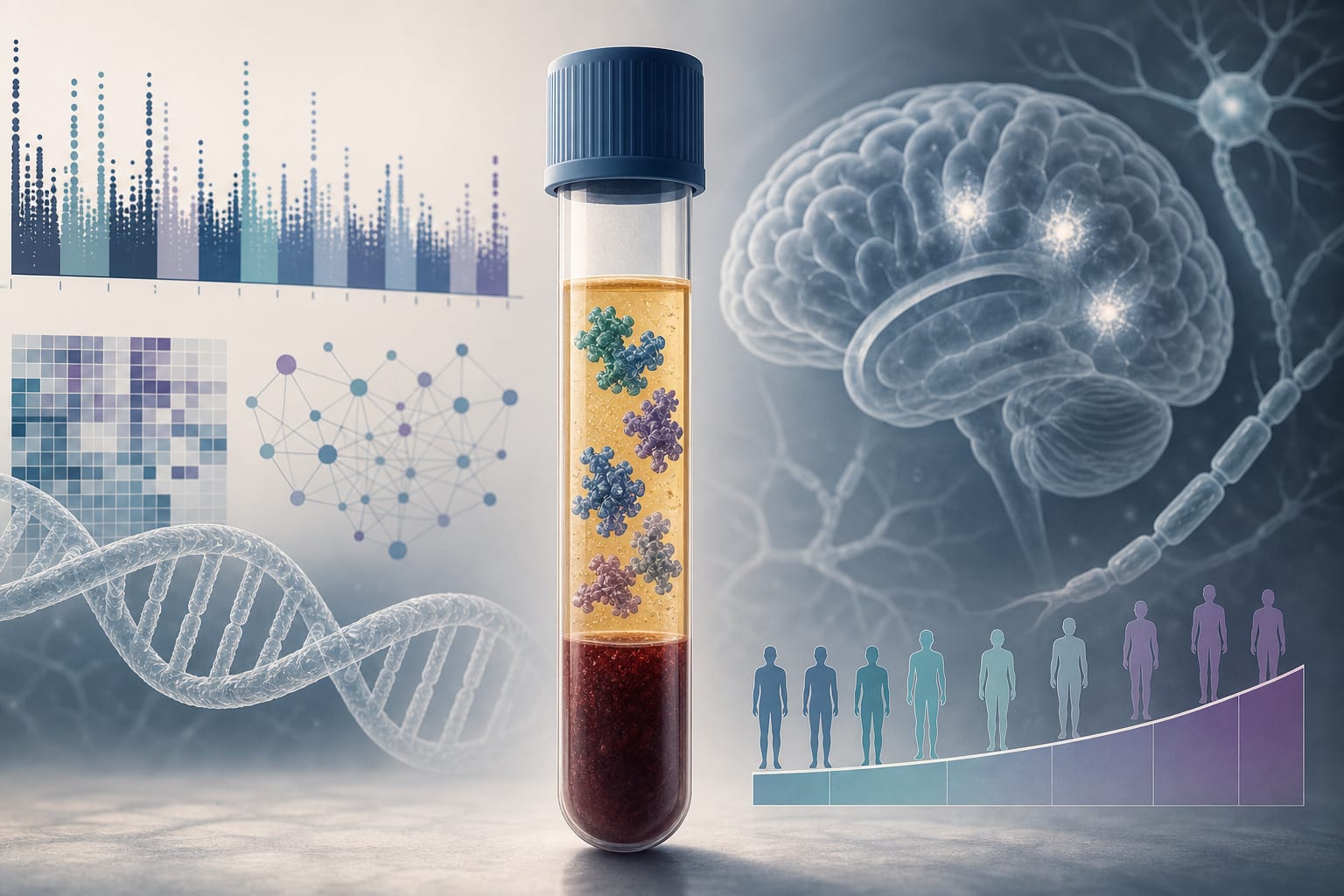
To identify plasma proteins causally implicated in multiple sclerosis (MS) using an integrated genetic-proteomic approach.
Approach:
Methodology: Utilized Mendelian randomization and colocalization to analyze 2,545 protein measurements from 3 cohorts, totaling 80,824 individuals, and assessed their association with MS in an independent set of 14,802 cases and 26,703 controls.
Key Findings:
Nominated 39 causal proteins associated with MS risk.
Validated predictive value of these proteins in individuals diagnosed with MS up to 15 years prior.
Identified DKKL1 as a candidate with protective effects on MS risk and severity.
Improved fine-mapping resolution by over 10-fold and identified novel MS risk loci.
Interpretation:
The findings refine genetic factors and pathways involved in MS onset and highlight protein biomarkers that may enhance early risk stratification and inform targeted therapies.
Limitations:
Discordance across proteomic platforms remains unresolved.
Prediagnostic validation has not been performed.
Relevance of identified proteins to disease severity is unclear.
Conclusion:
The integrated approach provides insights into causal proteins and genetic factors related to MS, potentially aiding in early detection and therapeutic strategies.
Dizziness is one of the most common yet complex complaints encountered across primary care, neurology, otolaryngology, and cardiology. It can present as vertigo, imbalance, or nonspecific lightheadedness. It can leave both patients and physicians searching for clear answers.