MSSA Bacteremia–Associated Staphylococcal Scalded Skin Syndrome in an Older Adult Resembling Toxic Epidermal Necrolysis
-
November 3, 2026
Objective:
To describe an older adult with SSSS and the diagnostic challenge of distinguishing it from toxic epidermal necrolysis.
Approach:
- Case: An 88-year-old woman with untreated diffuse large B-cell lymphoma presented with fever and rapidly spreading superficial desquamation. Mucous membranes were spared.
- Diagnostic evaluation: Blood cultures, skin biopsy, and clinical examination were used to distinguish SSSS from SJS/TEN and bullous pemphigoid.
- Treatment: After empirical vancomycin and ceftriaxone, therapy was narrowed to oxacillin and then cefazolin, alongside wound care, pain control, and nutritional support.
Key Findings:
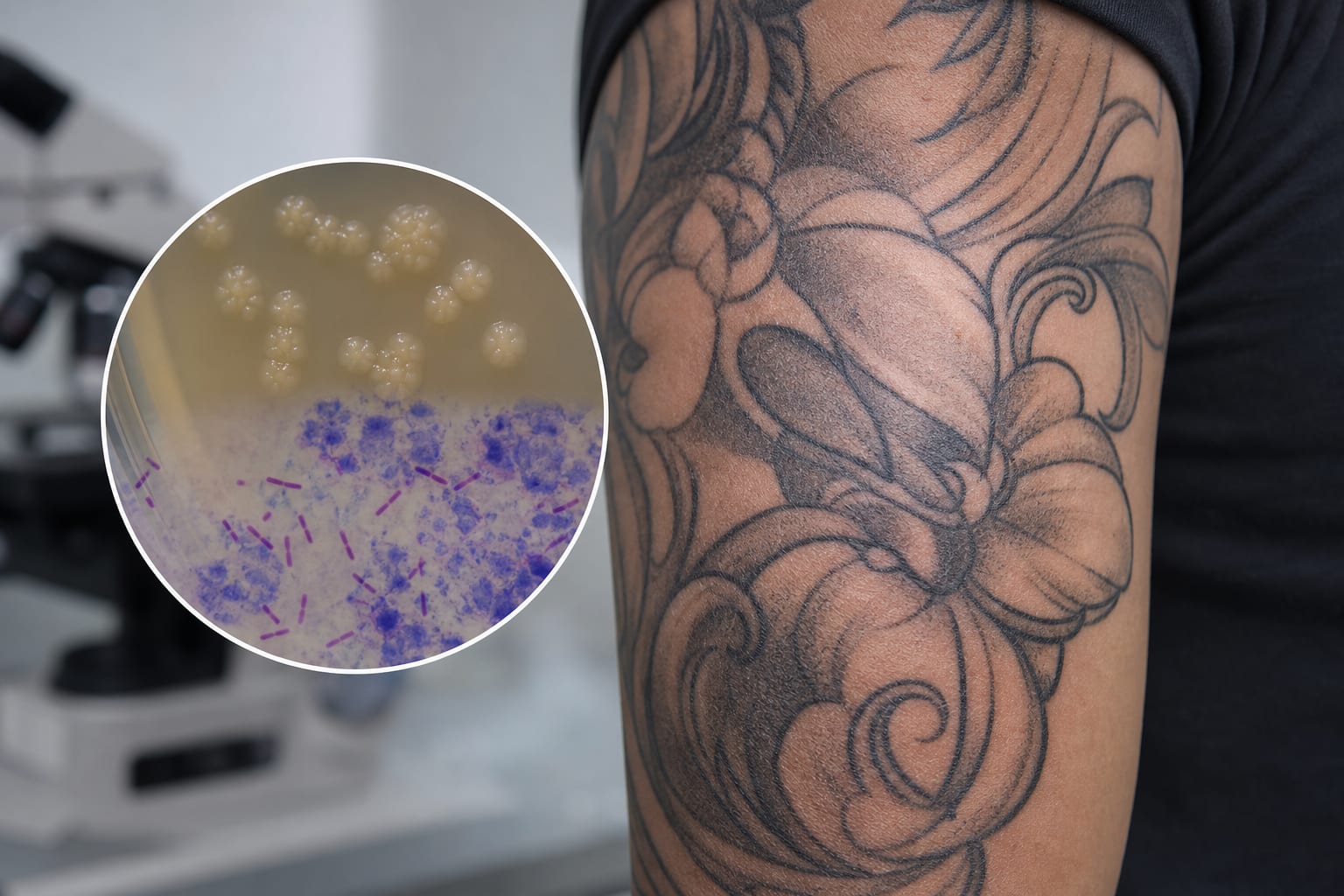
- Blood cultures grew methicillin-sensitive Staphylococcus aureus (MSSA).
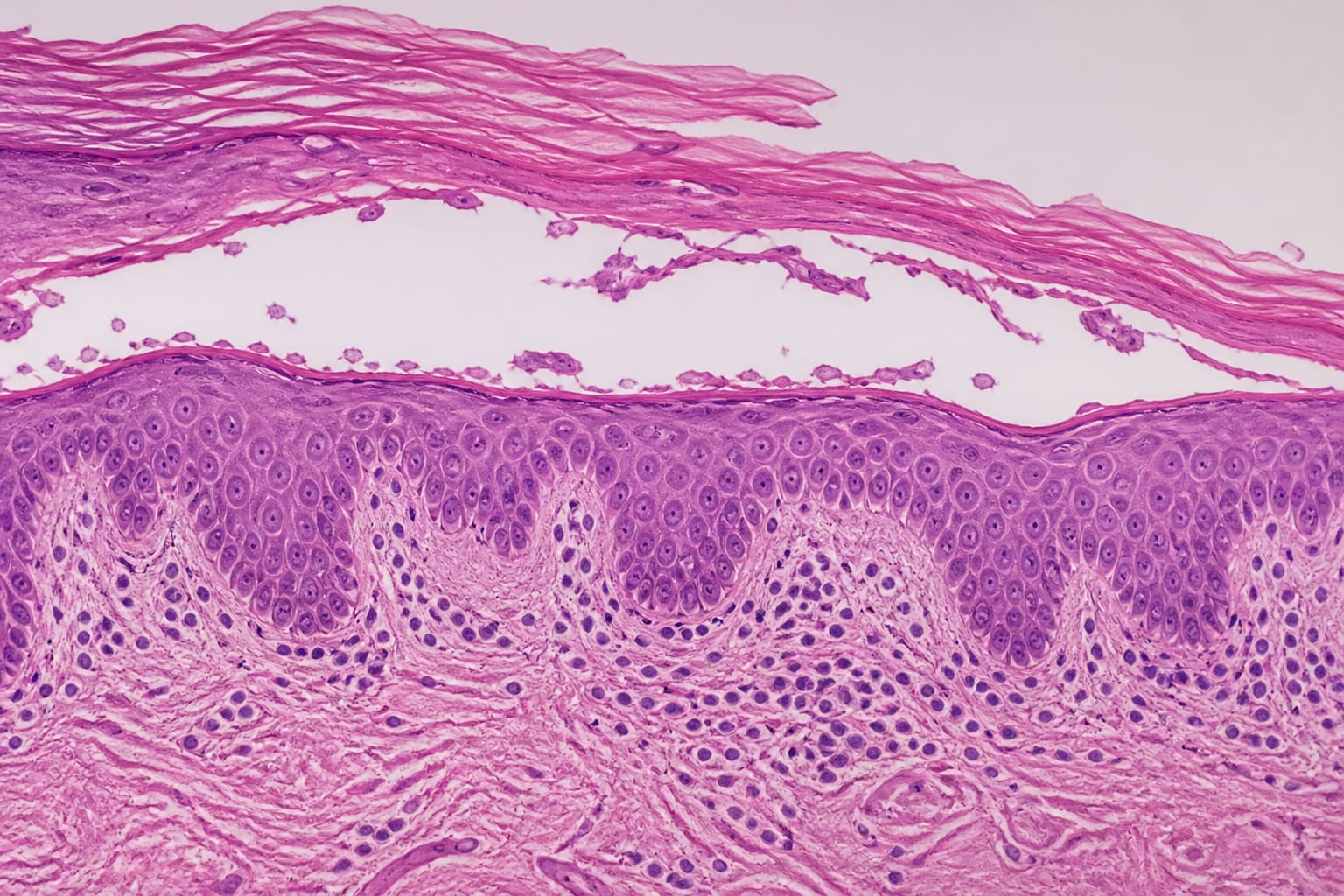
- Skin biopsy showed intraepidermal cleavage and subcorneal splitting, findings consistent with SSSS.
- Mucosal sparing and superficial desquamation supported SSSS, while the patient’s advanced age heightened concern for TEN.
- The patient improved with targeted antibiotics and supportive care, with progressive re-epithelialization.
Interpretation:
The authors report that mucosal sparing, MSSA bacteremia, and biopsy findings together established SSSS despite its clinical resemblance to TEN. The patient had untreated diffuse large B-cell lymphoma and preserved renal function.
Limitations:
- This is a single-patient case report and does not establish how frequently these findings occur or compare treatment outcomes.
Sources:
Based on findings from:
Staphylococcal Scalded Skin Syndrome in an Older Adult With MSSA Bacteremia Mimicking Toxic Epidermal Necrolysis
Annals Of Internal Medicine: Clinical Cases, 2026.
https://www.acpjournals.org/doi/10.7326/aimcc.2026.0384
This content is an AI-generated, fully rewritten summary based on a published scholarly article. It does not reproduce the original text and is not a substitute for the original publication. Readers are encouraged to consult the source for full context, data, and methodology.