To assess whether the H2GO! program affected children’s BMI z score and beverage intake over 12 months compared with usual programming.
Approach:
Design and setting: Unblinded, parallel-group cluster-randomized trial conducted at Boys & Girls Club sites in Massachusetts. Sites were pair-matched by region and enrollment before randomization.
Participants: Eligible children were 8 to 13 years old, current site members, English-proficient, and able to access a Wi-Fi-enabled device; participating parents or caregivers were adults and English-proficient.
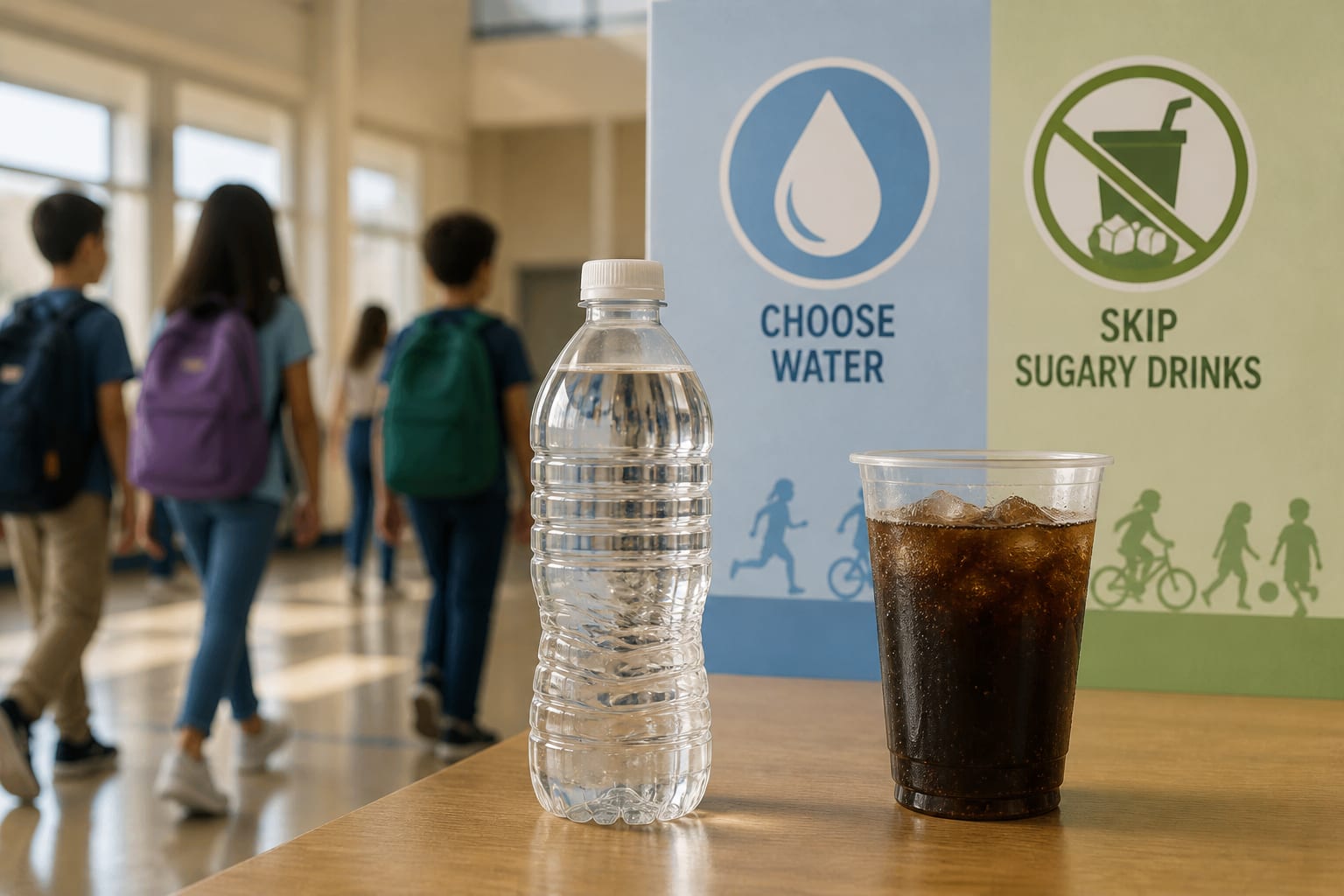
Intervention and comparison: H2GO! included 12 one-hour, in-person sessions over about six weeks, delivered by trained staff. Activities addressed sugary-drink reduction and water intake through interactive exercises, youth-created narratives, and parent–child activities. Comparison sites…
Assessments: Assessments occurred at baseline and 2, 6, and 12 months. The primary outcome was change in child BMI z score at 12 months; secondary outcomes included changes in sugar-sweetened beverage and water intake.
Key Findings:
The provided context describes the trial rationale, design, intervention, and planned outcomes but does not report trial results.
Interpretation:
The context establishes the study’s hypothesis and methods but does not provide evidence about whether H2GO! changed BMI z score or beverage intake.
Limitations:
The supplied article context ends during the description of beverage-intake measurement and does not include results or a full account of study limitations.
by Monica L. Wang, Selenne Alatorre, Aviva G. Schwarz, Janice Weinberg, Linda Sprague Martinez, Jennifer Aldworth, Rabindra Kadel, Milagros C. Rosal, Stephenie C. Lemon