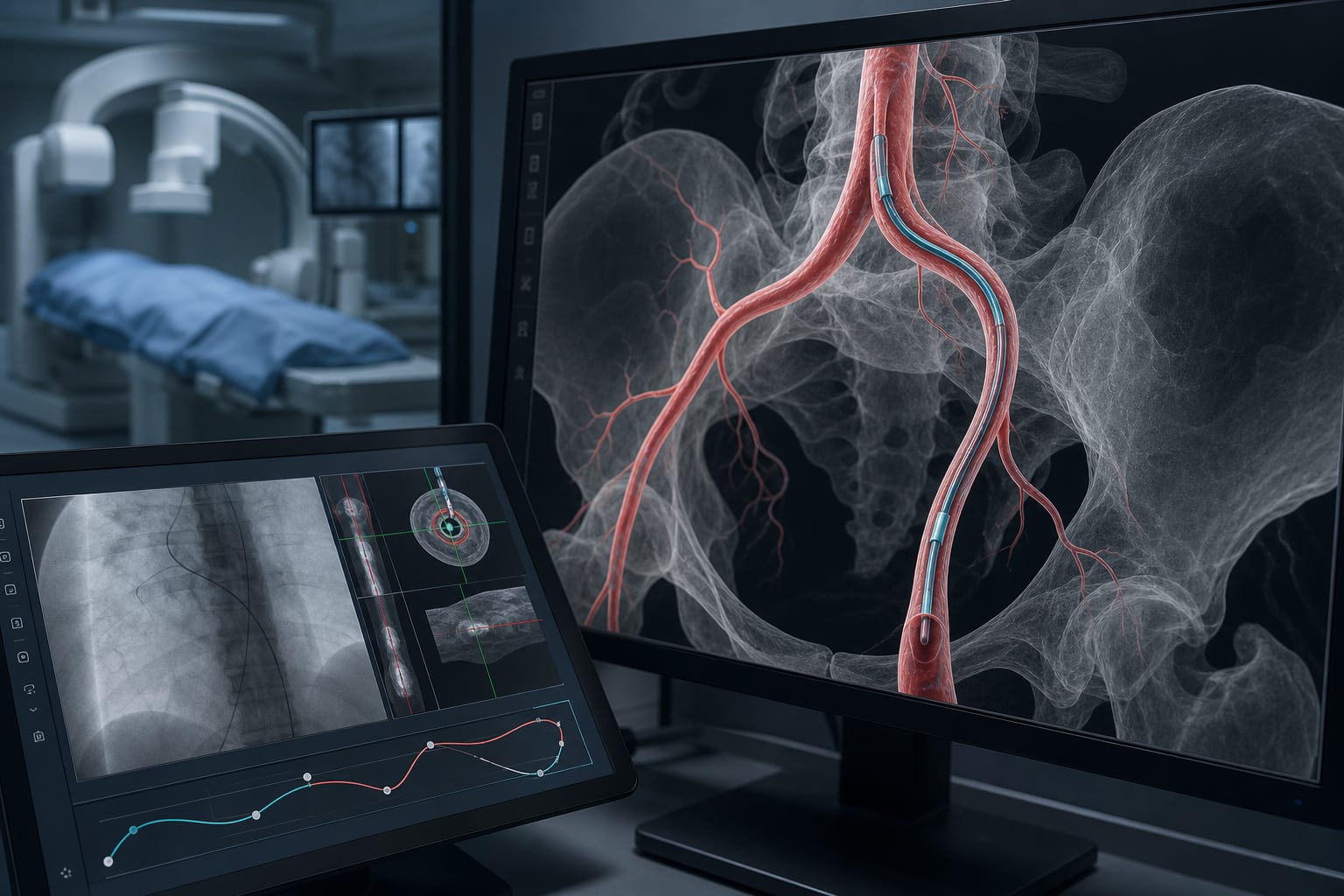
To introduce a method that integrates sensor-based catheter shape reconstruction, interactive biomechanical simulation, and mixed reality visualization into a Medical Augmented Reality System (MARS) for 3D monitoring of catheter vessel interaction and associated vessel deformation, enhancing surgical navigation.
Key Findings:
The integration of MARS can enhance operator understanding during transcatheter procedures by providing real-time visual feedback.
Current navigation systems still rely on conventional image-based methods and have limitations in accounting for intraoperative vessel deformations, which can lead to complications.
Combining a gamepad-based catheter controller with an HMD has shown improved performance and navigation intuitiveness, suggesting a more user-friendly interface.
Interpretation:
While MARS shows promise in enhancing navigational awareness, it is not yet accurate enough for standalone guidance in surgical procedures due to limitations in real-time data integration and visualization fidelity.
Limitations:
Preoperative models do not account for intraoperative vessel deformations, which can lead to inaccuracies during procedures.
High computational costs limit the interactivity of physics-based dynamic modeling approaches, making them impractical for real-time applications.
Current head-mounted display solutions lack the accuracy and reliability required for manual tasks, which is critical in surgical environments.
Conclusion:
The study demonstrates the feasibility of integrating advanced monitoring and visualization techniques into endovascular navigation, potentially improving surgical outcomes by enhancing situational awareness and decision-making.
In a pooled analysis of two randomized crossover trials, reducing nightly sleep by about 1.5 hours for 6 weeks was associated with modest increases in body weight and waist circumference without measurable changes in body composition.
Research highlights expanding diagnostic capabilities but persistent gaps in antiviral therapy and vaccine coverage for pediatric enterovirus infections.