Ferroptosis in chemotherapy resistance and resensitization in breast cancer: a systematic review of preclinical evidence and translational implications - Summary - MDSpire
Advertisement
Ferroptosis in chemotherapy resistance and resensitization in breast cancer: a systematic review of preclinical evidence and translational implications
To systematically review preclinical studies on ferroptosis in chemotherapy-resistant breast cancer models and identify key mechanisms and their implications for treatment.
Approach:
Literature Search: Systematic search of PubMed, Scopus, Embase, and Web of Science for studies published between January 2016 and May 2024.
Key Findings:
Forty-four studies met inclusion criteria, with the majority published since 2024. TNBC was the focus of 47.7% of studies.
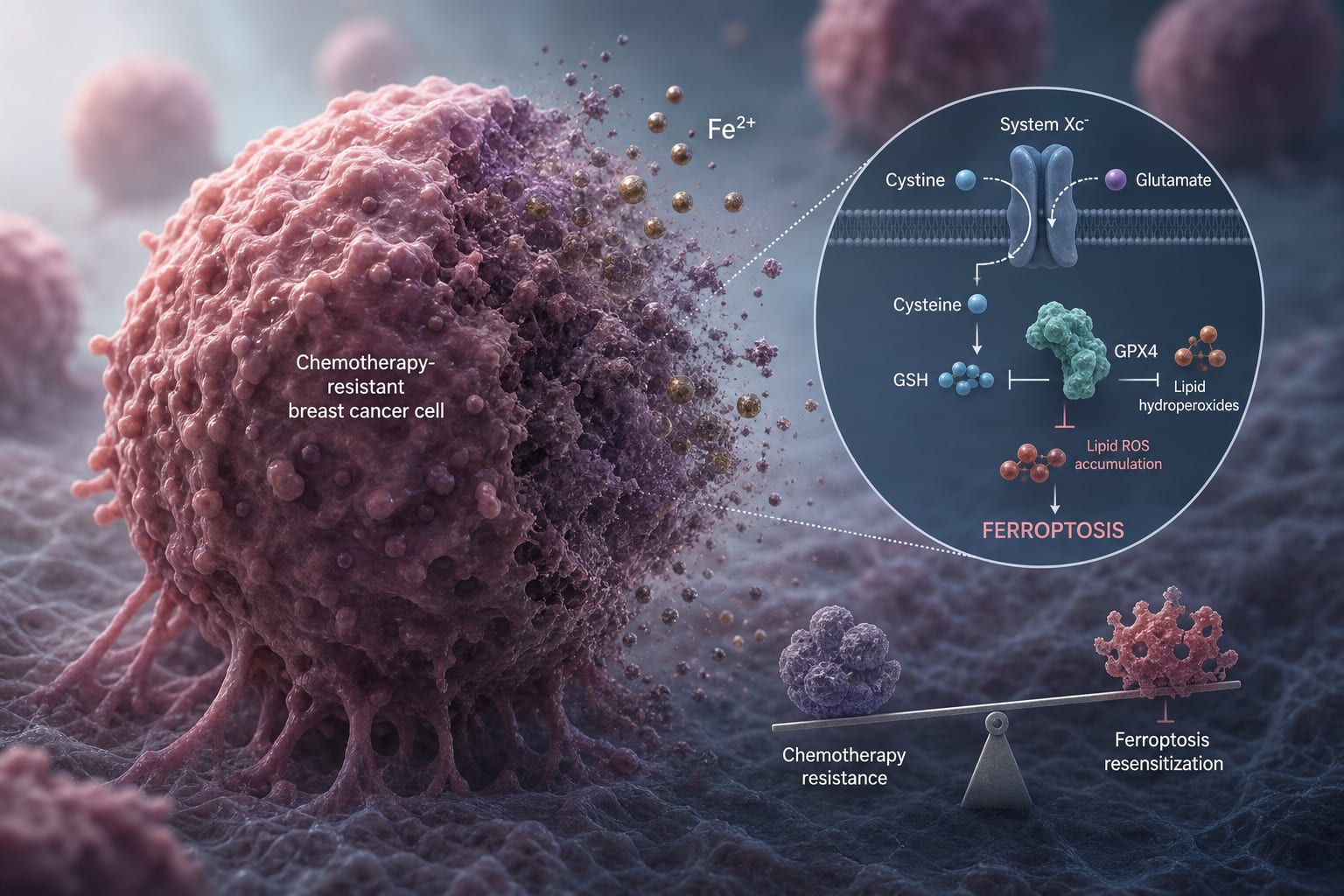
Mechanisms were classified into six categories: GPX4 axis (28 studies, 63.6%), iron metabolism regulation (8 studies, 18.2%), SLC7A11/xCT pathway (5 studies, 11.4%), and three single-study mechanisms (6.8% combined).
Evidence ranking classified the GPX4 axis, iron metabolism regulation, and the SLC7A11/xCT pathway as Level A (strong evidence), and the remaining mechanisms as Level C.
Interpretation:
Ferroptosis regulation presents a diverse strategy to address chemotherapy resistance in breast cancer, particularly through the GPX4 axis, iron metabolism, and SLC7A11/xCT pathway.
Limitations:
Reporting of randomization (11.4%) and blinding (0%) in animal studies requires improvement.
The review is limited to preclinical studies, which may not fully translate to clinical settings.
Conclusion:
Ferroptosis mechanisms provide a framework for prioritizing translational targets in overcoming breast cancer chemoresistance.