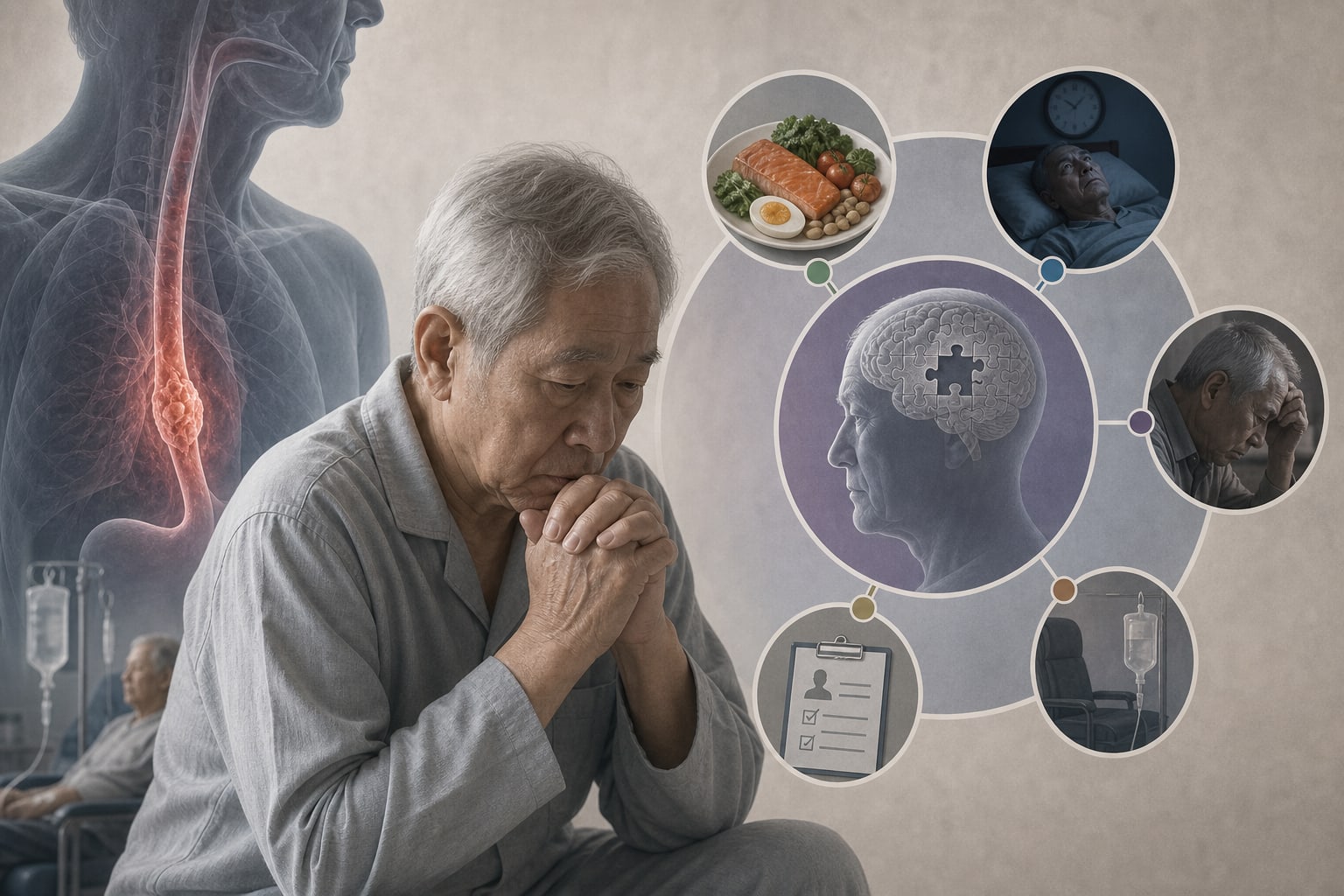
To examine the prevalence of cognitive frailty and its associated factors among older patients with esophageal cancer undergoing chemotherapy, and to provide evidence for the development of targeted nursing interventions.
Approach:
Key Findings:
The incidence of cognitive frailty among older patients with esophageal cancer undergoing chemotherapy was 45.1%.
Significant factors associated with cognitive frailty included chemotherapy cycles, nutritional risk, sleep disturbances, depression, educational attainment, participation in cognitive training activities, and social support (p < 0.05).
Interpretation:
Cognitive frailty is relatively common among older patients undergoing chemotherapy for esophageal cancer and is influenced by multiple interrelated factors.
Limitations:
The study used a convenience sample, which may limit generalizability.
The cross-sectional design does not allow for causal inferences.
Conclusion:
Healthcare professionals should strengthen assessment and management during chemotherapy and develop targeted interventions to reduce the risk of cognitive frailty.