Reduced circulating mitochondrial DNA integrity and increased DNA oxidation in preclinical and clinical pediatric obesity: an observational study - Summary - MDSpire
Advertisement
Reduced circulating mitochondrial DNA integrity and increased DNA oxidation in preclinical and clinical pediatric obesity: an observational study
To evaluate oxidative DNA damage and circulating mitochondrial DNA integrity in children with different obesity phenotypes as indicators of metabolic risk.
Approach:
Study Design: A retrospective, cross-sectional study involving 103 children aged 6–12 years classified into normal-weight controls, preclinical obesity (pOb), and clinical obesity (cOb) using the 2025-OCF criteria.
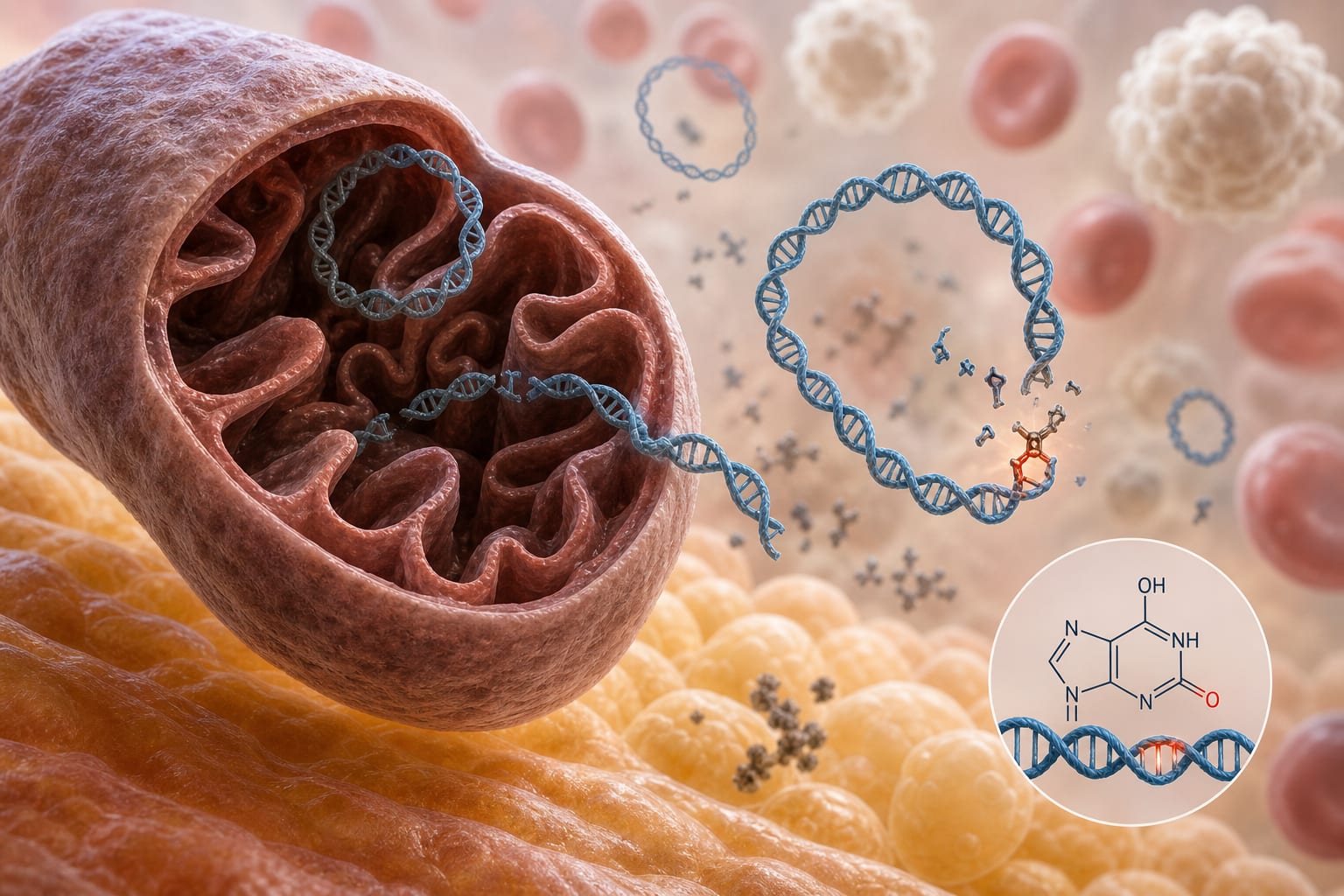
Biomarker Assessment: Oxidative DNA damage was quantified using 8-hydroxy-2′-deoxyguanosine (8-OH-dG), and c-mtDNA integrity was evaluated by long-range PCR.
Lipid Metabolism Markers: Lipid metabolism markers including triglycerides, HDL cholesterol, and the triglyceride-to-HDL cholesterol ratio were measured.
Cytokine Measurement: Plasma cytokine levels were quantified using flow cytometry.
Key Findings:
Both pOb and cOb groups showed significantly higher 8-OH-dG levels and reduced c-mtDNA integrity compared to controls (p < 0.0001).
8-OH-dG levels positively correlated with triglycerides, TG/HDL-C ratio, and TyG index.
c-mtDNA integrity exhibited inverse correlations with lipid-related markers and positive correlation with HDL-C levels.
Waist circumference percentile was independently associated with both 8-OH-dG and c-mtDNA integrity after adjustments.
Interpretation:
Oxidative DNA damage and reduced c-mtDNA integrity were observed in both preclinical and clinical obesity groups, indicating mitochondrial and oxidative alterations associated with excess adiposity.
Limitations:
The study is cross-sectional, limiting causal inferences.
Sample size may restrict the generalizability of findings.
Conclusion:
c-mtDNA integrity and 8-OH-dG may serve as biomarkers associated with excess adiposity and metabolic risk in pediatric obesity.