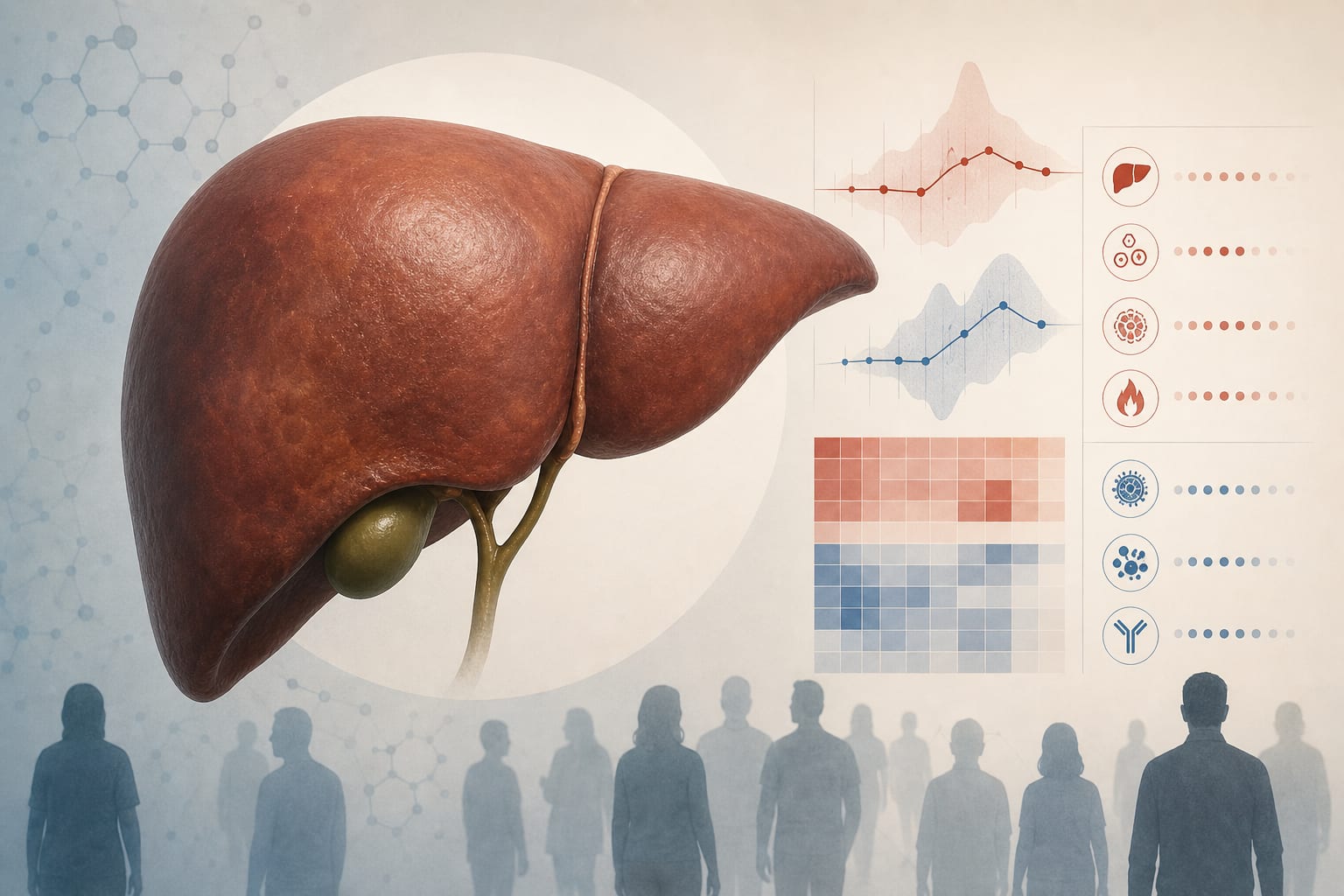
To investigate the associations between non-invasive hepatic steatosis and fibrosis indices and biomarkers of intestinal dysfunction in patients diagnosed with depression, particularly focusing on the role of metabolic syndrome and other contributing factors.
Key Findings:
Altered serum levels of CIT and I-FABP may indicate intestinal dysfunction in depressed patients, with specific correlations identified.
Non-invasive hepatic indices correlate with biomarkers of gut permeability, suggesting a potential pathway for further research.
Metabolic, dietary, and psychometric factors influence liver function in depressed individuals, warranting further exploration.
Interpretation:
The study suggests a link between liver dysfunction and intestinal health in patients with depression, emphasizing the importance of the gut-liver-brain axis in understanding these associations.
Limitations:
Cross-sectional design limits causal inferences, as temporal relationships cannot be established.
Sample size may not be representative of the broader population, potentially affecting generalizability.
Potential confounding factors, such as lifestyle choices and comorbidities, were not fully controlled.
Conclusion:
The findings support the hypothesis that liver dysfunction in depressed patients is associated with biomarkers of intestinal health, highlighting the need for further investigation into interventional strategies that could improve patient outcomes.