A novel label-free nanoplasmonic biosensor for distinguishing tumor margins during surgery for brain metastases
Objective: To assess the feasibility and diagnostic performance of a nanostructured plasmonic biosensor for margin assessment in brain metastases surgery.
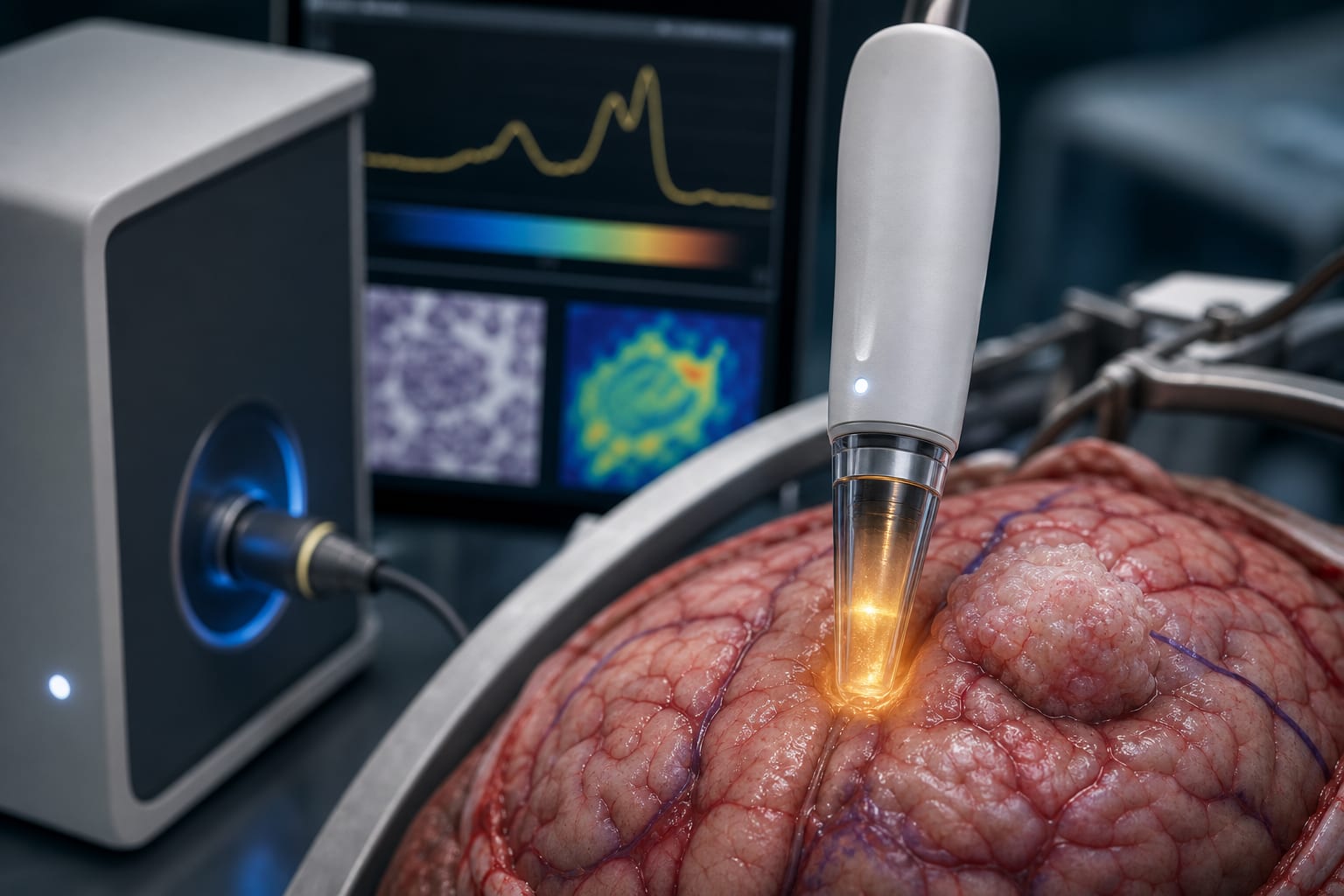
Approach: Study Design: A prospective multicenter study was conducted with patients having newly diagnosed brain metastases eligible for surgical treatment.Patient Selection: Inclusion criteria included adults ≥ 18 years, newly diagnosed brain metastases, and histopathological confirmation.Data Collection: Clinical and radiological data were collected, including patient demographics and tumor characteristics.Tissue Sampling: Tumor and adjacent peritumoral tissue specimens were collected intraoperatively following a standardized protocol.Biosensor Operation: The biosensor utilized a gold film with a square array of circular nanoholes to detect refractive index changes in tissue.Key Findings: The biosensor demonstrated high sensitivity in distinguishing glioblastoma from peritumoral brain tissue. The technology provides real-time assessment of tumor margins without the need for fluorescent agents. Interpretation: The EOT-based biosensor may offer valuable information regarding the tumor–brain interface during surgery.
Limitations: The study was limited to specific hospitals and may not be generalizable to all surgical settings. Further validation in larger cohorts is necessary to confirm findings. Conclusion: The study suggests that the nanoplasmonic biosensor could enhance intraoperative margin assessment in brain metastases surgery.