Adaptive Fast-Slow Large Language Model Framework for Multidimensional Classification of Prenatal Ultrasound Reports: Comparative Study - Summary - MDSpire
Advertisement
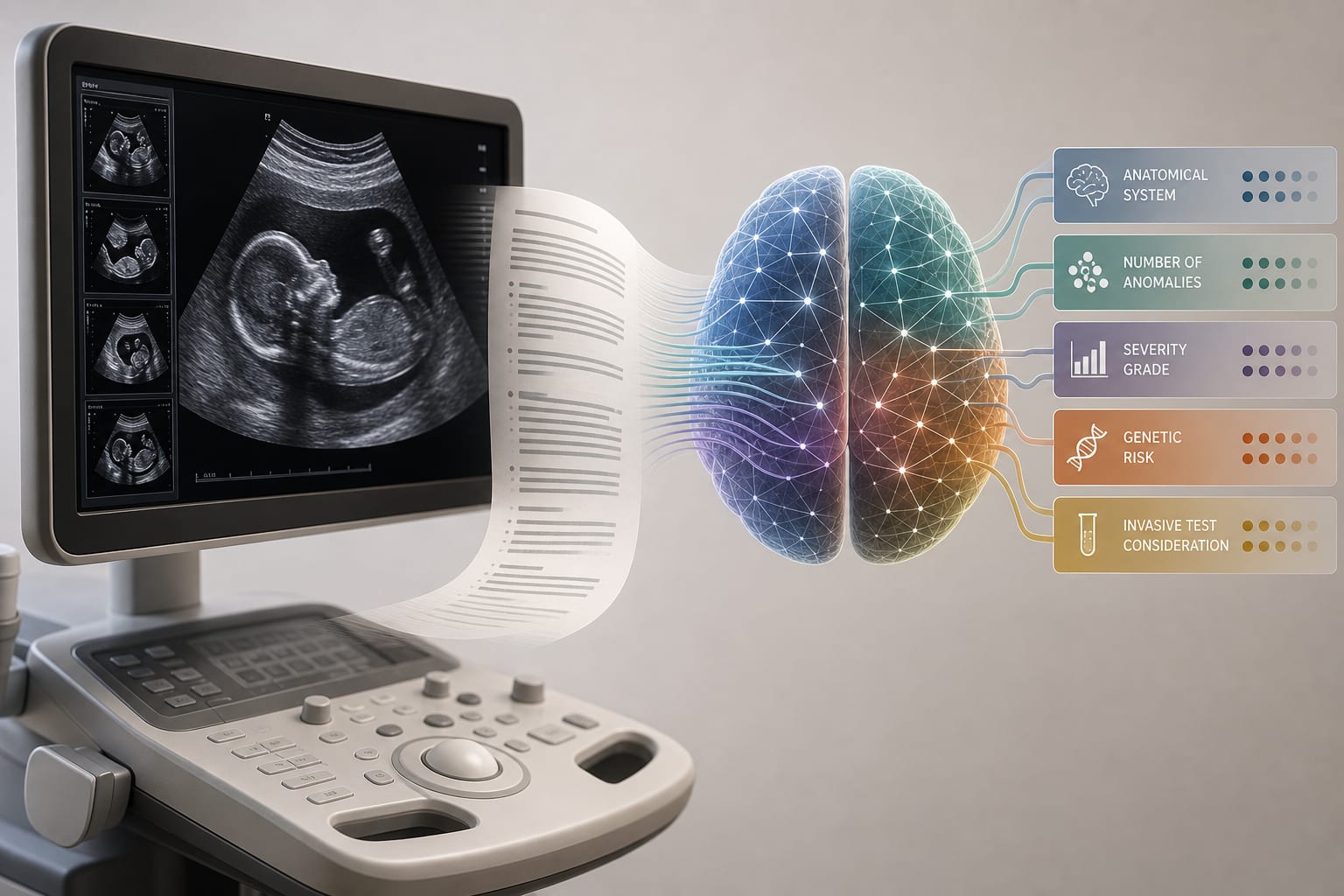
Adaptive Fast-Slow Large Language Model Framework for Multidimensional Classification of Prenatal Ultrasound Reports: Comparative Study
To demonstrate that accurate, multidimensional profiling of prenatal ultrasound reports is strongly predictive of pathogenic risks and to evaluate the effectiveness of retrieval-augmented generation (RAG) versus chain-of-thought (CoT) reasoning in automating the analysis, particularly in subjective assessments.
Key Findings:
Multidimensional classification is essential for accurate genetic risk assessment, influencing clinical decision-making.
The fast base model (V3.2-B) and RAG are sufficient for factual tasks, but may lack depth in subjective evaluations.
CoT reasoning is necessary for automating subjective components of severity assessment, enhancing diagnostic accuracy.
Interpretation:
The study highlights the importance of integrating multidimensional classifications in prenatal ultrasound reporting to improve clinical decision-making and patient counseling.
Limitations:
The study's findings are based on a specific gestational window, potentially excluding late-onset anomalies and affecting generalizability.
The reliance on expert-verified results may introduce bias in the classification process, potentially skewing risk assessments.
Conclusion:
The adaptive fast-slow LLM framework can enhance the analysis of prenatal ultrasound reports, improving the accuracy of phenotype-driven diagnosis.
Pregnant patients with type 1 diabetes had higher bleeding-on-probing and plaque levels than healthy controls in a small pilot study, though most other periodontal measures did not differ significantly between groups.