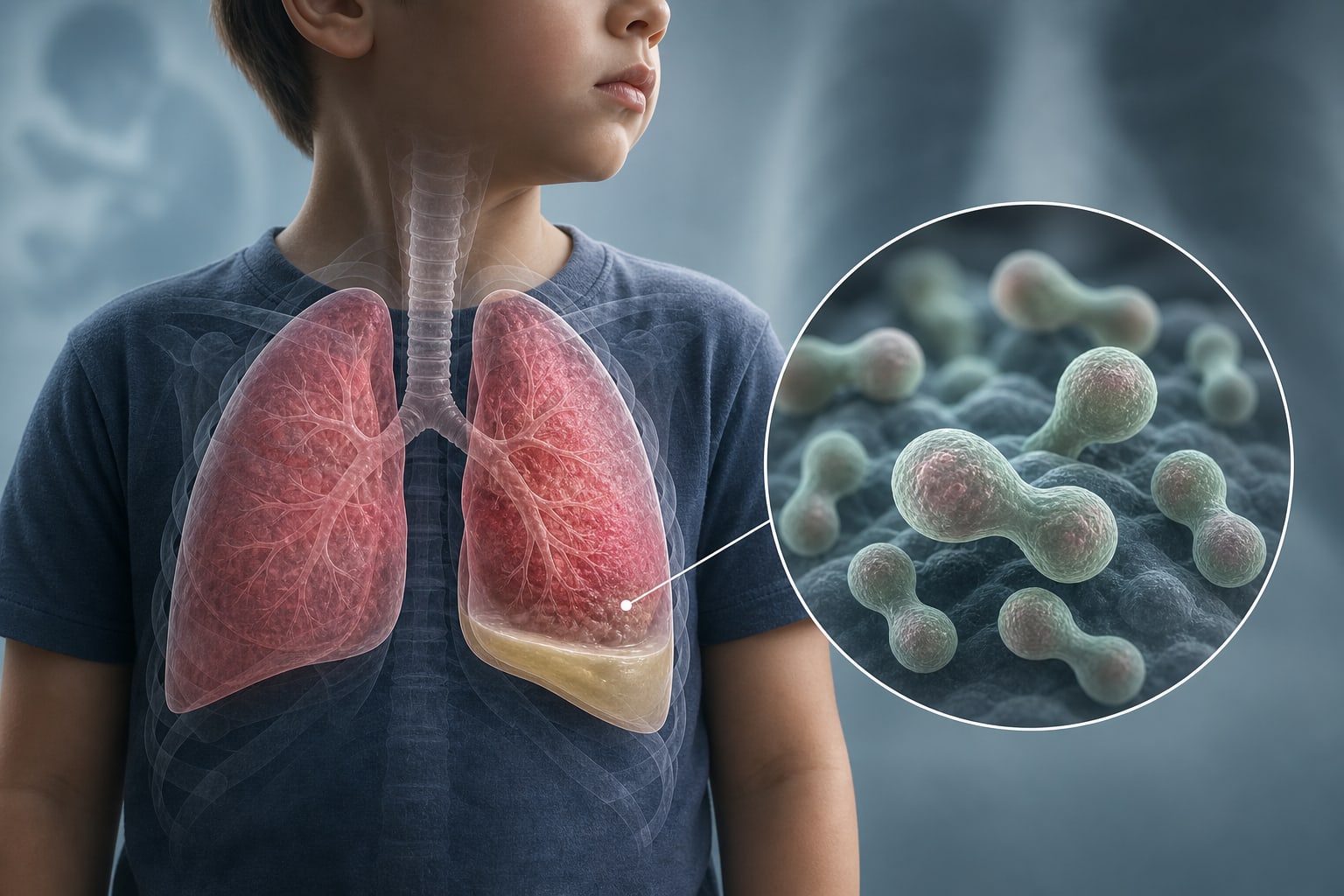
Clinical characteristics, predictive factors, and therapeutic outcomes of mycoplasma pneumoniae pneumonia with pleural effusion in children: a retrospective cohort study - Summary - MDSpire
Advertisement
Clinical characteristics, predictive factors, and therapeutic outcomes of mycoplasma pneumoniae pneumonia with pleural effusion in children: a retrospective cohort study
To analyze the clinical characteristics, predictive factors and curative effects of mycoplasma pneumoniae (MP) infection combined with pleural effusion in children.
Approach:
Key Findings:
Age, length of hospital stay, CRP level, white blood cell count, neutrophil count, IgM level, left lung disease, intravenous glucocorticoid use, duration of fever, and duration of antibiotic use were higher in the MPP group compared to the group without pleural effusion (P < 0.05).
The number of cases, bilateral lung lesions, and IgA levels in autumn were significantly lower in the MPP group with pleural effusion (P < 0.05).
Age, CRP, white blood cell count, autumn infection, IgM and IgA levels were correlated with pleural effusion.
Interpretation:
Predictors of MP infection with pleural effusion in children include age, CRP, WBC, autumn infection, IgM and IgA.
Limitations:
Retrospective design may introduce bias.
Single-center study limits generalizability.
Conclusion:
The study identifies age, CRP, white blood cell count, autumn infection, IgM and IgA as factors associated with pleural effusion in children with MP pneumonia.