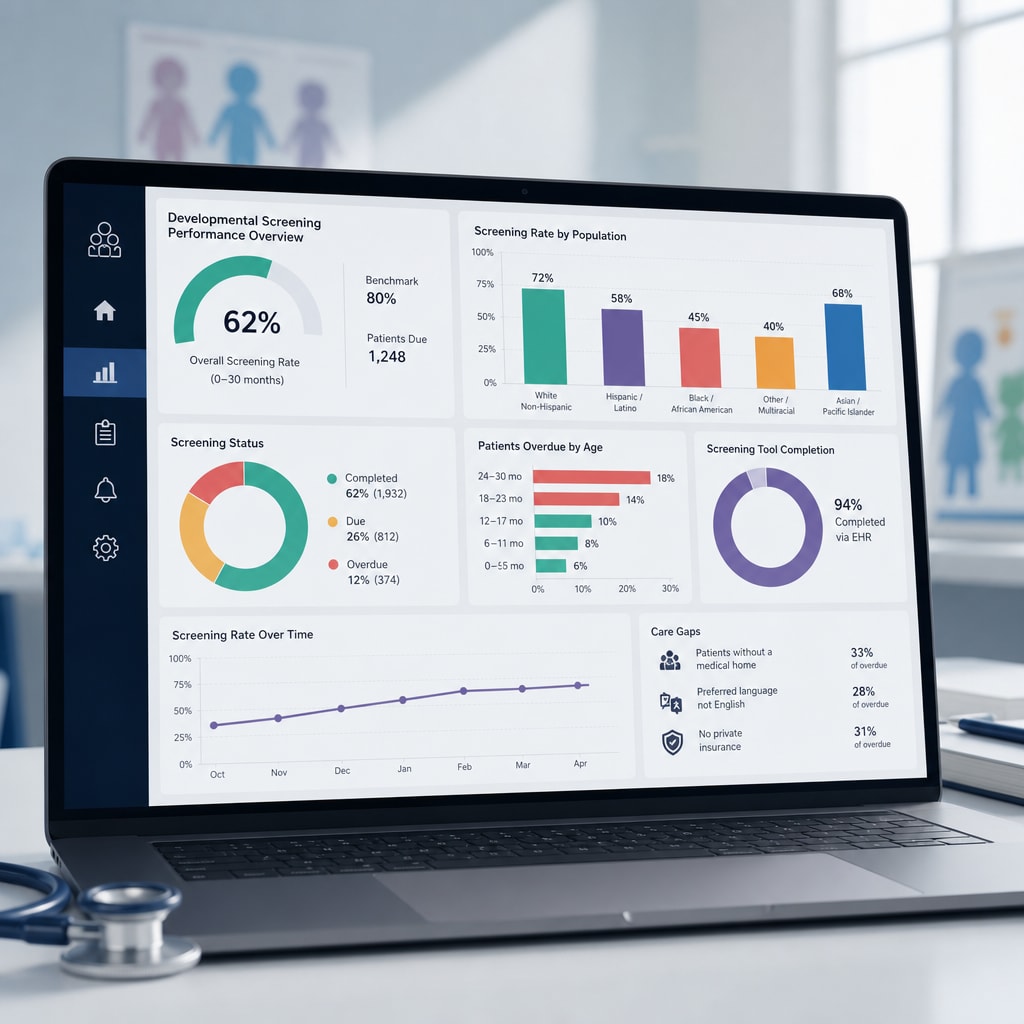
To identify patient-level and system-level characteristics associated with developmental screening outcomes and evaluate the impact of an EHR-based dashboard on these outcomes, specifically focusing on screening rates and follow-up processes.
Key Findings:
Low screening rates persist, particularly among minority and low-income children, highlighting the need for targeted interventions.
Electronic tools and standardized processes can improve screening rates, suggesting a model for other health systems.
The dashboard facilitates better tracking and follow-up of screening questionnaires, potentially leading to improved health outcomes.
Interpretation:
The study highlights the importance of electronic health record systems in enhancing developmental screening processes and addressing disparities in early identification of developmental delays and autism, with implications for health policy and practice.
Limitations:
Study did not include direct human participant research ethics review.
Findings may not be generalizable beyond the specific health system studied, which could limit the applicability of results to other settings.
Conclusion:
Implementing EHR-based dashboards can significantly enhance the efficiency of developmental screening processes and potentially improve outcomes for children at risk for developmental delays and autism.
This twice-monthly newsletter highlights recently published research where Dana-Farber faculty are listed as first or senior authors. The information is pulled from PubMed and this issue notes papers published from January 16 - 31.