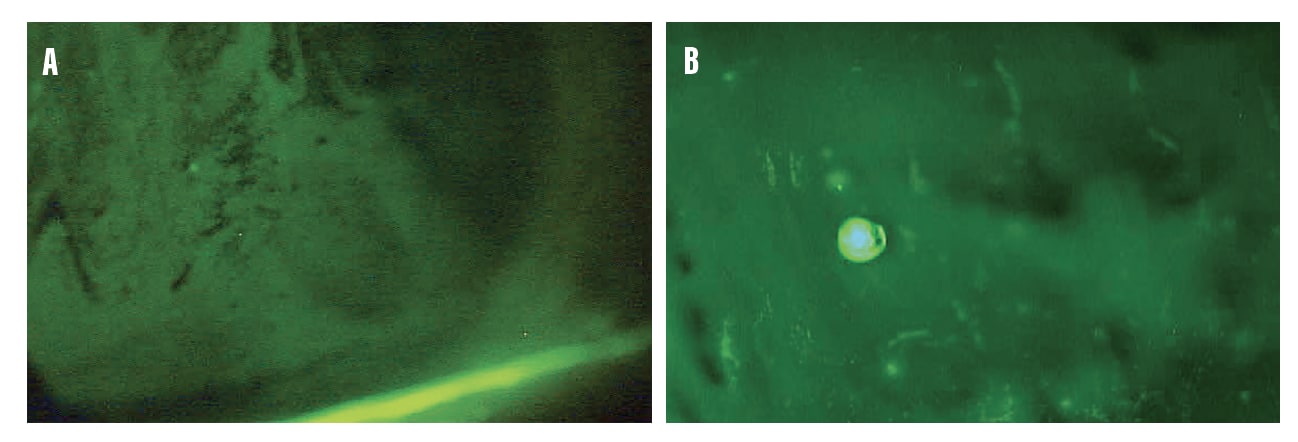
To investigate the long-term effects of LASIK on corneal nerves and immune cell behavior using advanced imaging techniques.
Approach:
Study Design: The study compared 13 post-LASIK patients with 19 age-matched healthy controls, evaluating corneal nerve architecture, sensory responses, tear cytokines, and immune cell behavior up to two years post-surgery.
Imaging Technique: Advanced functional in vivo confocal microscopy (Fun-IVCM) was used to assess the ocular surface in detail.
Key Findings:
Post-LASIK corneas showed reduced central corneal nerve density and branching, along with impaired mechanical sensitivity.
Epithelial T cells in post-LASIK eyes exhibited significantly faster movement at the corneal whorl compared to controls, suggesting heightened immune surveillance activity.
Dendritic cells in post-LASIK participants had lower density but were larger, more circular, and morphologically distinct, indicating potential immune activation.
Elevated interleukin-16 (IL-16) levels were found in tears of post-LASIK patients, suggesting a prolonged low-grade inflammatory state.
Mechanical sensitivity was reduced, but responses to hyperosmolar saline stimuli were preserved.
Interpretation:
The study indicates that LASIK may induce persistent neuroimmune changes relevant for chronic post-LASIK dry eye and neuropathic ocular pain.
Limitations:
The clinical significance of the observed neuroimmune changes remains uncertain.
Subgroup analyses showed no major differences in immune cell morphology or dynamics between symptomatic and asymptomatic patients.
Conclusion:
Further studies are warranted to explore the long-term functional significance of the differences in corneal nerve and immune cell features after LASIK.
Dr. Theriot discusses the differences between natural tear film and artificial tears—and why the change in moniker to "lubricating drops" is appropriate.