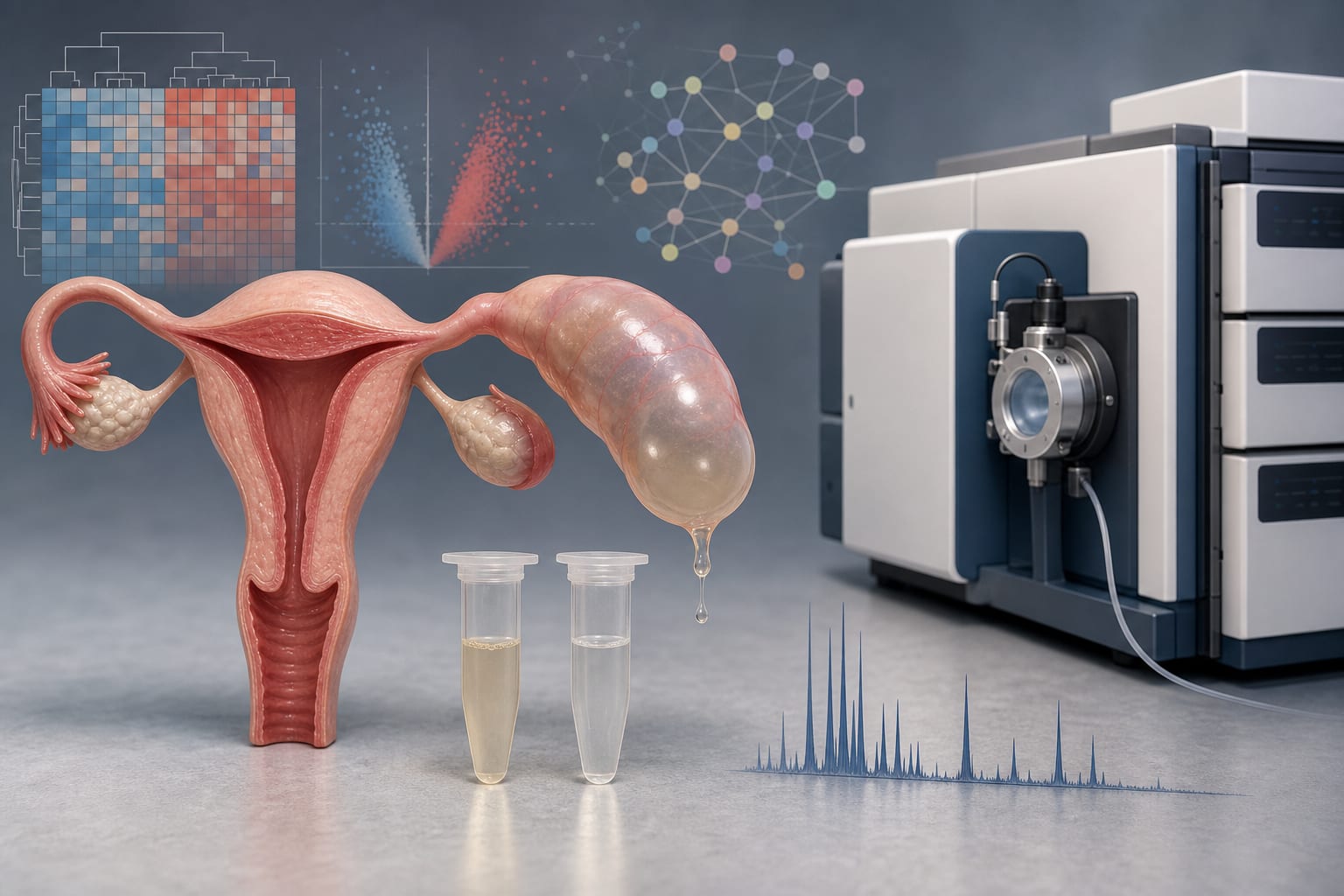
To characterize the metabolomic profile of hydrosalpinx fluid and compare it with normal pelvic fluid.
Approach:
Sample Collection: Fallopian tube fluid was collected from 10 patients with hydrosalpinx and normal pelvic fluid from 10 infertile women for metabolomics analysis.
Metabolite Annotation: Metabolites were annotated using KEGG and HMDB databases, identifying key metabolic disorder pathways.
Data Analysis: Weighted gene co-expression network analysis (WGCNA) was used to identify hub metabolites associated with disease status.
Key Findings:
A total of 660 significantly different metabolites were identified, with 209 upregulated and 451 downregulated.
Key metabolic pathways involved included biosynthesis of unsaturated fatty acids, efferocytosis, arachidonic acid metabolism, and tryptophan metabolism.
Core metabolites identified included 5-[1-Carboxy-2-(Trimethylazaniumyl) Ethoxy]-5-Oxopentanoate and D-Dopachrome.
Interpretation:
The metabolic profile of hydrosalpinx fluid shows significant differences in lipid and amino acid metabolism compared to normal pelvic fluid.
Limitations:
The study involved a small sample size of 20 women.
The findings may not be generalizable beyond the studied population.
Conclusion:
Hydrosalpinx fluid exhibits distinct metabolic characteristics that may impact embryo implantation and development.