To highlight the unusual aggressive behavior of an intramedullary melanocytoma with multifocal spinal recurrence and enhance understanding of the clinical spectrum of spinal melanocytomas.
Key Findings:
Intramedullary melanocytomas are rare, with fewer than 30 cases reported, highlighting their clinical significance.
The patient developed multifocal intradural extramedullary recurrence, an unprecedented pattern in the literature, indicating a need for further research.
Despite benign histopathological features, the tumor exhibited aggressive behavior with rapid clinical progression, challenging existing assumptions.
Interpretation:
The case underscores the potential for aggressive behavior in intramedullary melanocytomas, challenging the notion of their benign nature despite favorable histological characteristics, and suggesting a need for vigilant monitoring.
Limitations:
The rarity of the condition limits generalizability of findings, necessitating caution in applying these results broadly.
Long-term outcomes and effectiveness of palliative care were not extensively documented, which may affect the understanding of treatment efficacy.
Conclusion:
This case illustrates an unusual and aggressive recurrence pattern of intramedullary melanocytoma, emphasizing the need for awareness of potential complications and the necessity for ongoing monitoring to manage patient outcomes effectively.
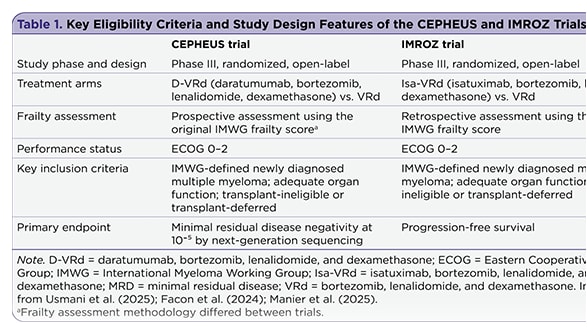
The management of newly diagnosed transplant-ineligible multiple myeloma remains challenging, in part due to the complexity of treatment decisions for frail patients. Recent subgroup analyses provide insight into whether quadruplet therapy may offer advantages over triplet therapy in this population.