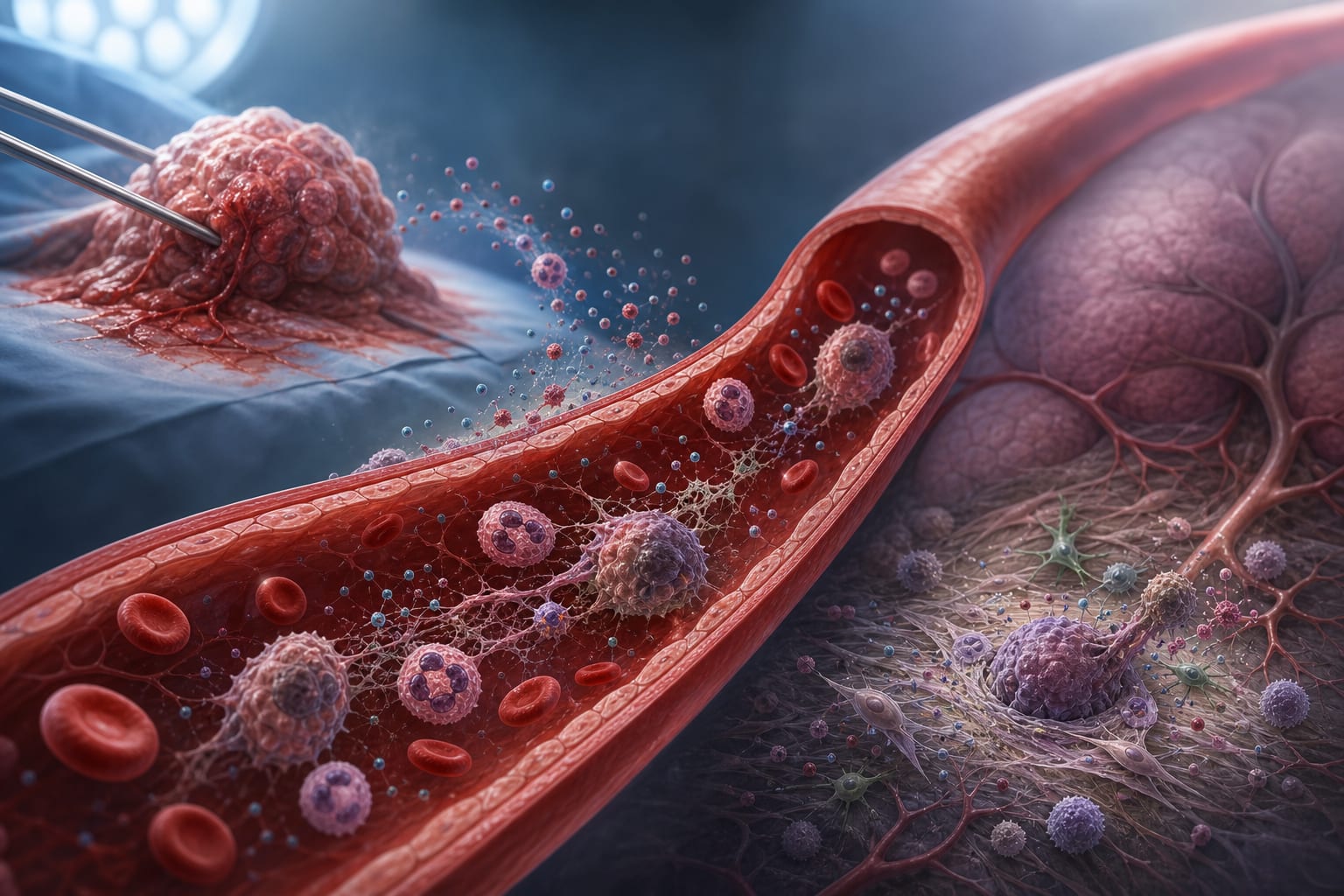
The lactylation axis: bridging metabolic reprogramming and immunosuppression in the tumor microenvironment
-
By
-
Xingxing Tao
-
Yingjie Liu
-
Peishan Yu
-
Wenjiang Wu
-
Yanli Fu
-
Ping Lan
-
Shengzhu Jin
-
June 19, 2026
-
Objective:
To elucidate the role of lactylation in tumor progression and its implications for cancer therapy.
Approach:
Key Findings:
- Lactylation is a critical epigenetic mechanism linking metabolic changes to gene regulation in cancer.
- It enhances tumor cell malignancy and promotes immune suppression within the tumor microenvironment.
- Lactate accumulation from the Warburg effect provides a substrate for lactylation, influencing both tumor and immune cell behavior.
Interpretation:
Understanding the lactylation axis establishes a novel metabolic-epigenetic-immune paradigm in cancer biology.
Limitations:
- Current evidence is largely correlative; causal strategies are needed to confirm direct effects of lactylation.
- Technical limitations exist in lactylation detection methods, including specificity and sensitivity issues.
Conclusion:
The lactylation axis represents a potential target for precision cancer therapy by integrating metabolic, epigenetic, and immune perspectives.