To provide an integrated perspective on the dual effects of ultraviolet radiation (UVR) on melanocyte biology and discuss specific emerging combination therapies for vitiligo.
Key Findings:
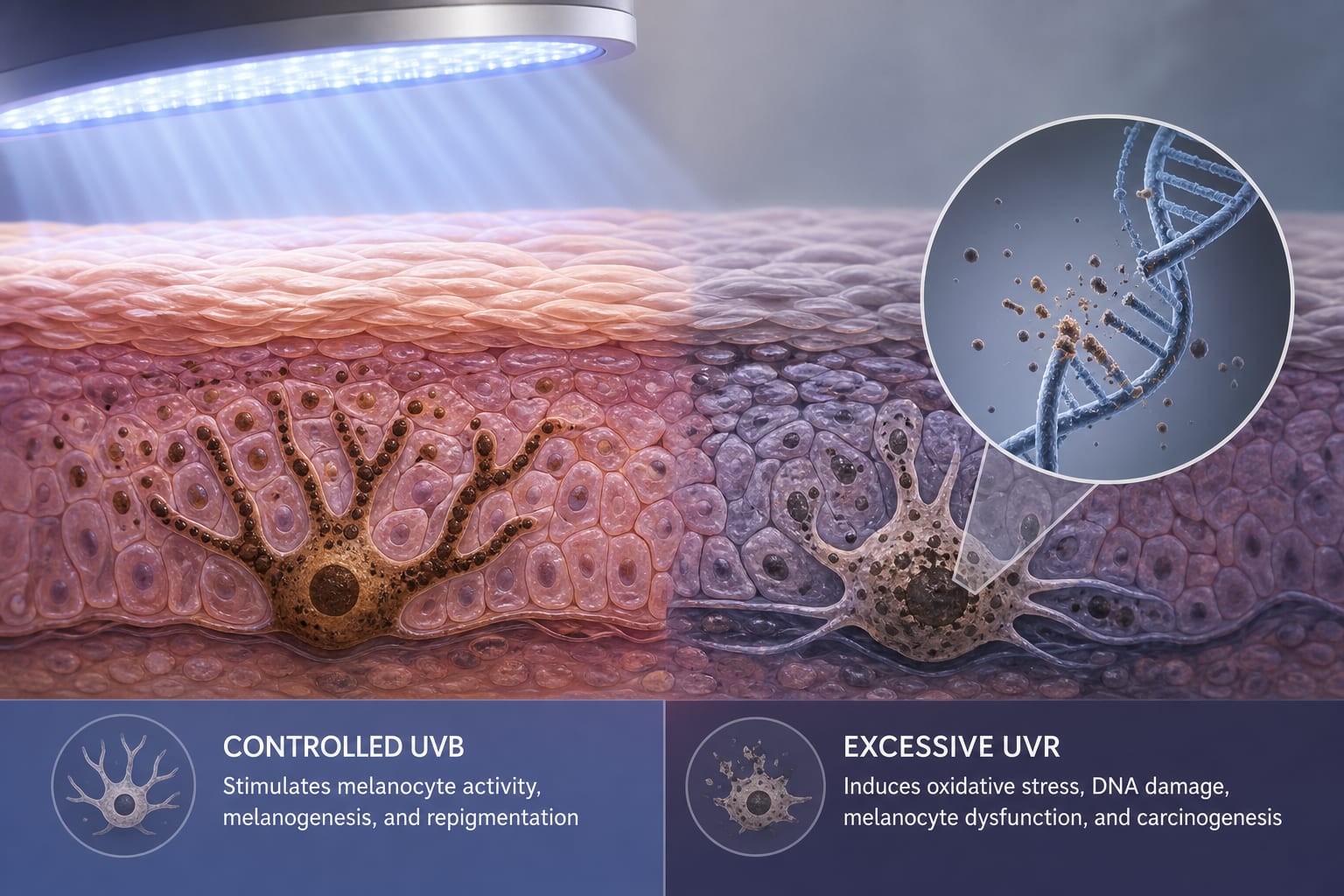
Narrowband ultraviolet B (NB-UVB) and excimer-based phototherapy are effective for inducing repigmentation in vitiligo.
Excessive UVR exposure can impair skin barrier function and increase the risk of photoaging and carcinogenesis.
Low-dose UV exposure enhances epidermal pigmentation, while high-dose exposure promotes melanocyte senescence and genomic instability.
Emerging combination therapies may enhance treatment efficacy but require further investigation.
Interpretation:
The review underscores the importance of balancing therapeutic benefits of UVR in vitiligo treatment against long-term risks of carcinogenesis.
Limitations:
The review does not provide direct clinical trial data to support the proposed combination therapies.
Potential long-term effects of combination strategies on melanoma risk are not fully addressed, and the long-term safety of UVR exposure is not discussed.
Conclusion:
The dual role of UVR in melanocyte biology necessitates careful consideration in therapeutic contexts, highlighting the need for ongoing research into balancing therapeutic benefits against long-term risks of carcinogenesis.
Water-related activities were the most commonly reported setting for recent sunburn, while more than one-half of respondents reported sunscreen use at the time of their most recent sunburn.