To investigate the difference between cardiac index measured using the estimated Fick principle and thermodilution in immediate post-orthotopic heart transplantation patients.
Approach:
Study Design: A single center prospective observational cohort study analyzing cardiac index measurements in pediatric patients post-OHT.
Patient Inclusion: Patients aged 5 years or older who received orthotopic heart transplants were included, with exclusions for significant left to right shunting.
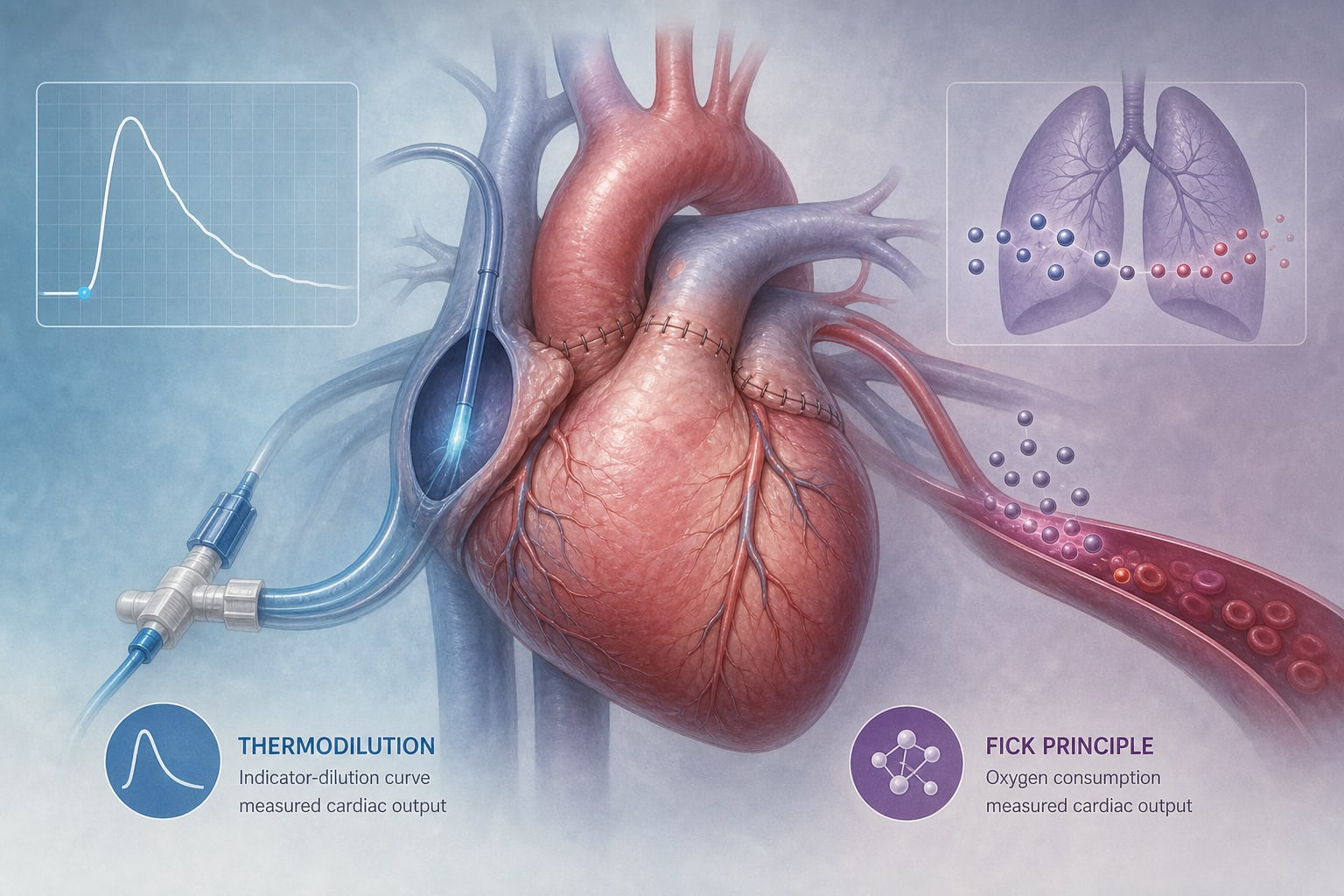
Measurement Methods: Cardiac index was measured using both the Fick method (LaFarge formula) and thermodilution during routine post-OHT catheterizations.
Data Analysis: Statistical analysis included multivariable models and linear mixed-effects models to assess agreement and changes over time.
Key Findings:
The median cardiac index via thermodilution was 2.7 L/min/m2, while via the Fick method it was 3.7 L/min/m2.
The median difference between Fick and thermodilution was +0.99 L/min/m2, indicating low agreement (ICC = 0.13).
In 48% of cases, cardiac index was normal by Fick but abnormal by thermodilution.
Interpretation:
The findings suggest significant discrepancies between the Fick method and thermodilution in assessing cardiac index in pediatric patients post-OHT.
Limitations:
The study was conducted at a single center, which may limit generalizability.
The sample size was relatively small with 26 patients and 174 catheterizations.
Conclusion:
The study indicates discrepancies between the Fick method and thermodilution in assessing cardiac index in pediatric patients post-OHT.