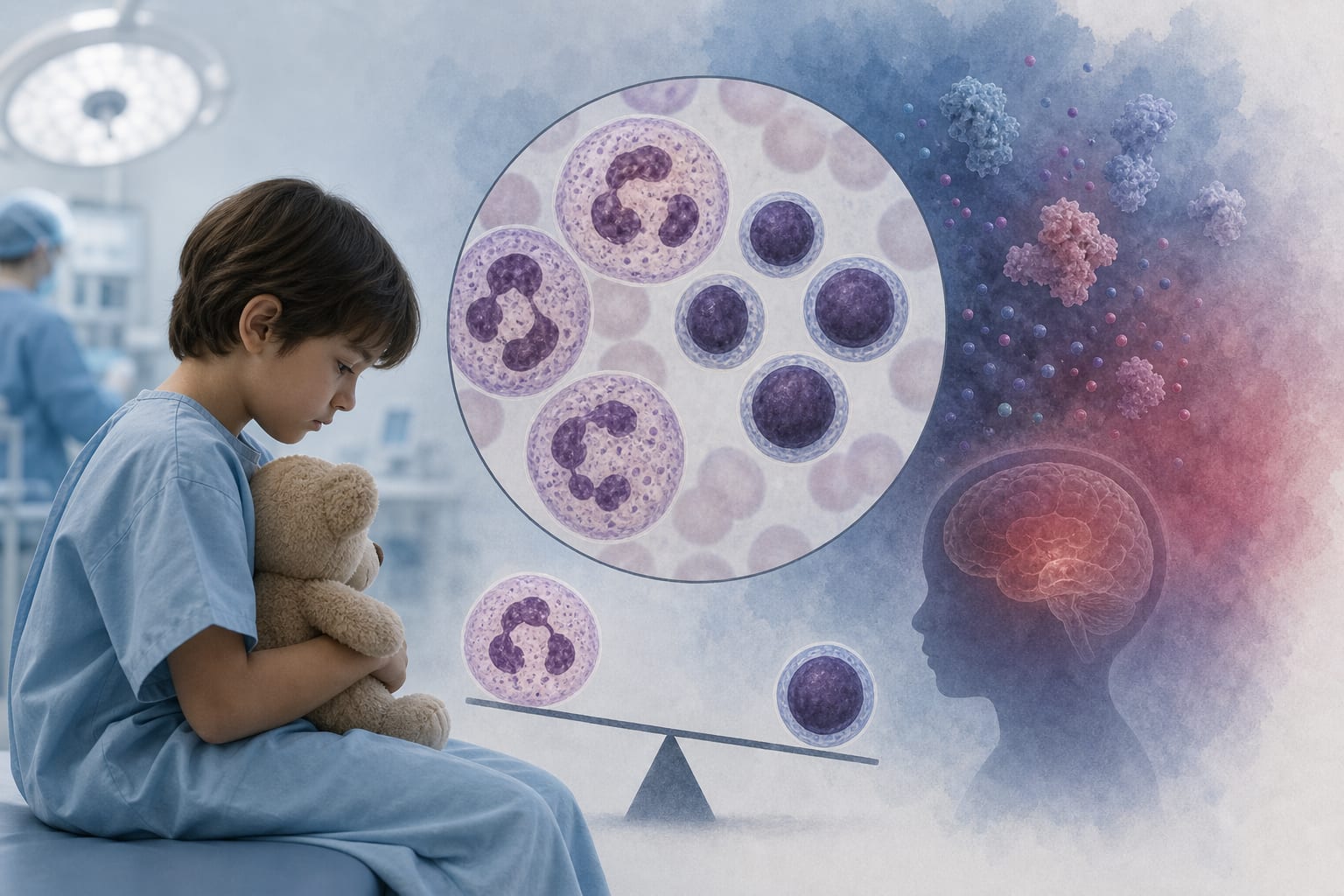
To investigate the association between preoperative hemogram-derived inflammatory markers and emergence agitation (EA) in pediatric patients, and to evaluate the relationship between these markers and preoperative anxiety.
Approach:
Study Design: A prospective observational study involving 350 pediatric patients aged 5-12 years scheduled for elective or emergency surgeries. Data on demographic, clinical, and hemogram parameters were collected.
Outcome Measures: Primary outcome was EA defined by a PAED score ≥ 10 within 30 minutes post-anesthesia. Secondary outcome was preoperative anxiety defined by an m-YPAS score ≥ 40.
Key Findings:
Preoperative anxiety affects up to 65% of pediatric patients and is linked to emergence agitation (EA).
Emergence agitation occurs in 0.25%–90.5% of children shortly after anesthesia.
Inflammatory markers such as neutrophil-to-lymphocyte ratio (NLR) and systemic immune-inflammation index (SII) may correlate with preoperative anxiety and EA.
Interpretation:
Limitations:
Limited studies on the relationship between EA and inflammatory markers in children.
Exclusion of patients with certain medical conditions may limit generalizability.
FOXC1 duplications were the second most common monogenic finding among genetically solved juvenile open-angle glaucoma cases in one registry, supporting the use of copy-number variant analysis in early-onset glaucoma testing.
“High-dose intravenous vitamin C administered early after injury did not reduce organ dysfunction or [mortality] and should not be a treatment in severe burns.”