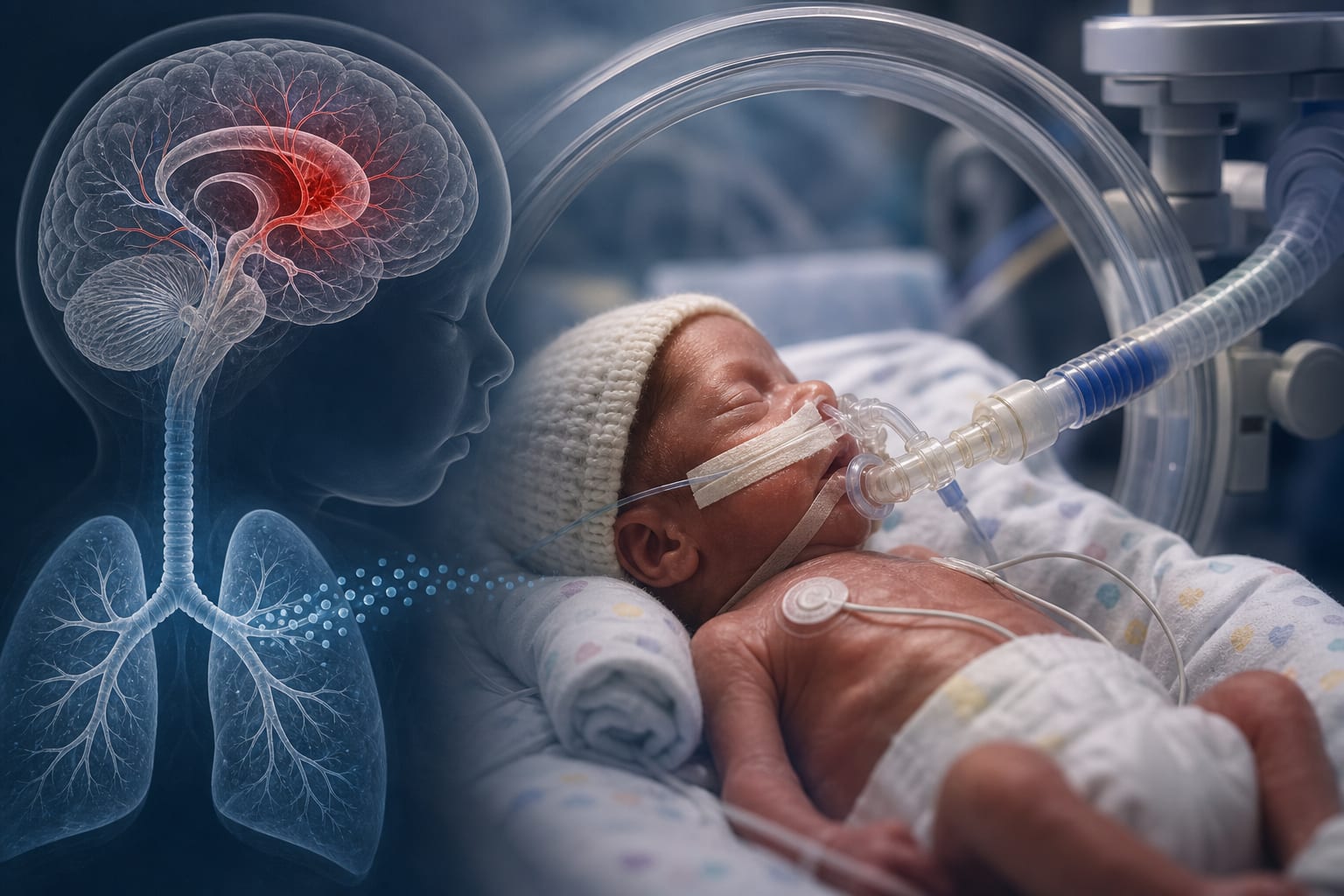
To investigate the association between early PaCO2 values and variability with survival without severe intraventricular hemorrhage (IVH) in extremely preterm infants managed with first-intention high-frequency jet ventilation (HFJV).
Approach:
Study Design: Single-center retrospective cohort study of 50 infants treated within a small baby program.
Key Measurements: Assessment of peak PaCO2, PaCO2 fluctuations, and deviation from target during the first 24 postnatal hours.
Key Findings:
Infants who survived without severe IVH had lower peak PaCO2 and smaller fluctuations.
Higher peak PaCO2 and greater fluctuations were associated with lower odds of survival and absence of severe IVH.
Proposed cut points: peak PaCO2 <65 mm Hg, fluctuation <25 mm Hg, deviation from target <15 mm Hg.
Interpretation:
Limitations:
Associations do not prove causality; infants with higher PaCO2 may have been sicker.
PaCO2 exposure was measured intermittently, potentially missing clinically important changes.
Residual confounding is possible due to cohort size and characteristics related to gestational age.
Proposed thresholds have modest sensitivity and specificity.