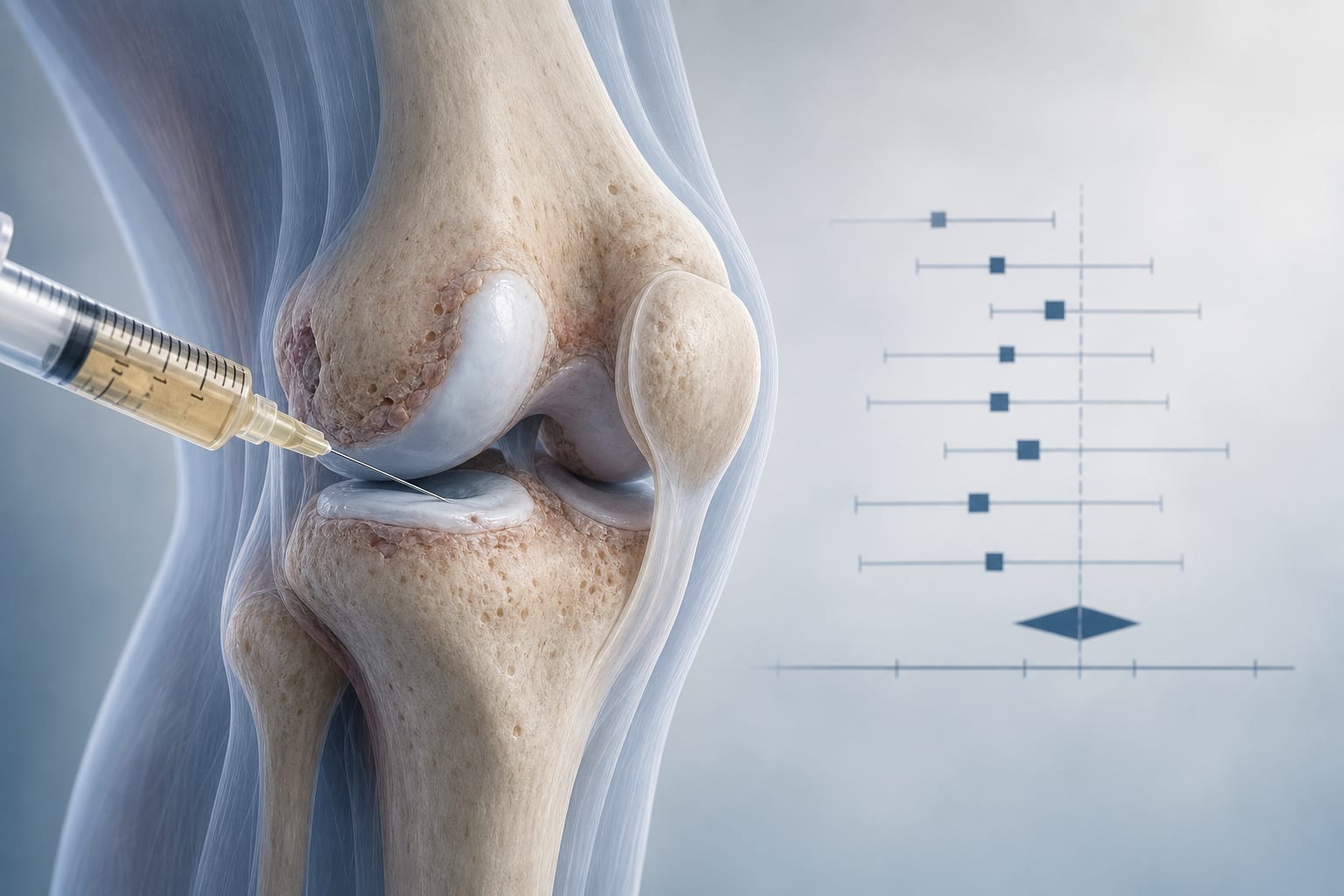
To assess the temporal efficacy of intra-articular ozone therapy in reducing symptoms among patients with knee osteoarthritis (KOA) using systematic review and meta-analysis techniques, providing evidence-based support for phased and continuous clinical treatment planning.
Approach:
Key Findings:
Intra-articular ozone therapy shows a time-dependent effect on symptom improvement in KOA patients, based on 16 RCTs with a total of 1,172 participants.
At 1 month post-intervention, WOMAC total decreased significantly (SMD = -0.63).
At 2 months, significant improvements were observed in WOMAC pain, function, and VAS.
No statistically significant differences were found at 3 months.
At 6 and 12 months, ozone therapy showed statistically significantly worse scores compared to control groups.
Interpretation:
Ozone therapy is effective in the short term (1-2 months) for alleviating pain and improving joint function in KOA, but its efficacy diminishes significantly by 3 months and is weak at 6 and 12 months.
Limitations:
The review is limited by the number of included studies and follow-up time points, which may affect the generalizability of the findings.
Evidence regarding the long-term efficacy of ozone therapy is sparse, highlighting the need for further research.
Conclusion:
Ozone therapy may serve as a short-term treatment option for KOA, but further placebo-controlled long-term trials and studies on repeated dosing regimens are needed.