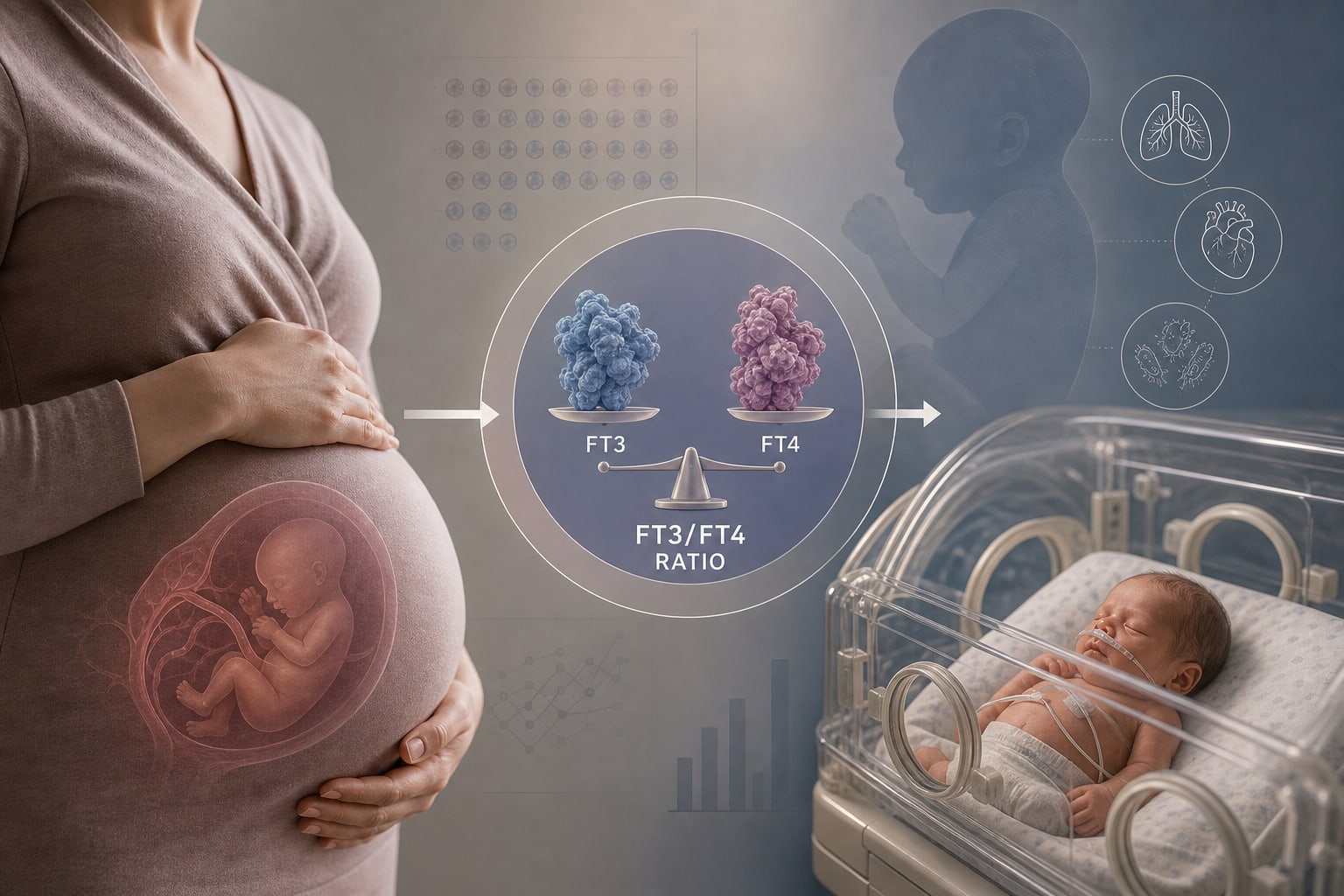
To investigate the association between the maternal free triiodothyronine to free thyroxine ratio during the first trimester and the risk of neonatal adverse outcomes.
Key Findings:
Mothers in the highest quartile of the FT3/FT4 ratio had a significantly increased risk of adverse neonatal outcomes compared to those in the lowest quartile.
The relationship followed a non-linear J-shaped pattern, with risks escalating sharply beyond a specific threshold.
Higher FT3/FT4 ratios were associated with neonatal anemia, patent ductus arteriosus, jaundice, and myocardial injury.
The risk was particularly pronounced in nulliparous women, mothers with a normal body mass index, and female neonates.
Interpretation:
An elevated FT3/FT4 ratio in early pregnancy may indicate increased neonatal risk, reflecting maladaptive maternal metabolic demands impacting fetal health.
Limitations:
Retrospective design may introduce selection bias.
Exclusion of women with thyroid or immune disorders limits generalizability.
Conclusion:
The maternal FT3/FT4 ratio in early gestation could serve as a sensitive indicator of neonatal risk, warranting further investigation for potential clinical applications.