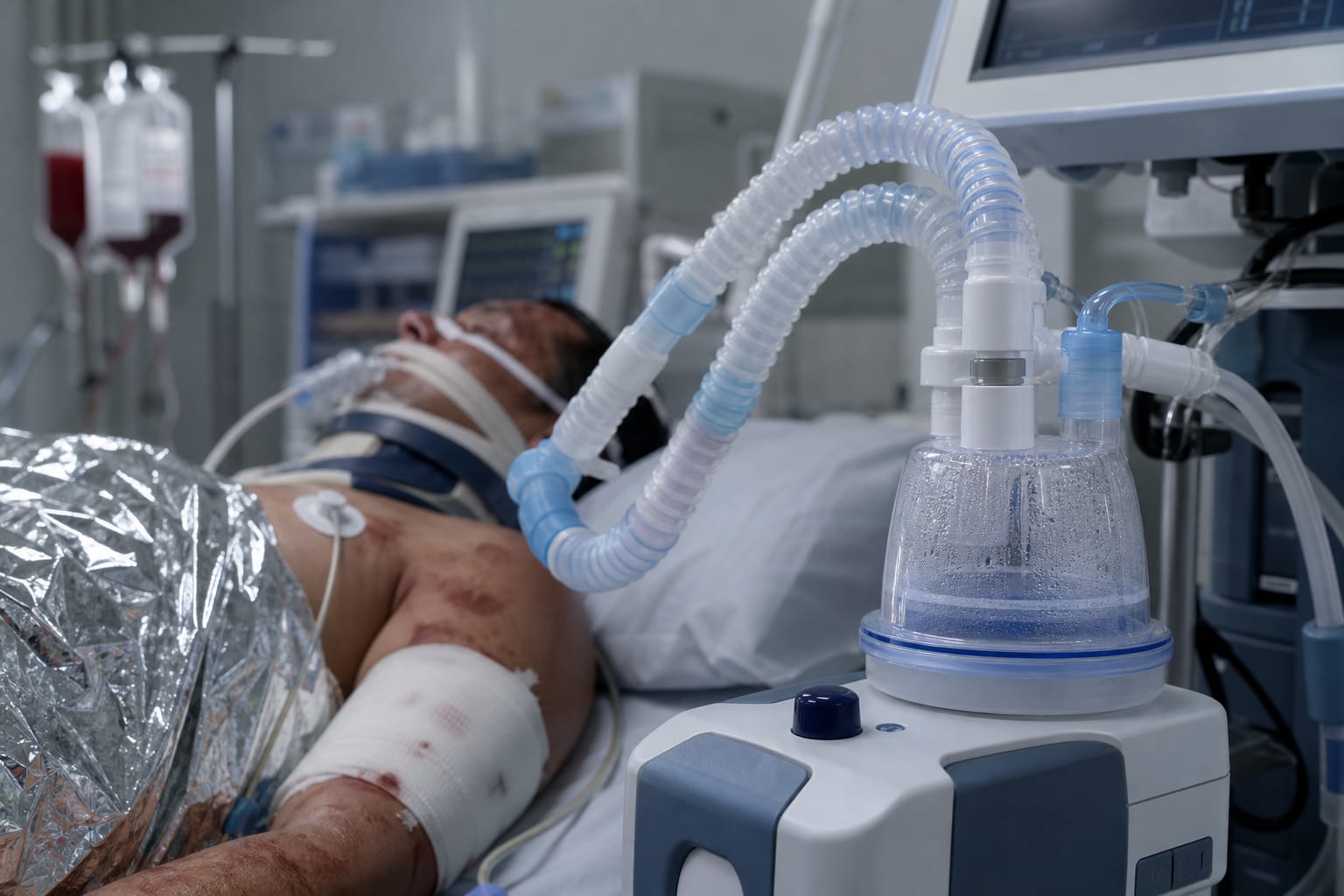
To assess the effectiveness of heated humidification via ventilator circuits in raising core body temperature in trauma patients with hypothermia.
Approach:
Study Design: Utilized a porcine model of trauma-associated hypothermia, simulating trauma through controlled hemorrhage and cooling.
Intervention: Animals were treated with blood transfusion and passive warming, then randomized to receive different warming modalities including heated humidifiers at 37°C and 44°C.
Key Findings:
Heated humidification at 44°C achieved the greatest increase in core body temperature (mean increase of 1.8°C).
None of the treatment arms returned to baseline temperature after 4 hours.
No histopathological evidence of thermal tracheal injury was observed in any treatment group.
Interpretation:
The study indicates that heated, humidified inspired air does not significantly raise core body temperature in hypothermic trauma patients.
Limitations:
The porcine model may not fully extrapolate to human physiology.
The study duration of 4 hours may not reflect real-world application for achieving normothermia.
Conclusion:
Further studies are needed to explore higher temperatures for heated gases and longer warming durations, while considering safety and clinical outcomes.