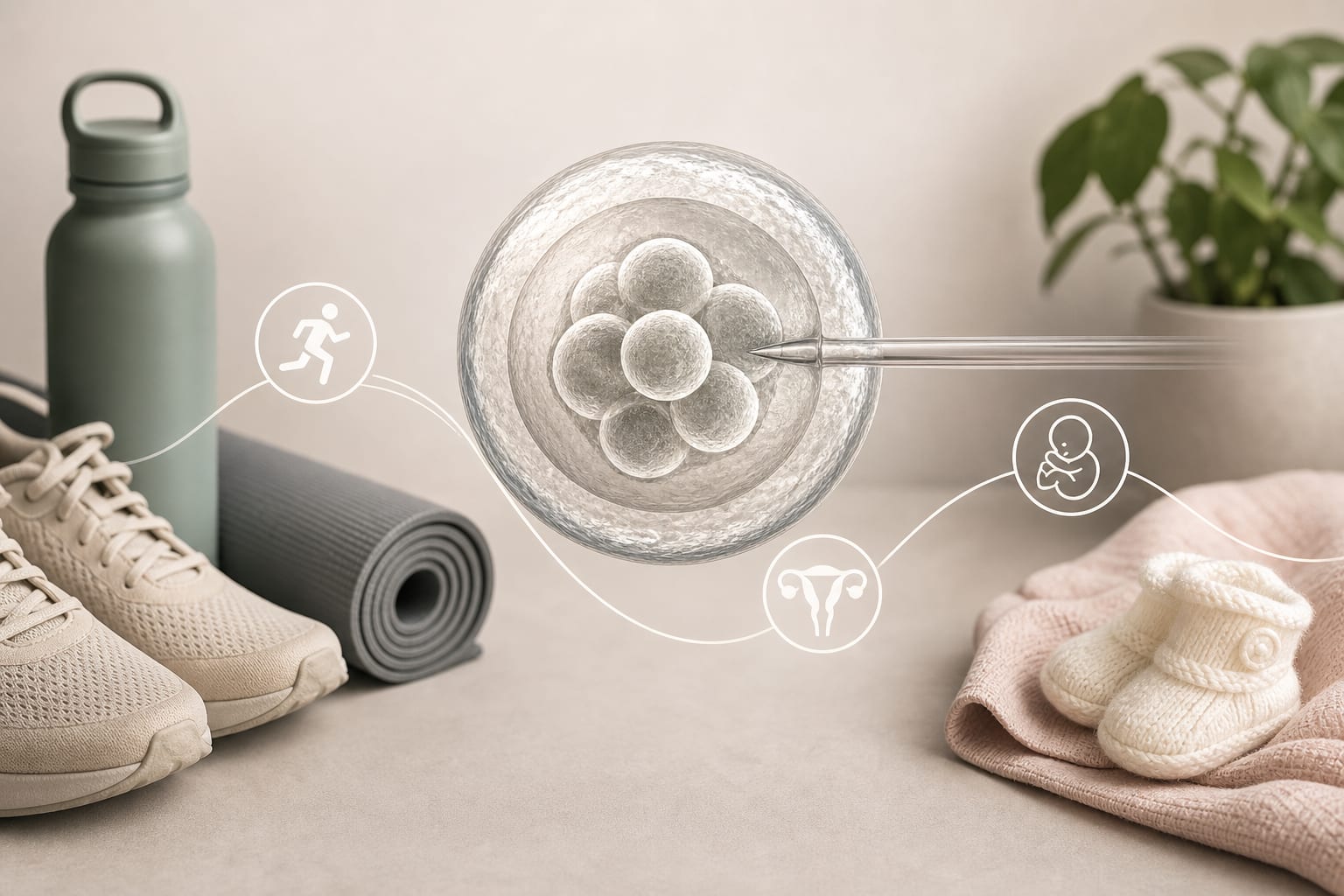
To evaluate the association between self-reported physical activity and reproductive outcomes in patients undergoing assisted reproductive technology (ART).
Approach:
Study Design: Retrospective single-center cohort study including 2,576 patients undergoing 6,850 ART cycles with embryo transfer from 2000 to 2021.
Patient Categorization: Patients categorized by self-reported weekly physical activity: Group A (no regular exercise), Group B (1–2 times per week), Group C (≥3 times per week).
Outcome Measures: Primary outcome was cumulative live birth rate per oocyte pick-up (OPU); secondary outcomes included cumulative pregnancy rate, pregnancy rate per embryo transfer, live birth rate per transfer, miscarriage rate, and number of oocytes retrieved.
Key Findings:
Patients exercising 1–2 times weekly (Group B) had the highest pregnancy rate per embryo transfer (34.8%) compared to Group A (32.5%) and Group C (29.7%).
Live birth rate per transfer was highest in Group B (25.6%) compared to Group A (23.0%) and Group C (22.4%).
Cumulative pregnancy rate per OPU was highest in Group B (58.7%) compared to Group A (52.5%) and Group C (49.5%).
Cumulative live birth rate per OPU was also higher in Group B (43.1%) compared to Group A (37.2%) and Group C (37.1%).
Interpretation:
Limitations:
The study is retrospective and conducted at a single center, which may limit generalizability.
Physical activity was self-reported, which may introduce bias.