Engineered exosomes deliver structurally optimized toad BAX to reactivate mitochondrial apoptosis in colorectal cancer
-
By
-
Xinqiang Xu
-
Hongjie Wu
-
Yixin Yan
-
Hongwei Cui
-
Tianyi Yu
-
Ye Yang
-
Zhendong Deng
-
Jinjun Qian
-
June 24, 2026
-
Objective:
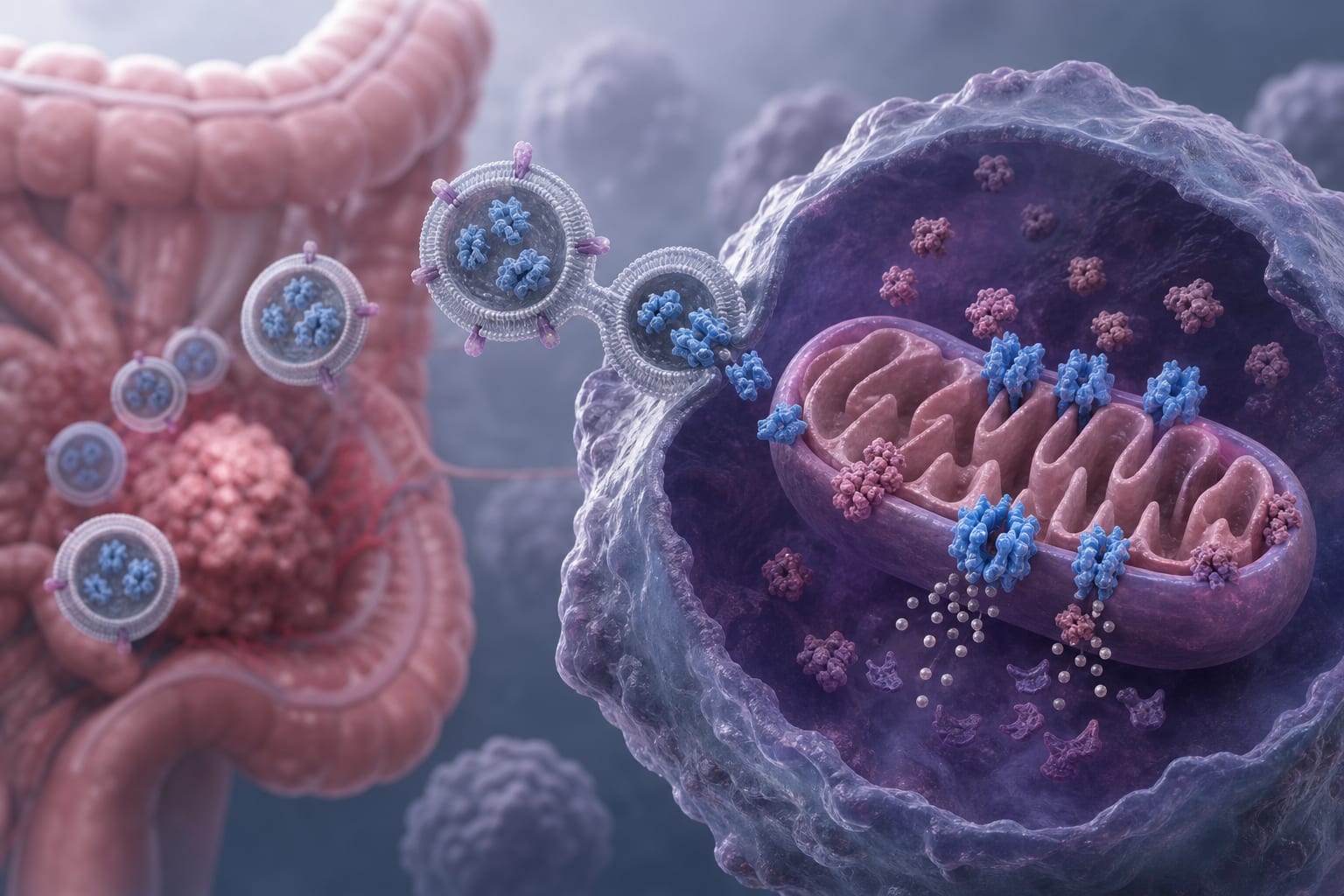
To evaluate the therapeutic potential of toad BAX from Xenopus laevis in colorectal cancer (CRC) and its delivery via engineered exosomes.
Approach:
- Functional Activity Evaluation: Assessed the activity of toad BAX in human CRC cell lines and mouse models.
- Binding Quantification: Measured direct binding of toad BAX to human BCL-2 using microscale thermophoresis.
- Mechanism Elucidation: Investigated the mechanism of action through JC-10 staining, subcellular fractionation, and liposome permeabilization assays.
- Mutagenesis: Created a triple mutant of BAX to enhance binding affinity to BCL-2.
- Exosome Packaging: Packaged optimized BAX into engineered exosomes for targeted delivery and assessed anti-tumor efficacy.
Key Findings:
- Toad BAX binds to human BCL-2 with a dissociation constant (Kd) of 12.7 ± 1.9 µM.
- Toad BAX triggers mitochondrial outer membrane permeabilization, cytochrome c release, and caspase activation.
- The triple mutant of BAX showed enhanced BCL-2 affinity and superior anti-tumor activity compared to wild-type BAX.
- Exosome-mediated delivery of optimized BAX effectively targeted CRC cells and inhibited tumor growth in various models.
Interpretation:
Limitations:
- The study is preclinical and requires further validation in clinical settings.
- Potential off-target effects and long-term safety of exosome-mediated delivery need to be assessed.
Conclusion: