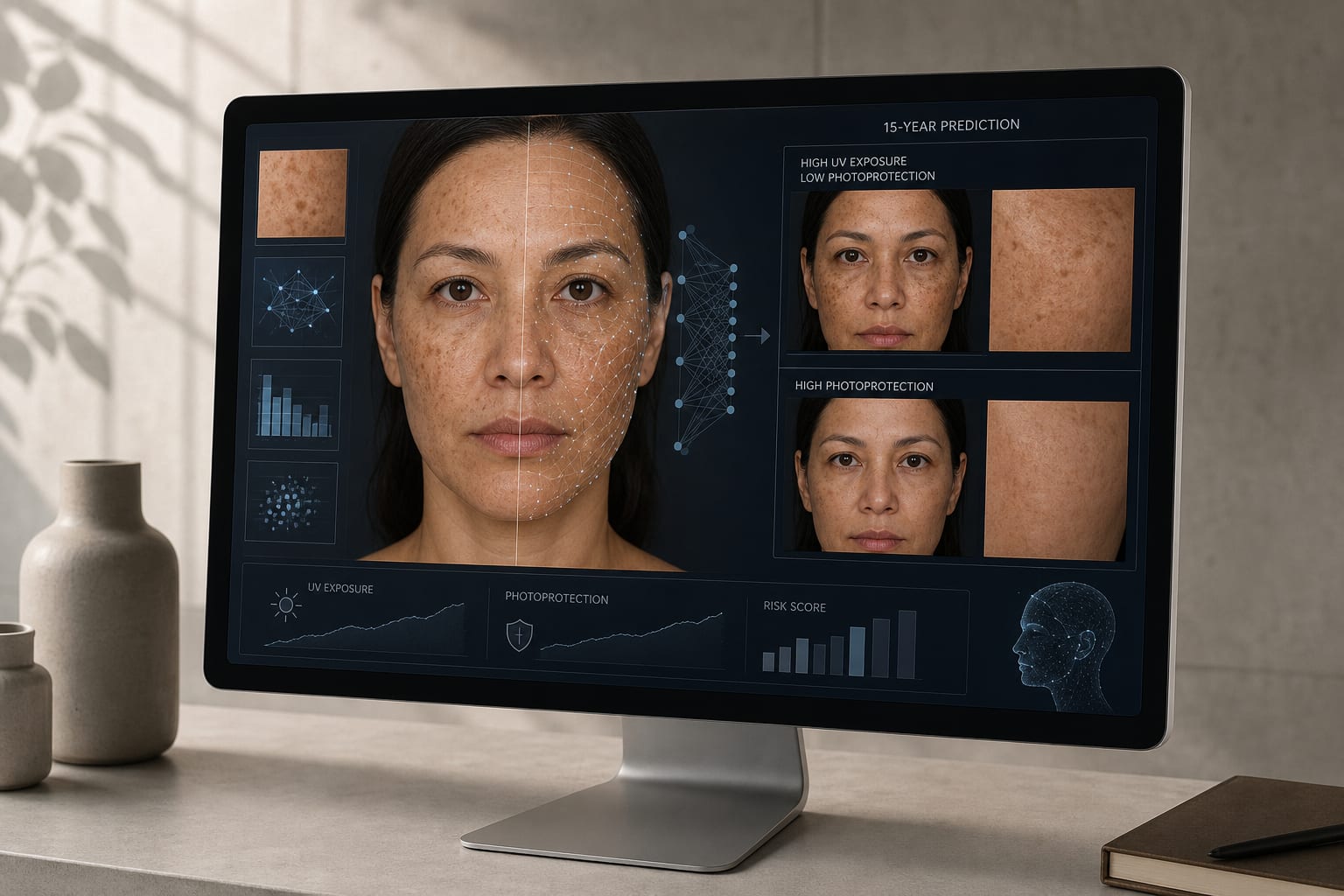
To develop a simulator for predicting and visualizing age-related facial hyperpigmentation based on dermatologist expertise and machine learning.
Approach:
Key Findings:
The simulator provides individualized predictions of facial hyperpigmentation based on varying degrees of sun exposure and photoprotection.
The EBAS framework quantifies the cumulative progression of clinical aging signs over 15 years.
High correlation metrics confirm strong alignment between expert clinical scores and model predictions, though further validation may be necessary.
Interpretation:
The simulator offers a reliable tool for dermatologists, researchers, and consumers to understand and visualize the impact of aging and UV exposure on facial hyperpigmentation.
Limitations:
The study did not require formal ethics committee approval due to its non-interventional nature.
The model's training dataset was limited to 600 individuals, which may affect generalizability and the robustness of predictions.
Conclusion:
The study presents a method for predicting age-related facial hyperpigmentation, highlighting the role of dermatologist insights in developing predictive tools.