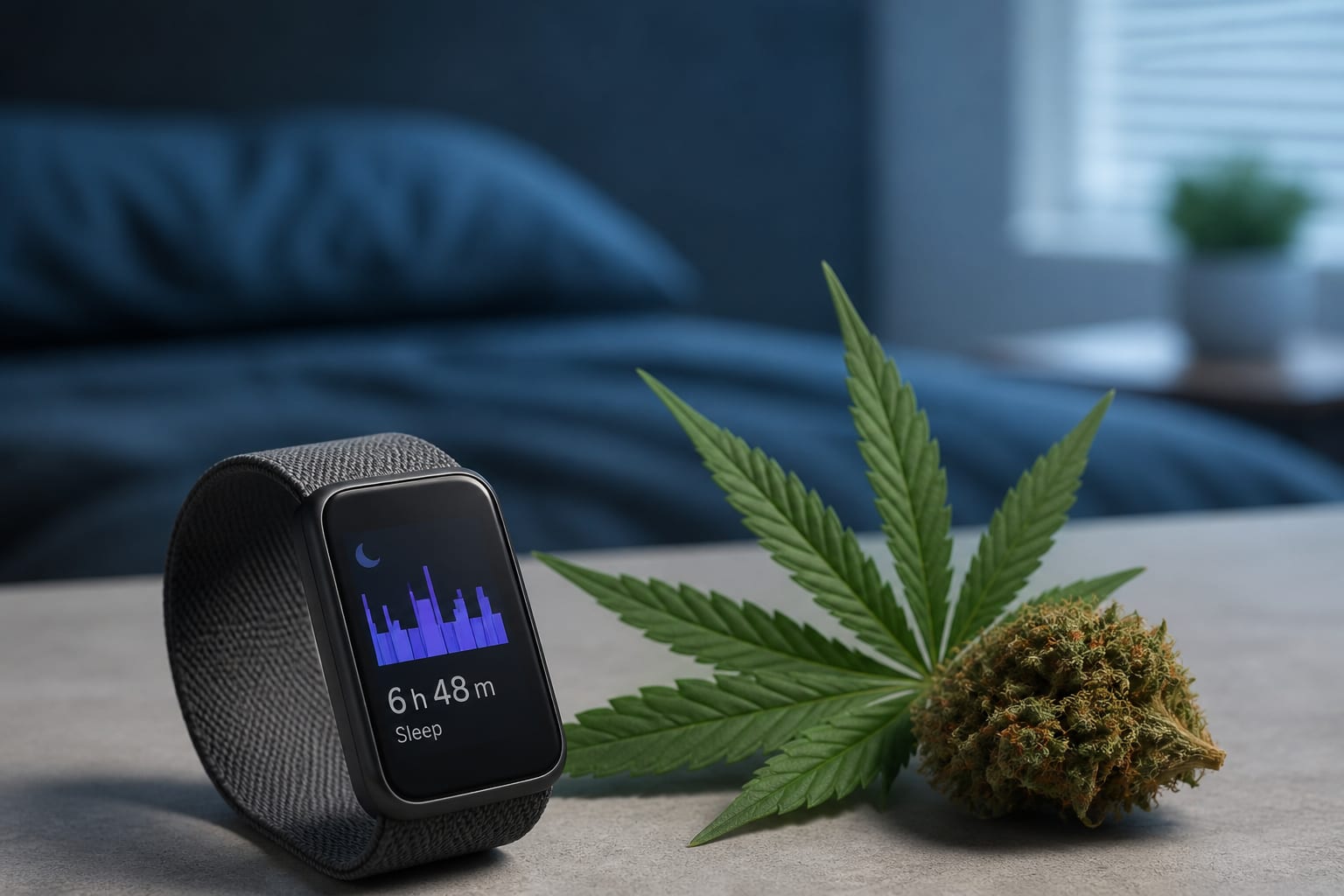
To examine associations between cumulative and recent nonmedical cannabis use and objective and subjective sleep outcomes in middle-aged adults, and assess whether selected demographic and substance-use factors modified these associations.
Approach:
Study design and participants: Longitudinal CARDIA cohort data were used, covering follow-up from 1985–1986 through 2020–2022. The analytic sample included 1,266 participants; objective-sleep analyses included 891 and subjective-sleep analyses included 1,128.
Cannabis exposure: Participants reported lifetime and past-30-day nonmedical cannabis use at examinations. Year-35 use was classified as recent, former, or never; cumulative exposure was estimated in cannabis-years.
Sleep measures: At year 35, wrist actigraphy assessed sleep duration, sleep percentage, fragmentation, and wakefulness after sleep onset. The Pittsburgh Sleep Quality Index (PSQI) assessed subjective sleep quality.
Key Findings:
The provided context describes the study rationale, cohort, exposure measures, and sleep outcomes but does not report study results.
Interpretation:
The study was designed to evaluate longitudinal associations between cannabis exposure and sleep in middle age using both actigraphy and self-reported sleep quality.
Limitations:
The supplied context does not include the study’s results or full discussion, so findings and author-reported limitations cannot be summarized.
The analytic samples were smaller than the original CARDIA cohort, and objective- and subjective-sleep analyses included different numbers of participants.
Lower self-esteem and greater romantic loneliness may help explain how perceived phone disengagement relates to psychological well-being in young adults.