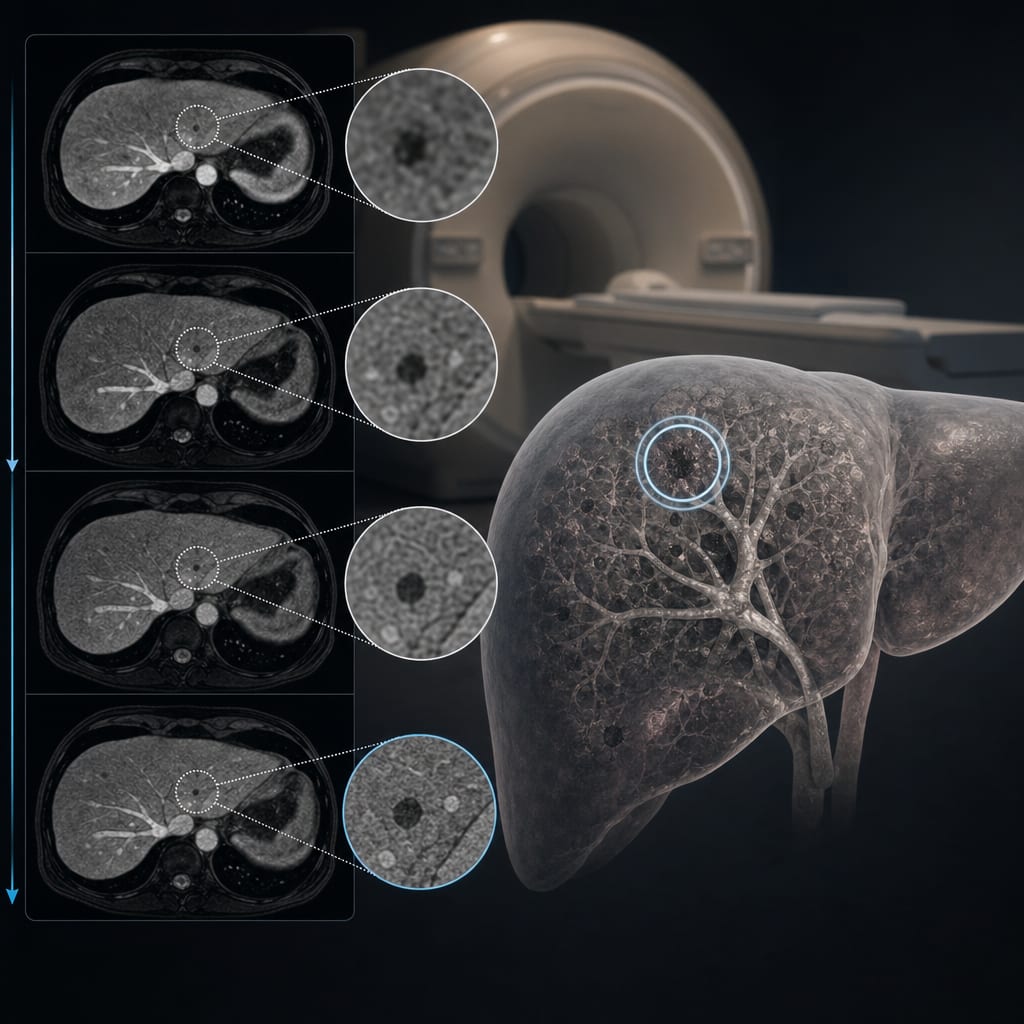
To synthesize current evidence on mucinous cystic neoplasms of the liver (MCN-L), focusing on epidemiology, diagnosis, imaging, pathology, surgical management, and prognosis, and to highlight their clinical significance.
Key Findings:
MCN-L are rare cyst-forming tumors with a potential for malignant transformation, necessitating accurate differentiation from other cystic lesions.
Accurate preoperative diagnosis is challenging due to overlapping imaging findings with other cystic liver lesions.
Complete surgical excision is recommended for all suspected MCN-L, regardless of symptoms or size, due to high recurrence rates associated with non-definitive procedures.
Intraoperative findings, such as the 'peeling sign', may allow for parenchyma-sparing excision in selected cases.
Prognosis is generally favorable in non-invasive cases but significantly worse with invasive carcinoma, which cannot be reliably predicted preoperatively.
Interpretation:
MCN-L are distinct entities requiring careful management due to their premalignant potential and diagnostic challenges, emphasizing the need for definitive surgical intervention and ongoing research.
Limitations:
Preoperative diagnostic tools have limited reliability in excluding malignancy, compounded by historical misclassification.
Epidemiological data are sparse due to historical misclassification and the rarity of the condition.
Conclusion:
A practical framework for evaluating and managing cystic liver lesions suspicious for MCN-L is essential, incorporating advances in imaging and surgical techniques, and highlighting the need for further research.