The article examines the objective, findings, and clinical context described in Medicare Claims Reveal Cancer-Related Disparities Among American Indian and Alaska Native Beneficiaries.
Approach:
Data: Olsen and Tobey analyzed national traditional Medicare claims from 2016 through 2023.
Measures: The analysis examined cancer prevalence, health care use, expenditures, and mortality.
Key Findings:
Among beneficiaries diagnosed with cancer, AI/AN individuals had higher all-cause mortality, more inpatient admissions and emergency care, and greater per-person spending than the overall traditional Medicare population.
AI/AN beneficiaries had lower breast and colorectal cancer screening claim rates and less hospice use near the end of life.
The claims data do not identify cause of death, so the reported approximately twofold mortality difference is not specific to cancer.
Interpretation:
The article describes the findings as evidence of persistent inequities while emphasizing that claims alone cannot determine their causes. It discusses structural and health-service barriers, including underfunding, limited specialty capacity, referral and coordination challenges, and social determinants that can affect screening and cancer care.
Limitations:
Medicare claims do not specify cause of death or establish whether mortality differences reflect cancer, comorbidities, or access and continuity of care.
The AI/AN beneficiaries studied differed from the comparison population in age, disability or end-stage kidney disease eligibility, and dual Medicaid eligibility.
National estimates may obscure differences among more than 570 federally recognized Tribes; the article notes that the analysis does not establish whether Navajo beneficiaries make up a substantial share of the study population.
The provided article context ends mid-sentence, so its final discussion is unavailable.
Conclusion:
The article presents Medicare claims as a source of information about cancer-related disparities, while noting that data limitations and national aggregation constrain interpretation.
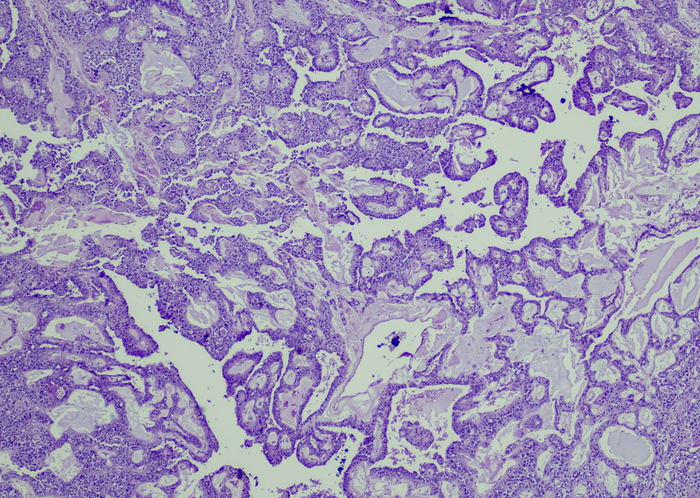
Pancreatic adenocarcinoma, the most common form of pancreatic cancer, accounts for roughly 90 to 95 percent of cases. It's notoriously difficult to catch early, because symptoms often don't appear until the disease has already spread